Ever feel like you’re doing all the right things with keyword research—picking relevant terms, checking volumes, assessing difficulty—but your content still isn’t quite cutting through the noise?
If so, you’re not alone.
While basic keyword research is essential, today’s competitive online landscape demands more.
This guide goes behind the basics to explore advanced keyword research techniques that give you a real competitive edge. And the good news is that anybody can do them — no SEO experience required.
In This Article
Shifting Your Mindset: The Core Principles of Advanced Keyword Research
Before we jump into specific techniques, it’s crucial to adopt an advanced keyword research mindset. It’s about looking at keywords not just as isolated terms, but as clues to user needs, market gaps, and strategic opportunities.
1. Focus on Opportunity, Not Volume & Difficulty
Don’t let high search volume or high difficulty scare you away prematurely. Advanced keyword research teaches you to look for weak spots in the competition, indicating true opportunities even for competitive terms.
It’s about finding where you can realistically win.
2. Deep Dive Into Search Intent
You know about informational, navigational, commercial, and transactional intent. But in advanced keyword research, you learn to identify the dominant intent of a search engine results page (SERP).
Does Google primarily show product pages, blog posts, or video tutorials for a given query?
Matching this intent is critical for ranking.
3. The Power of Context
Keywords don’t exist in a vacuum. Understanding the broader topic, the user’s journey (e.g., are they just starting research or ready to buy?), and related concepts helps you build more comprehensive and effective content.
4. Competitor Insight Is Gold
It’s not just what your competitors rank for, but how and why. What content formats are they using? Where are they strong? More importantly, where are they weak? These competitors insights are a cornerstone of advanced keyword research techniques.
7 Advanced Keyword Research Techniques You Can Use Right Now
These advanced keyword research strategies are designed to help you find untapped opportunities that drive organic traffic.
1. Use Forums & PAA Results to Find Long-Tail Queries
You’re probably already familiar with long-tail keywords. These are longer, more specific phrases that users type into search engines. They often have lower search volume but higher conversion rates because the user’s intent is very clear.

While some long-tail keyword research tools can help you find them, there’s actually a free way to get them — right from your audience.
Here’s how:
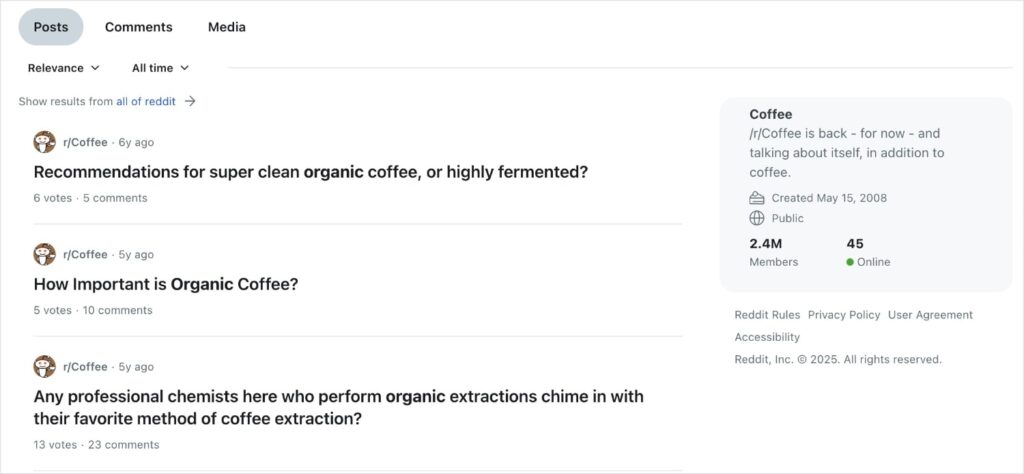
Analyzing Forums & Communities
This is where people voice their deepest pain points and most specific questions.
Go into Reddit, Quora, or niche-specific forums related to your industry. Search for keywords related to your business. Then, look at the questions with the most upvotes, comments, or engagement.
This gives you the exact phrasing your audience uses, helping you to target real-world language in your content.
Mining People Also Ask (PAA) & Related Searches
When you search on Google, pay close attention to the People Also Ask results. Click on each question to expand it and reveal more related questions.
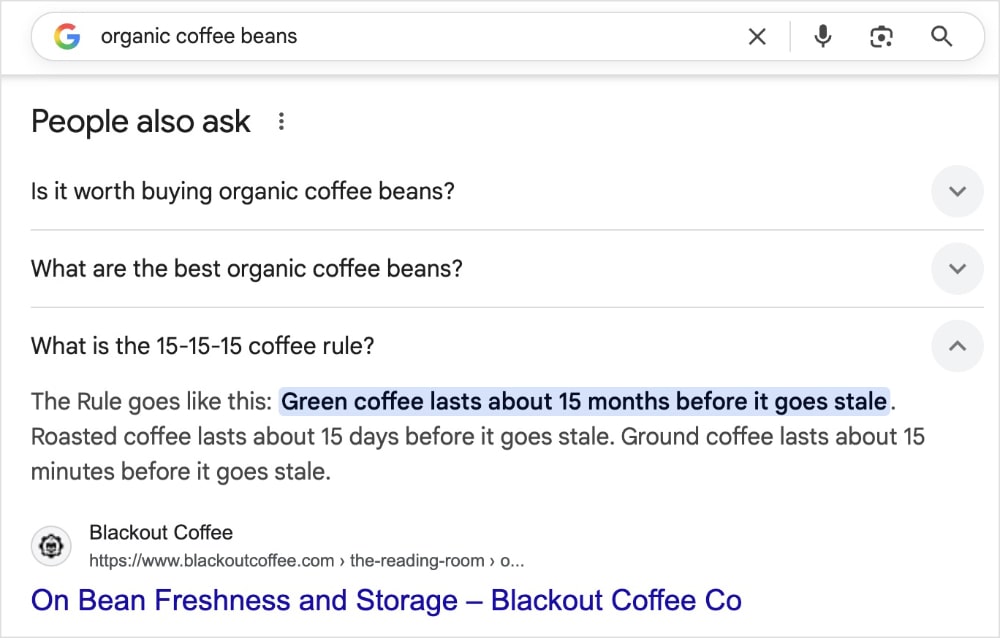
Then, keep clicking. This can generate an endless stream of highly specific, user-generated questions that you can turn into content.
Also, scroll to the bottom of the SERP for the “Related searches” section. You can find even more golden ranking opportunities here.
Leveraging Google Autocomplete Suggestions
Don’t just use the initial autocomplete suggestions. Type your seed keyword, then add an underscore (wildcard) at the beginning, middle, or end of the phrase. This acts like a wildcard, forcing Google to suggest different variations and modifiers.
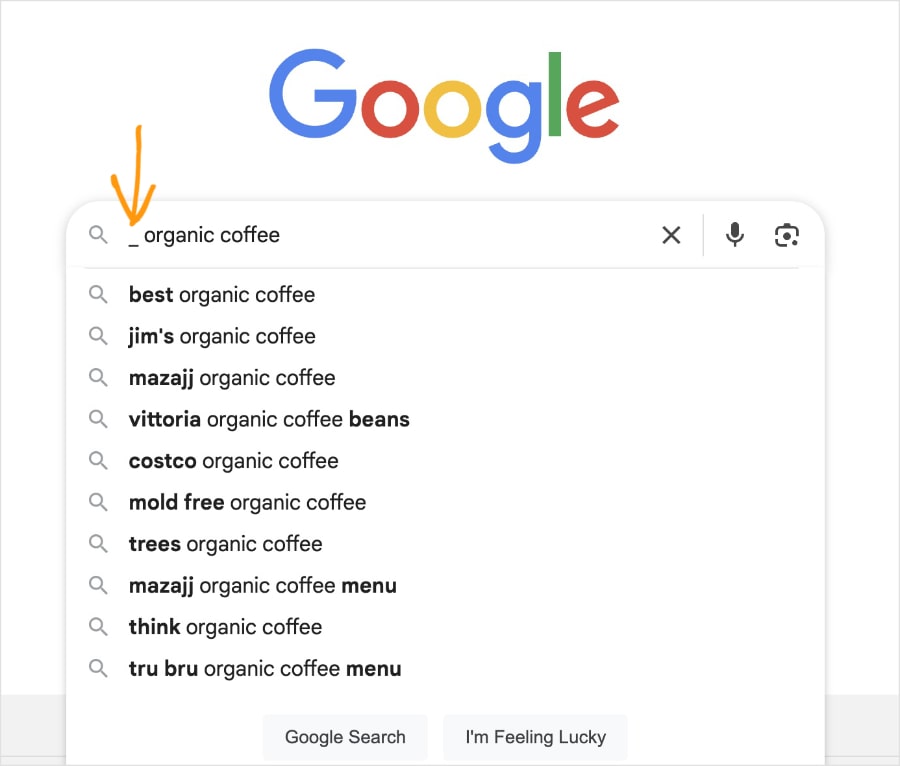
It’s super simple and an effective way to get a ton of long-tail keyword ideas for free.
2. Go Deeper Into Keyword Gap Analysis
Knowing what keywords your competitors rank for is non-negotiable nowadays. However, advanced keyword research involves understanding where their weaknesses are and where your opportunities lie.
Let’s look at how to do more in-depth keyword gap analysis.
Identifying Keyword Gaps
Use a tool like LowFruits to compare your site’s rankings against your top competitors. Look for keywords where they rank, but you don’t (or rank poorly). This points to clear content gaps.
LowFruits excels here because not only does it show if your website is ranking (or not) but it also identifies Weak Spots (low-authority domains, forums, UGC) ranking for your competitors’ keywords.
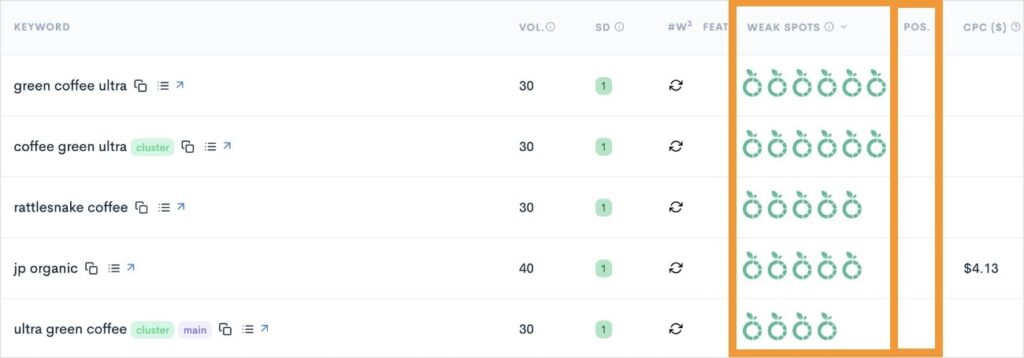
In the example above, our competitor keyword report show several keywords that (1) we’re not ranking for (because the position column is empty) and (2) have multiple Weak Spots.
What’s great about Weak Spots in LowFruits is that these icons represent domains in the top 10 search results, meaning you can land on the first page of Google with the right content.
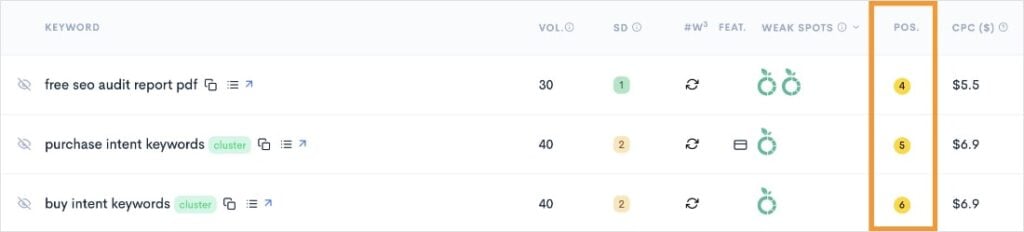
I also want to mention that LowFruits makes it easy to see if you are ranking for competitor keywords, too. In this example, we see the ranking position of our website in the column titled, “Pos.”
Analyzing Competitor Content for Intent & Depth
For keywords where competitors rank well, click through to their pages. What type of content is it (blog post, product page, guide)? How thorough are they? What questions do they answer? What angles do they miss?
This helps you create content that’s not just good, but better.
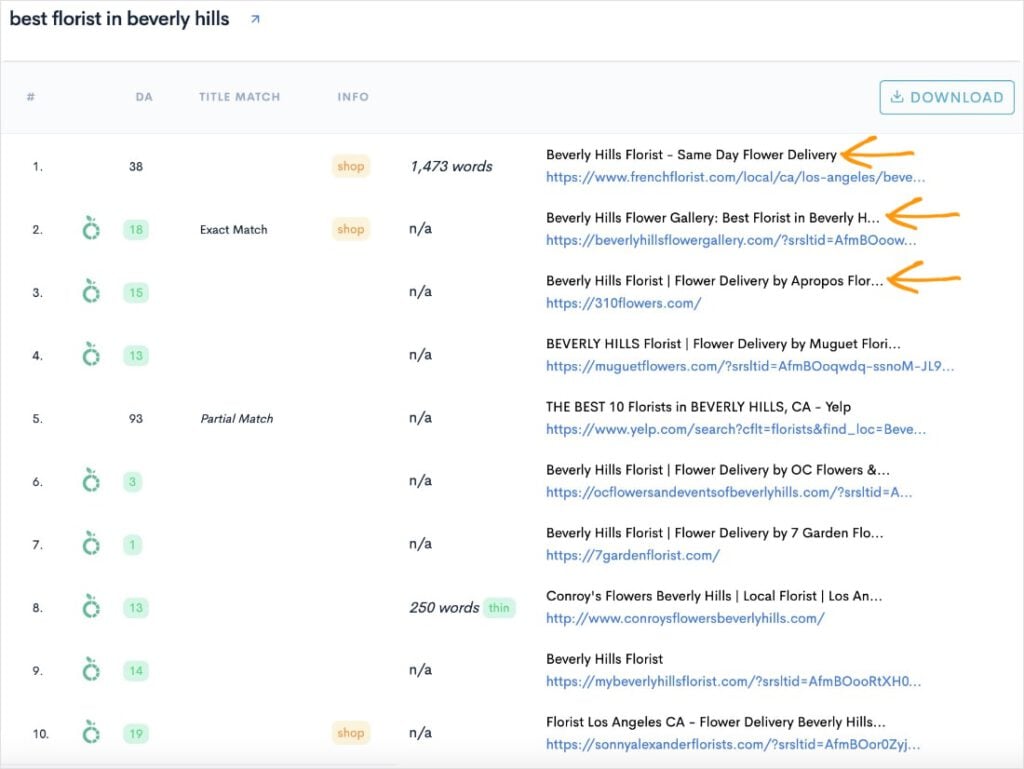
In LowFruits, you can do this without leaving the platform. Just click View the SERP next to the keyword you’re interested in.
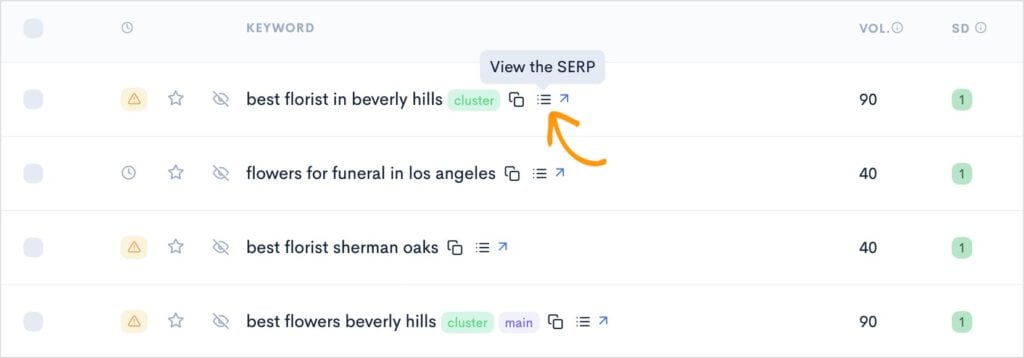
This will open a pop-out window with the top 10 organic search results. You can click any of the results to dive deeper into your competitors’ content.
“Partial Competitor” Analysis
Beyond your direct competitors, think of what other companies could be rivals. Who else serves your audience, even if they offer different products or services?
For a vegan food blog, a health supplement site might be a partial competitor for “plant-based protein” searches. Analyzing their keywords can reveal new, unexpected avenues for traffic that you might not have considered before.
3. Build Authority With Semantic SEO & Topic Clusters
Modern search engines don’t just match keywords; they understand concepts and relationships. Semantic SEO and topic clustering are critical for building authority, proving to Google that you’re a definitive resource on a subject.
Here’s how to do it:
Utilizing Topic Clusters
Google understands how different topics relate to each other.
Your advanced keyword research should aim to identify all relevant subtopics within a broader topic.
LowFruits helps significantly here by automatically grouping related keywords into logical topic clusters based on shared intent and semantic connections.
For example, here we can see the various clusters (aka, “subtopics”) of the seed keyword “los angeles florist.”
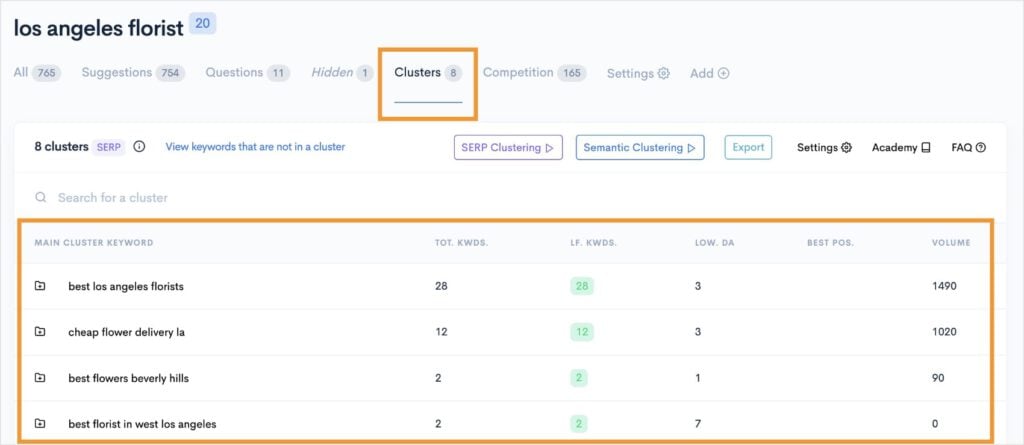
Within each cluster, LowFruits has organized keywords that share the same search intent. You can open any of these results to view the individual keywords within, like so:
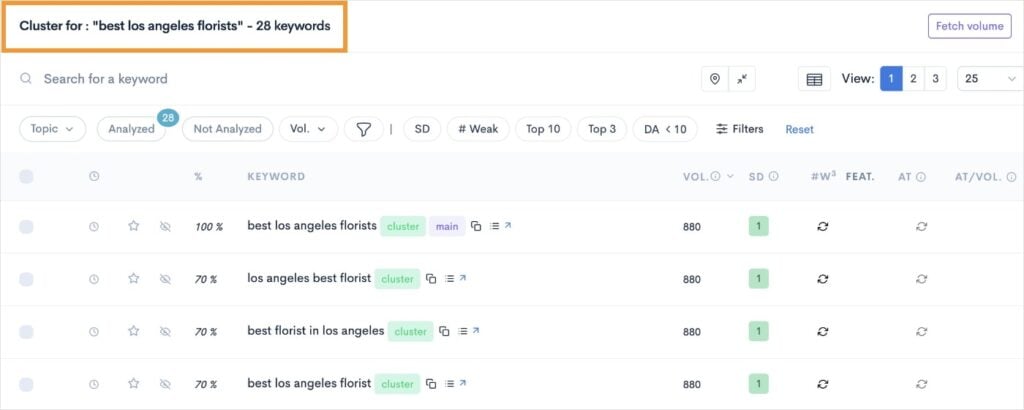
By targeting multiple keywords within a single piece of content, you:
- Rank for more than a single query.
- Increase the visibility of your content.
- Build authority within your niche or industry.
All of this contributes to better SEO and more results for your business.
Creating Pillars Pages & Supporting Content
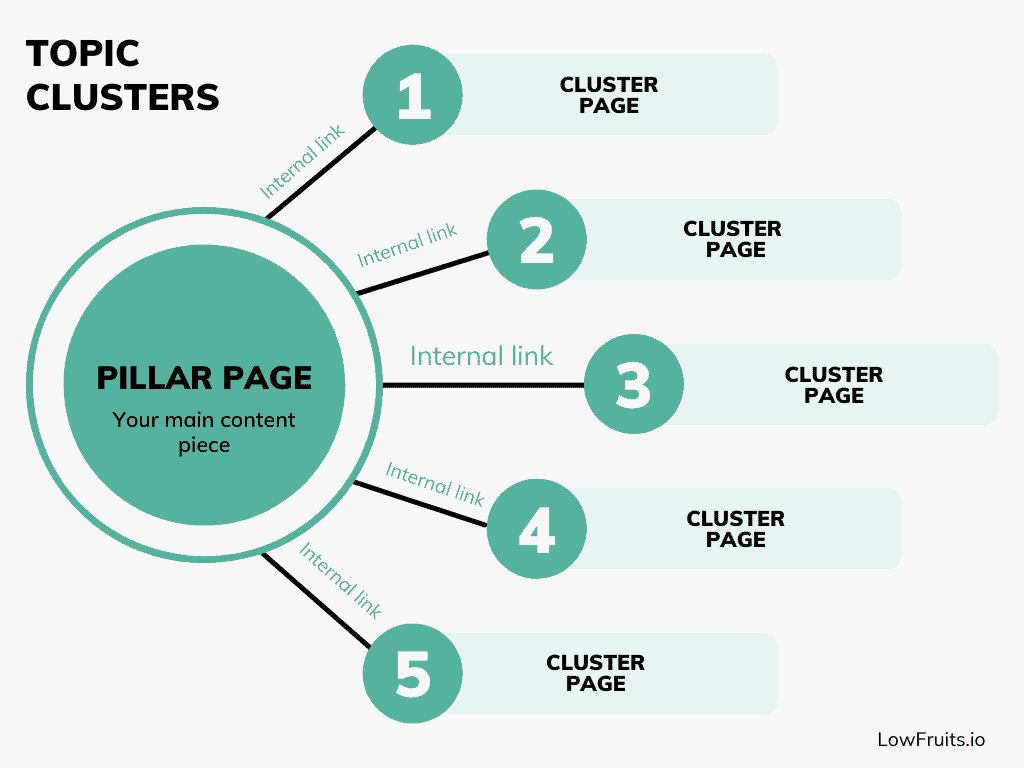
Once you have clusters, plan a “pillar page” (a comprehensive, long-form guide) for the main topic, and then create shorter, supporting articles that dive deep into specific subtopics within that cluster.
From here, use internal links to connect these pieces together. This creates an interconnected network of content, boosting topical authority on a specific subject.
4. Identify Emerging Trends Using SEO Tools
Why wait for a keyword to become competitive?
Advanced keyword research techniques allow you to spot emerging trends before they’ve gained popularity. This often means their keyword difficulty hasn’t caught up yet, meaning they’re still easier to rank for.
How to do it:
Spotting Trending Keywords
Use SEO tools to identify keywords that are starting to gain traction in SERPs. I like to use Google Trends for this task because it makes spotting emerging trends fast and easy. Plus, it’s free.
To use it, just type your seed keyword into the Explore tool. You’ll get a graph that shows “interest” over time.
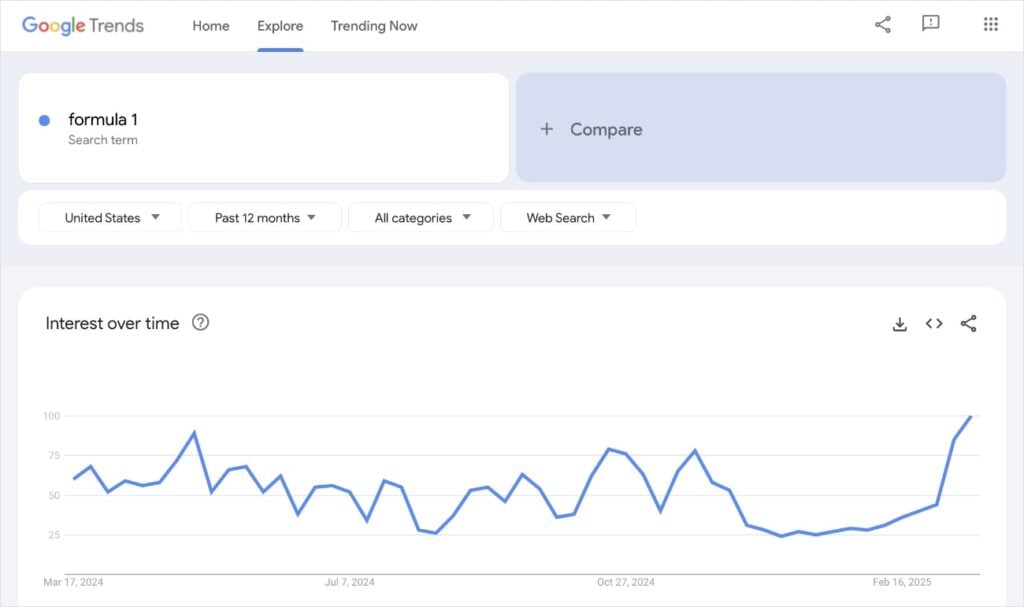
While Google Trends doesn’t give keyword metrics like search volume or difficulty, you can infer it from the data.
If the keyword has maintained relatively low interest historically but starts experiencing a sudden spike, this would be an emerging trend. (And a good keyword to target in a new piece of content.)
Analyzing Rising Content
Once you’ve identified trending keywords, reverse engineer the content that’s already ranking for them:
- What does their on-page SEO look like?
- What’s their content quality and depth like?
- Are they getting backlinks quickly? From where?
- What additional keywords are they targeting?
These insights can guide your own content creation efforts and help you outrank competitors while the keyword is still fresh.
5. Map Your Audience Personas
Digital marketers understand that different content serves different stages of a customer’s journey. You, too, can match your keywords and content to serve the distinct needs of your customers at different stages.
Audience personas are one way of achieving this.
Here’s how to do it:
Defining Your Personas
Create detailed profiles of your ideal customers, including their demographics, goals, pain points, and how they typically search for information or solutions.
You can use Google Analytics and market research to learn about your customers.
Mapping Keywords to Journey Stages
- Awareness Stage (Top of Funnel): Users are at the beginning of their journey and are gathering information. This stage aligns with Informational keywords such as “what is X” or “how to solve Y”.
- Consideration Stage (Middle of Funnel): Users are deeper in their research. They might be comparing products or solutions. For this stage, use commercial keywords like “best X for Y” or “X vs. Z reviews”.
- Decision Stage (Bottom of Funnel): At this stage, users are ready to take action. You should target transactional keywords here, like “buy X online,” “X discount code,” or “X service near me”.
6. Do Buyer Intent Keyword Research
This technique focuses specifically on users in the last stage of the customer’s journey. It’s about identifying keywords that signal a user is close to making a purchase.
These are often the most valuable keywords because they’re directly tied to conversions. While general intent is good, isolating strong buyer intent is an advanced keyword research technique at its prime.
Here’s what to look for:
- Transactional Modifiers: Look for keywords that include words like “buy,” “price,” “cost,” “discount,” “deal,” “coupon,” “for sale,” “review” (especially product reviews), “vs.” (for comparison shopping), “shipping,” or “order.”
- Product-Specific Searches: Users searching for specific product names, model numbers, or unique product features are often further down the purchase funnel.
- Service-Based Modifiers: For services, look for “near me,” “consultation,” “quote,” “hire,” “agency,” “company,” or specific service names.
- Competitor Branded Terms (with caution): While you generally don’t want to rank for competitors’ brand names, sometimes a user searching for “[Competitor Brand] alternative” or “[Competitor Brand] vs. [Your Brand]” signals high buyer intent.
Related reading: How to Find Buyer Intent Keywords
7. Mine Your Competitors’ Backlinks
Backlinks are a powerful signal of authority in SEO. Analyzing the links pointing to your competitors can reveal valuable keyword opportunities they might not even be directly targeting.
How to do it:
Use a backlink analysis tool like Semrush to see who links to your competitors. Then, focus on the anchor text.
Anchor text are the clickable words that other websites use when linking to other websites. Often, this anchor text will contain valuable keywords.
From here, read the paragraph around the backlink. This context can reveal the specific user need or angle that made the other site link to your competitor, giving you ideas for your own content.
This is an advanced keyword research SEO tip for finding topics that naturally earn backlinks, which is a proven way to increase organic traffic.
Tools for Advanced Keyword Research
While these advanced keyword research techniques rely heavily on your strategic thinking, tools can help you execute them efficiently.
LowFruits
LowFruits excels at finding “low-hanging fruit” and “Weak Spots.” It automates SERP analysis, so you can find these easy ranking opportunities faster than through manual processes.
It’s ideal for unearthing opportunities that fit many of the techniques discussed today, especially for competitor gap analysis and long-tail keyword discovery.
Its keyword clustering tool also greatly assist in semantic SEO, and it can help identify niche-specific buyer intent queries that have lower competition.
Google’s Free Tools
Don’t overlook free SEO tools!
Google Search Console offers insights into your current performance.
Google Trends is invaluable for spotting seasonality and emerging trends.
Google Autocomplete and People Also Ask (PAA) are also free venues that you’re likely already using on a daily basis. You can find endless long-tail questions and buyer intent keywords by paying a little more attention to search results.
Comprehensive SEO Platforms
Tools like Ahrefs and Semrush offer deep competitor analysis, extensive keyword databases, and backlink analysis features that are crucial for techniques like competitor gap analysis and backlink mining.
And while these tools often come at a higher price tag, they’re worth the investment for creating a winning SEO content strategy.
Advanced Keyword Research SEO Tips FAQs
What are advanced keyword research techniques?
Advanced keyword research techniques involve moving beyond basic metrics like search volume and difficulty. They focus on deeper analysis of search intent, competitive weaknesses, semantic relationships, and emerging trends. They also aim to understand the customer journey to find more strategic and less obvious keyword opportunities.
How do advanced techniques differ from basic keyword research?
Basic keyword research focuses on identifying common terms and their metrics. Advanced techniques go further by actively seeking out underserved topics, analyzing niche communities, performing deep competitor gap analysis, and more. This leads to a more nuanced and competitive keyword strategy.
Why is competitor analysis crucial in advanced keyword research?
Competitor analysis is vital because it reveals what’s already working in your niche and, more importantly, where competitors are weak. By identifying their “Weak Spots” (low-authority pages ranking highly) or keyword gaps, you can find direct opportunities to outrank them and capture their traffic.
What is semantic SEO and how does it relate to advanced keyword research?
Semantic SEO focuses on understanding the meaning and context of words, not just exact keywords. In advanced keyword research, it involves identifying related concepts to build topic clusters. By creating content around these clusters, you rank for a wider range of related queries and build authority with search engines.
Final Thoughts
In today’s crowded digital space, relying solely on basic keyword research is no longer enough to win.
By using these advanced keyword research SEO tips, you can drive more targeted traffic and conversions for your business.
It’s also important to note that you don’t have to use all the strategies at once. Pick the one that sounds the most feasable right now, and see how it works into your existing keyword research workflow. Then, as you grow, you can continue to add additional techniques to your process.
This approach ensures you don’t get overwhelmed from the get-go, allowing you to achieve success step by step.
Additional keyword research resources: