#1 Keyword Clustering Tool
Rank for More Keywords With Less Content
Stop creating separate posts for every keyword variation. LowFruits automatically groups related queries into keyword clusters, helping you create content that rank for multiple terms at once.

Auto
Clustering

Topic
Mapping

Search Intent Match

Semantic Match

Authority Analysis

Keyword Metrics


Organize Your Content Strategy With Smart Keyword Clustering
LowFruits’ Keyword Clustering Tool transforms hours of tedious research into minutes of actionable insights, helping you discover the most promising keywords for your content strategy.

Intent Analysis
Automatically identify the underlying user intent behind each keyword cluster.

Auto Grouping
Let our algorithm intelligently cluster your keywords based on SERP and semantic relationships.

Cluster Visualization
See your keyword relationships in an intuitive visual format for better content planning.

Topic Identification
Discover the core topics and subtopics within your keyword set.

Content Planning
Transform keyword clusters into the backbone of your content strategy.

Easy Reporting
Export clusters to share with your team and guide your on-page SEO efforts.
The Best Keyword Clustering Tool for Small Businesses
Start creating comprehensive content that ranks for multiple keywords.
Why Content Creators Love Our Keyword Clustering Tool ♥️
Here are some of the top reasons small business owners and digital marketers choose our Keyword Cluster Tool to improve their content strategy.
AI-POWERED CLUSTERING
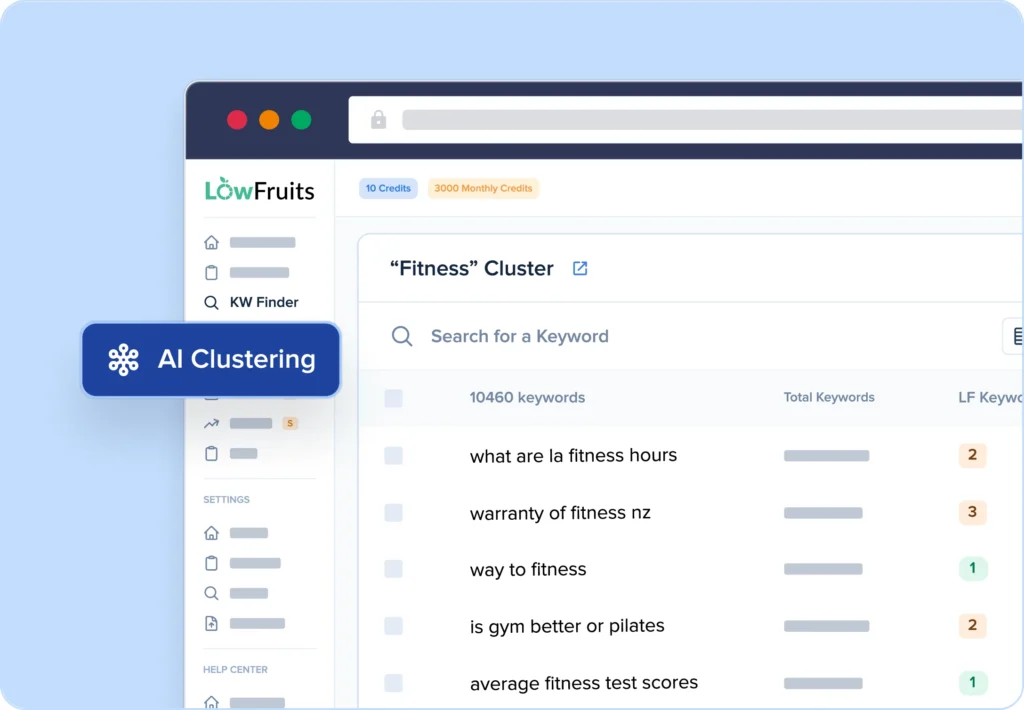
Group Keywords Automatically With AI
Manual keyword grouping is time-consuming and prone to errors. LowFruits’ AI analyzes millions of SERP relationships to automatically identify keyword clusters in seconds.
Our algorithms detect semantic relationships, search intent patterns, and SERP overlaps to create content-ready keyword groups that rank together.
CONTENT OPTIMIZATION
Create One Post, Rank for Many Keywords
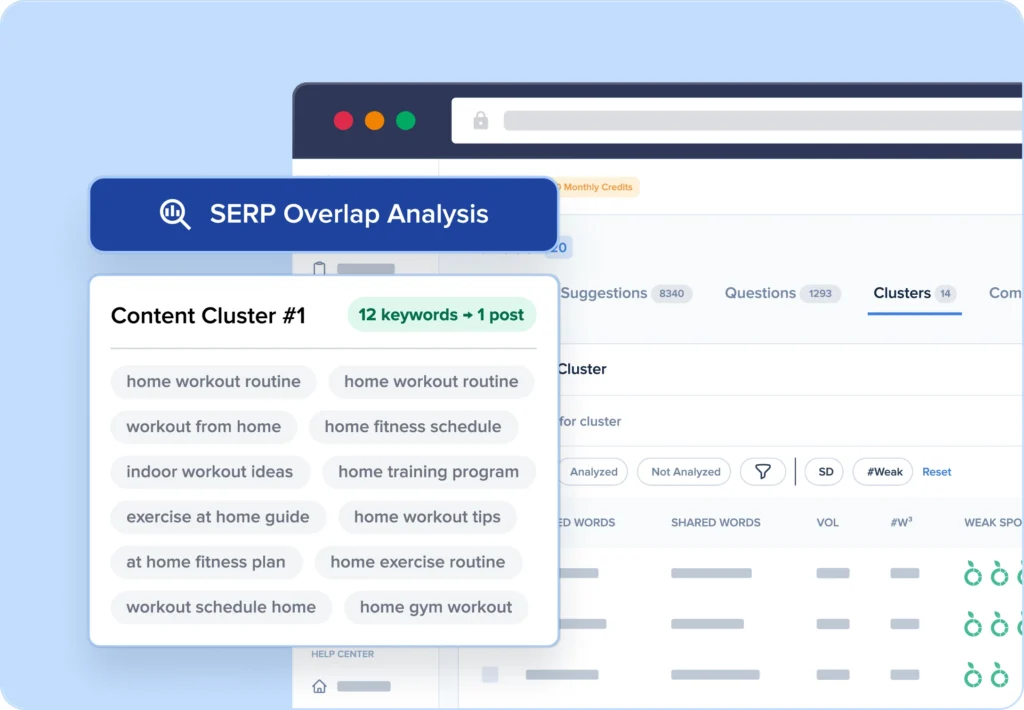
Stop diluting your content strategy with multiple posts targeting similar terms. Our intelligent clustering shows you exactly which keywords can be targeted with a single piece of content.
Our SERP overlap analysis ensures your content strategy is focused on keyword groups with proven ranking potential, helping you achieve more results with fewer resources.
SEARCH INTENT MATCHING
Effortlessly Align Content With User Intent
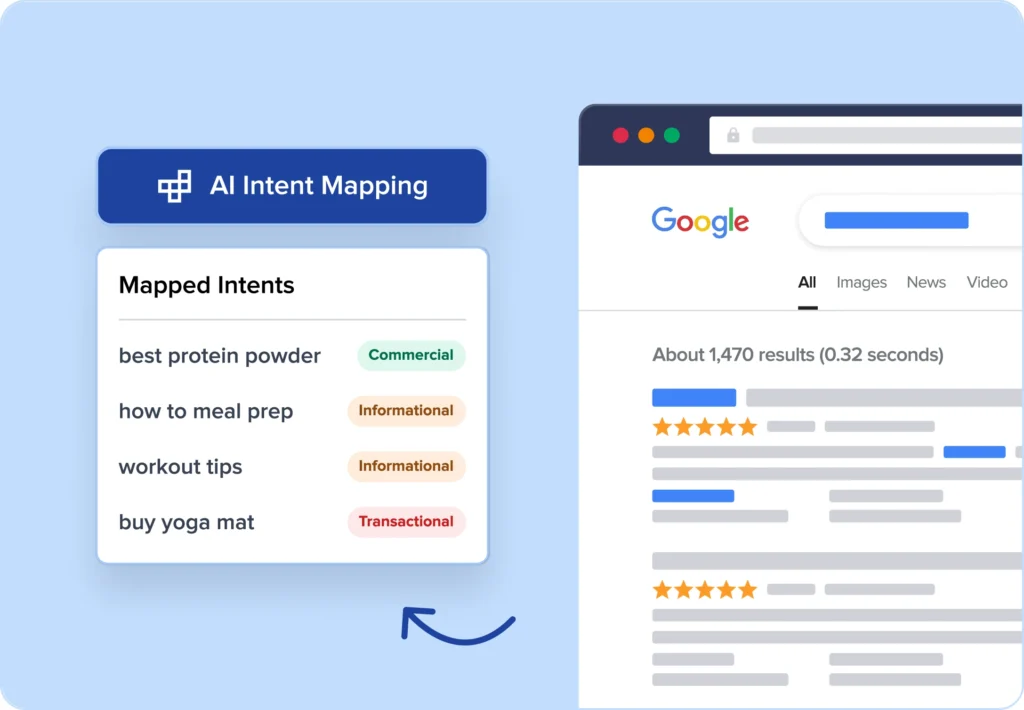
Different keyword variations often signal different search intent. Our AI automatically maps search intent patterns across your keyword clusters, helping you create content that perfectly matches what users want.
Each cluster shares similar search intent, ensuring your content satisfies both users and search engines.
CONTENT GAP ANALYSIS
Easily Identify Content Gaps
Wondering if you’ve missing important topics? Keyword clusters show you which topics and sub-topics you should cover in your content, so you provide maximum topic coverage with no extra research work.
Our advanced algorithms organize these groups automatically for you, so all you have to do is view the results.
KEYWORD DIFFICULTY INSIGHTS
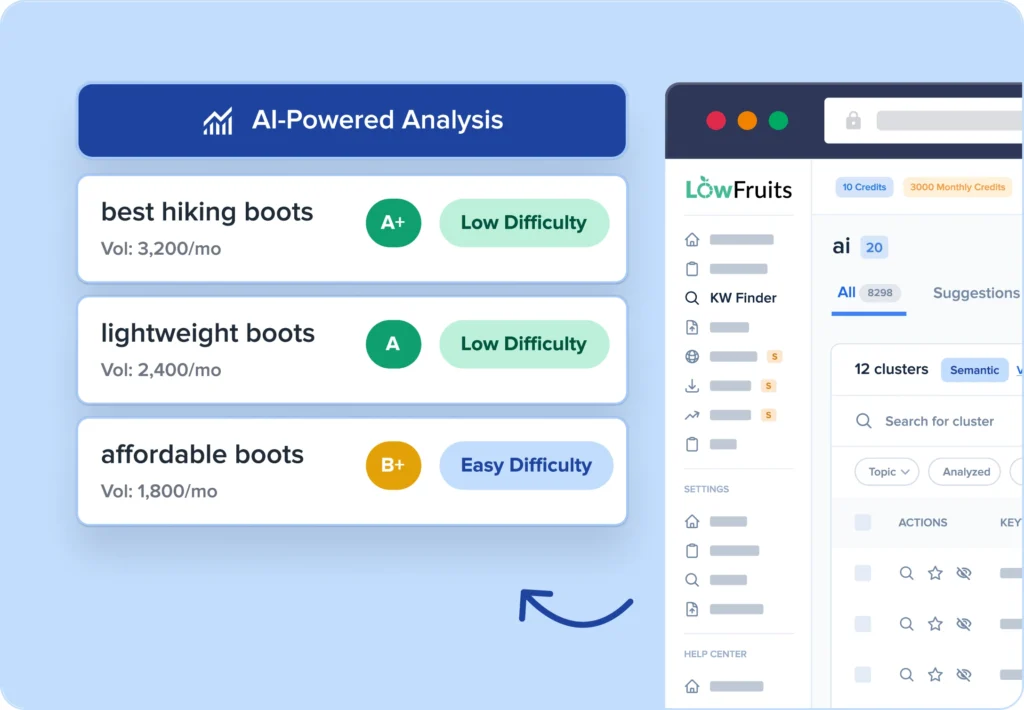
Find Easy Ranking Opportunities—Fast
Stop guessing which keywords you can rank for. LowFruits makes it easy to find long-tail keywords with low competition that make ideal keyword targets.
Using machine learning and real-time SERP data, we reveal exactly which keywords offer you a simple path to higher rankings.
Here’s What Our Users Have to Say
You don’t just have to take our word for it. See how real people and companies use LowFruits to rank for more keywords and generate organic traffic.
Create Keyword Clusters Like the SEO Pros
LowFruits is packed with powerful, beginner-friendly features that make core SEO tasks easy. Here’s a preview of what else you can get with the Keyword Cluster Tool.
Bulk SERP Checker
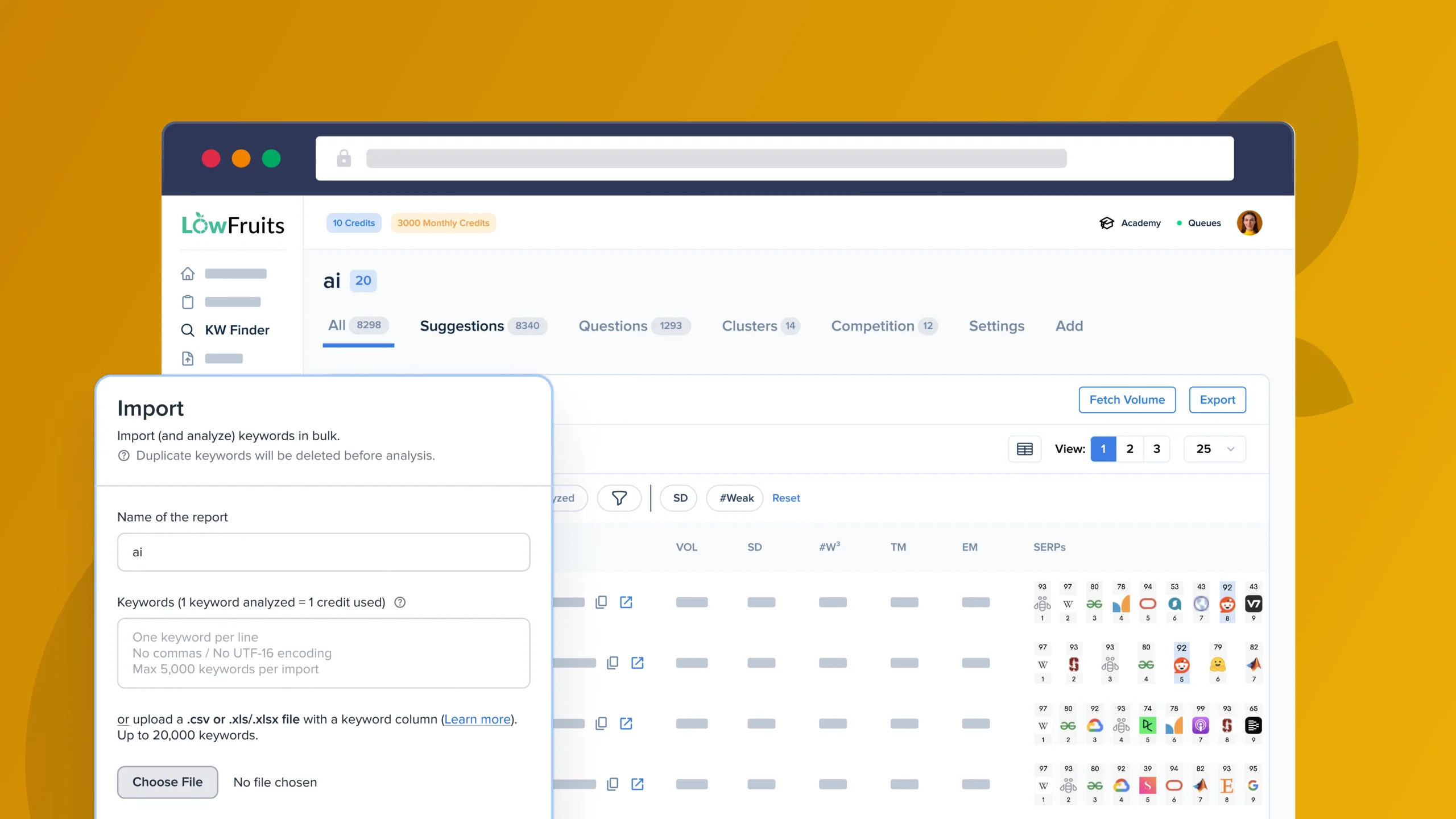
Analyze thousands of keywords in seconds and identify weak spots in SERPs to generate more traffic in record time.
Keyword Finder
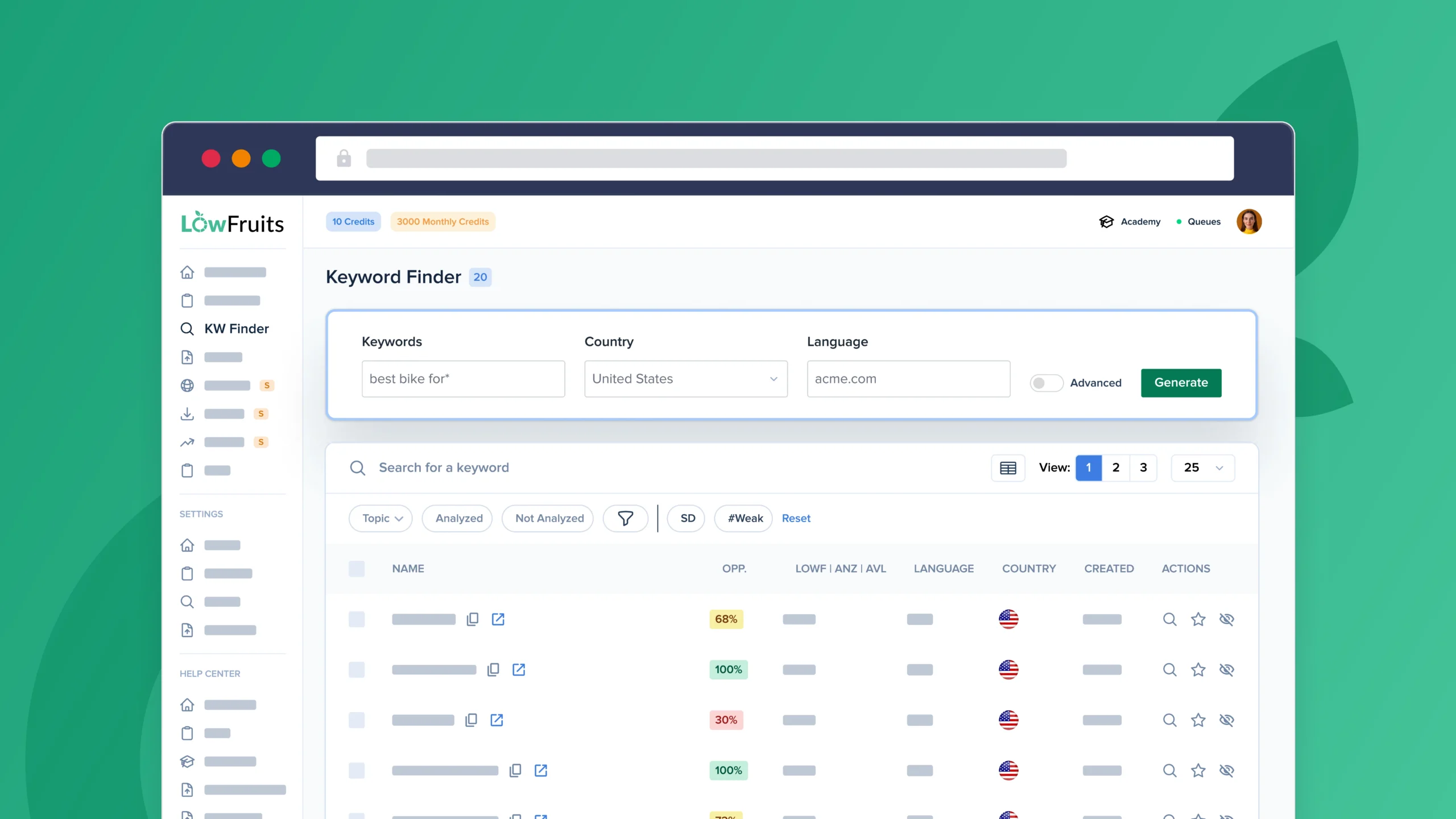
Discover long-tail keywords with low competition in SERPs. These hidden ranking gems help you rank high — and fast.
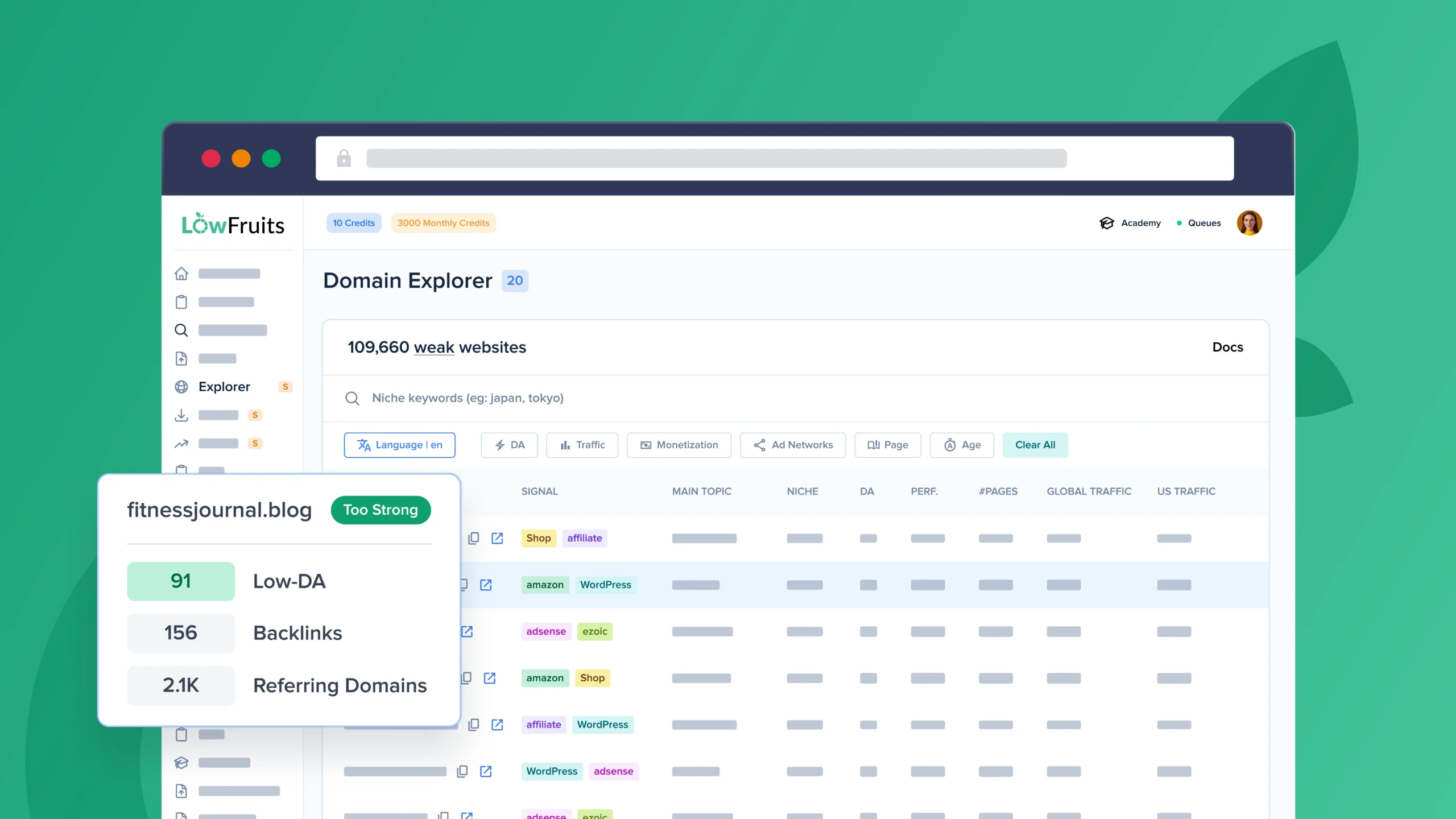
Domain Explorer
Explore our database of over 100K low-authority websites. Identify weak competitors in your niche that you can easily outrank.
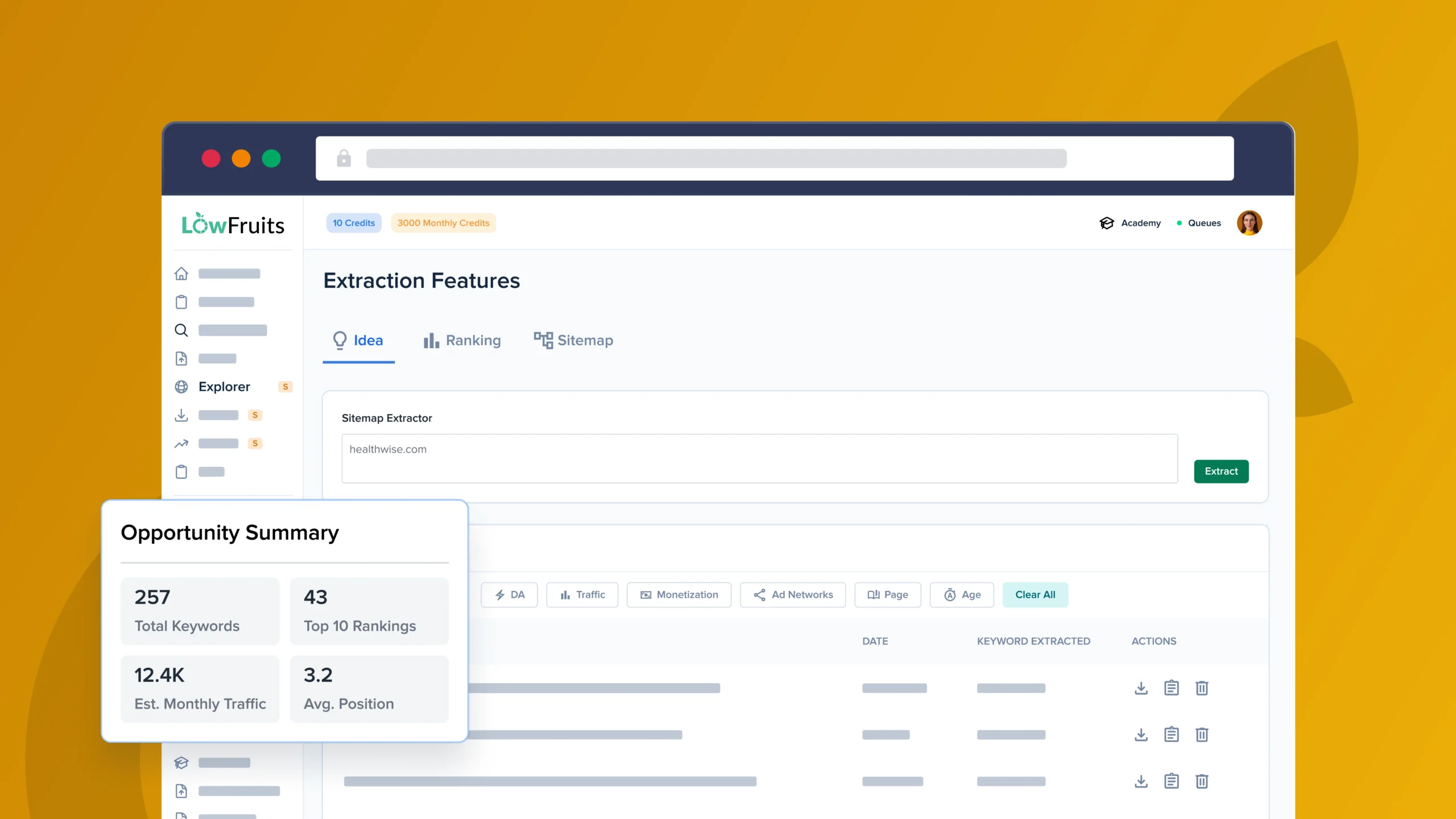
Keyword Extractor
Uncover competitors’ keywords, ranking positions, and content gaps to improve your own SEO strategy.
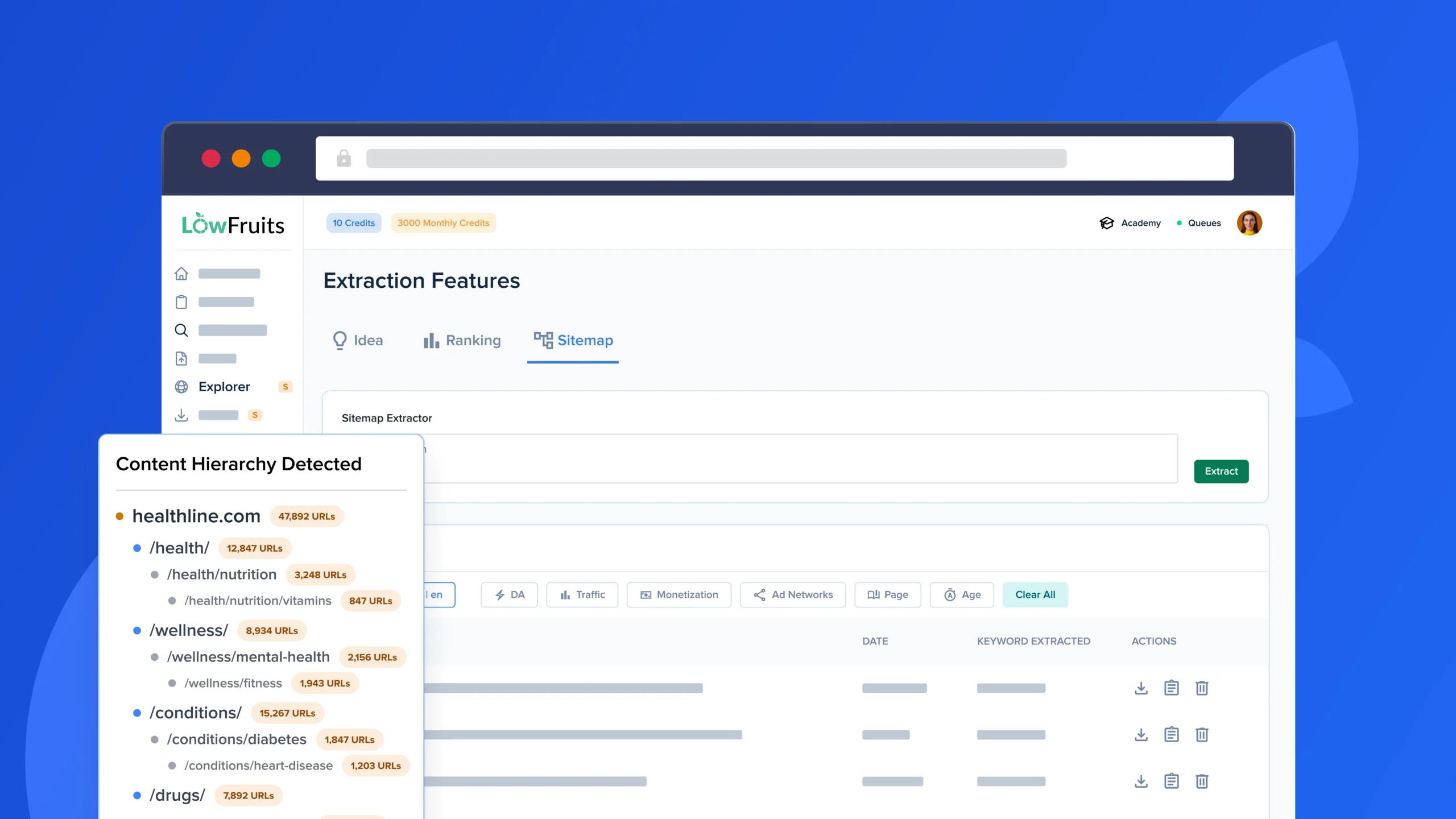
Sitemap Extractor
Extract competitors’ sitemaps to reveal their content strategies and find keyword opportunities for your website.
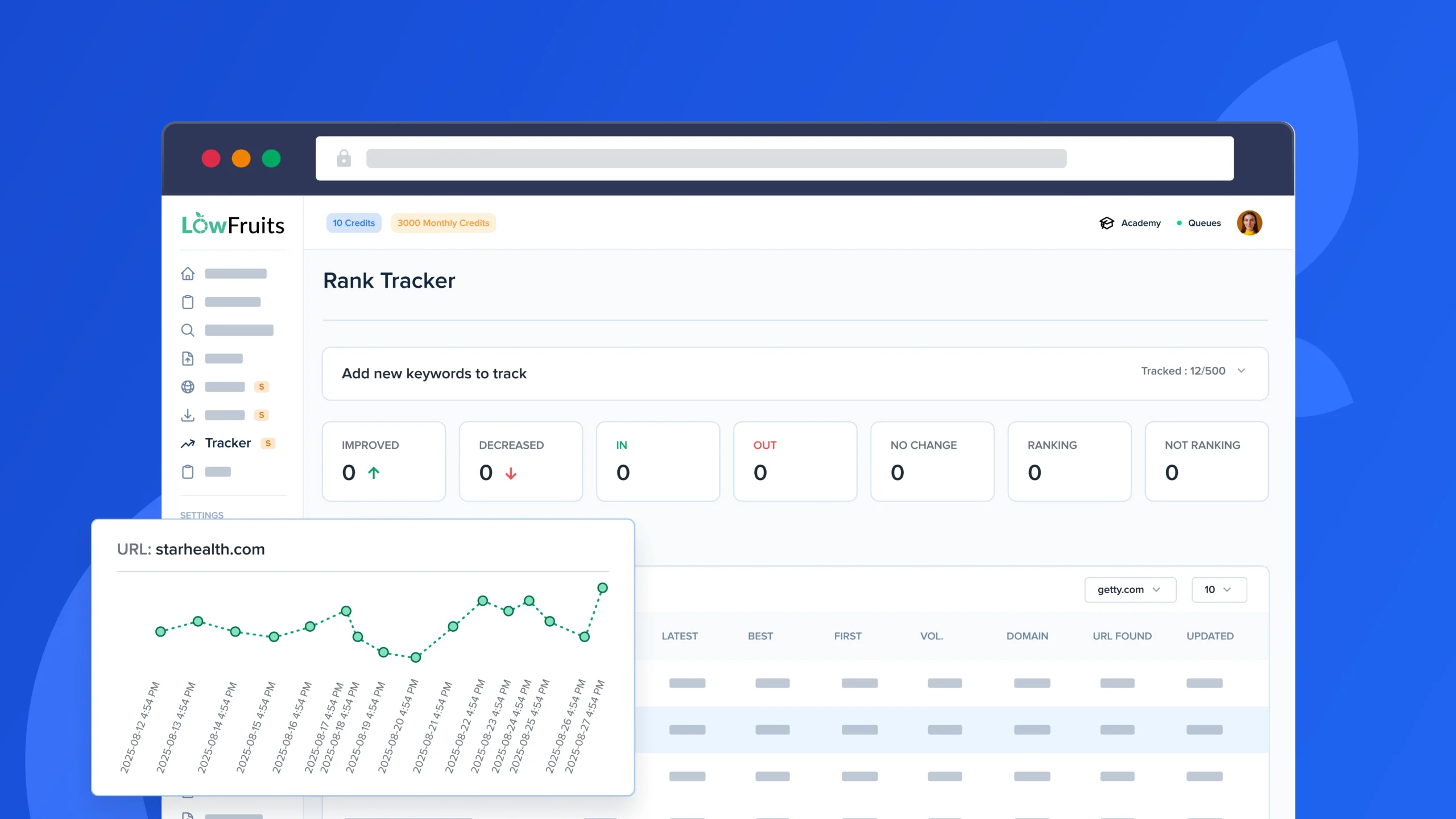
Keyword Rank Tracker
Track your most important keywords in Google and their position changes over time with easy visuals and reliable data.
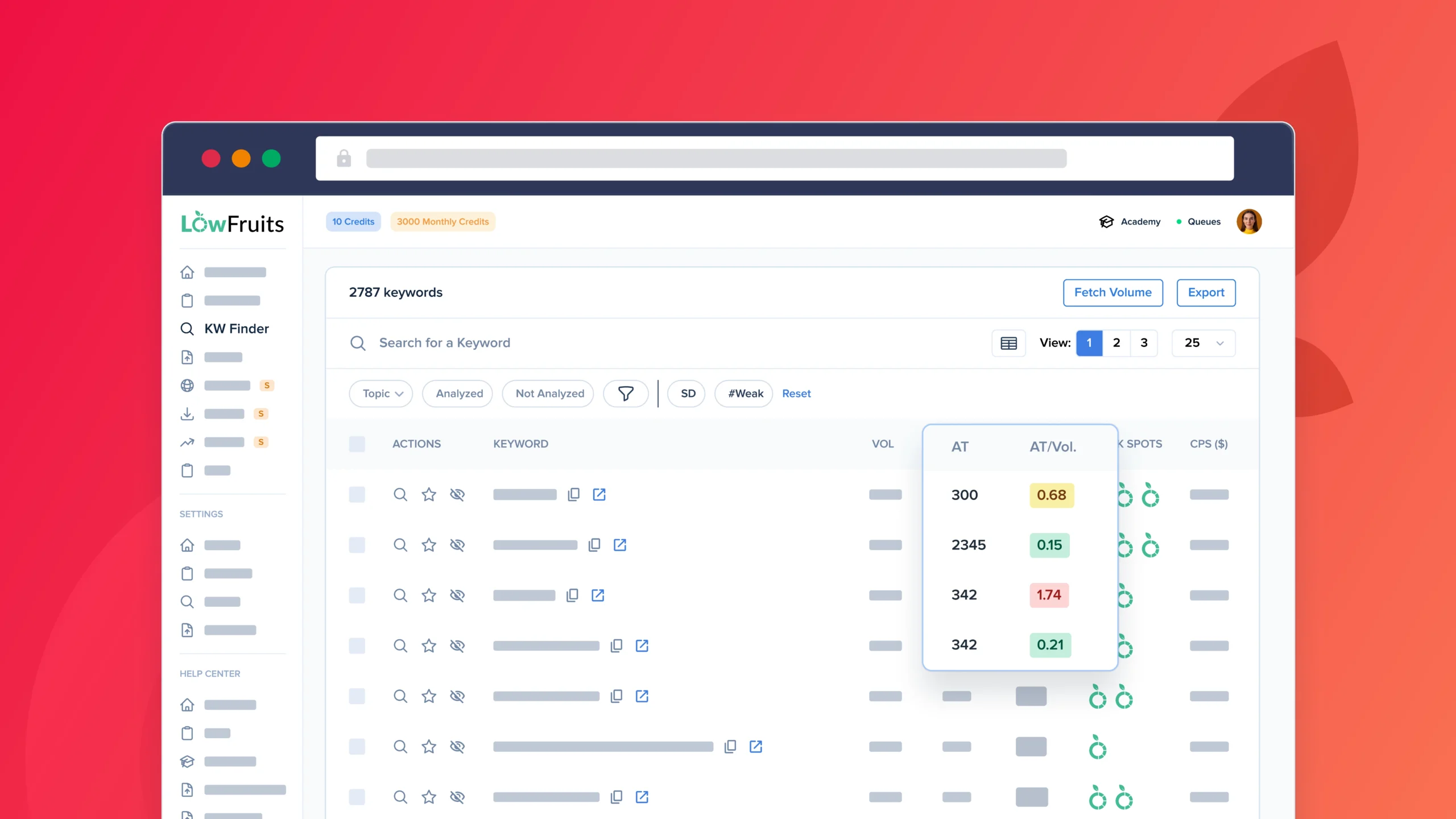
Allintitle & KGR Tool
Extract allintitle & Keyword Golden Ratio (KGR) data instantly. Identify easy keywords with real-time insights straight from Google.
The Best Keyword Clustering Tool for Improved Visibility
Maximize your content’s visibility in search results & drive more traffic to your site.
FAQs About LowFruits’ Keyword Clustering Tool
Get quick answers about creating keyword clusters in LowFruits. If your question is not listed here, then please contact us.
Our clustering algorithm analyzes multiple factors, including SERP similarity (which pages rank for each keyword), semantic relationships between terms, user intent signals, and natural language patterns. This multi-factor approach creates more accurate and useful clusters that guide your content creation efforts.
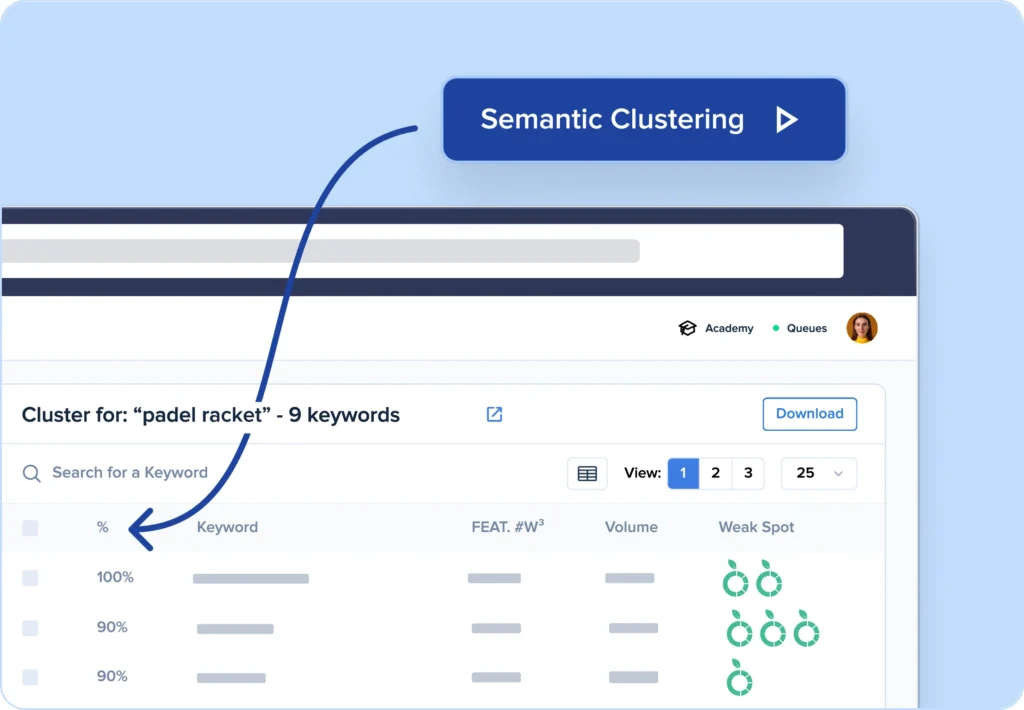
In LowFruits, you can cluster keywords by SERPs or semantics. In the SERP clustering method, keywords are grouped based on the percentage of URLs they share in the top 10 search results with the main keyword. This method focuses on grouping keywords with the same search intent.
Semantic clustering, on the other hand, focuses on the actual words used within search queries. You can set how many words you want your keyword cluster to share. For example, if you select 3 keywords, all results within the cluster will consist of those 3 keywords (and possibly more). This method is best for identifying additional long-tail keywords.
Yes! While our algorithm creates initial clusters automatically, you have full control to refine them. When in the Keyword Cluster Tool, simply select the “Settings” button and adjust the settings to your preferences. Once you’ve saved your selections, LowFruits will automatically recluster your keywords based on your updated settings.
Each cluster represents a potential piece of content. The primary keyword (the one with highest search volume) often makes a good title or H1, while secondary keywords can guide your subheadings and content sections. This method ensures you’re providing comprehensive topic coverage and aligning your content with search intent.
Absolutely. You can export your keyword clusters directly to your computer. The exports include all keywords in each cluster along with their metrics, making it easy to share with your content team or clients.
The Keyword Cluster Tool is available to both PAYG users and subscribers. To learn more about each plan, visit our pricing page.