Stop wasting time on content for keywords where you don’t stand a chance. I know; it’s harsh, and those high search volumes are really attractive, but this strategy just doesn’t work.
That’s why people pay the big bucks to SEO specialists to uncover the right keywords for their business.
But what if I told you that you could do the same thing yourself? And for free.
It’s really not that hard, despite what some “experts” try to make you believe. That’s why I’m going to give you all the secrets to understanding keyword metrics and how to interpret them for a better SEO strategy.
In This Article
Why Understanding Keyword Metrics Is Non-Negotiable for SEO
In today’s competitive online landscape, SEO guesswork is a recipe for wasted time and missed opportunities. Understanding keyword metrics is essential for:
- Making informed decisions: Stop relying on hunches and start basing your SEO strategy on real data.
- Prioritizing content: Focus your efforts on keywords that offer the best potential return for your time and resources.
- Measuring real progress: Track your SEO rankings and see what’s working (and what’s not) so you can continuously improve.
Plus, you don’t need to be an SEO analyst to leverage them to their full potential. Keyword metrics are really easy to grasp when you know how they work.
Let’s get into that next.
7 Essential Keyword Metrics to Know
These keyword metrics separate SEO winners from “wishful thinkers”. Master these, and you’ll be miles ahead of the game — and well on your way to higher rankings.
1. Search Volume
Keyword search volume is perhaps the most fundamental keyword metric you need to understand. It represents the average number of times people search for a specific keyword during a given time period, typically monthly.
You’ll often see monthly search volume abbreviated as MSV. However, each keyword research tool may use a slight variation.
Think of search volume as the size of your potential audience. If you’re fishing for traffic, search volume tells you how many fish are in that particular pond. A higher search volume means more people are looking for information related to that keyword, which could translate to more visitors to your website.
(Wait ‘til you read about keyword difficulty in our next section before you start targeting these high-volume keywords. There’s more to the story.)
It’s also important to note that search volume isn’t static. It can fluctuate based on:
- Seasonal trends (think “holiday recipes” in December)
- Current events and news
- Industry changes and developments
- Geographic location
- Device types used for searching
Google Trends is a great tool for investigating the popularity of a keyword over time. It doesn’t show search volume, but instead focuses on interest. It uses a scale of 1 to 100, with 100 being peak popularity for a specific term.
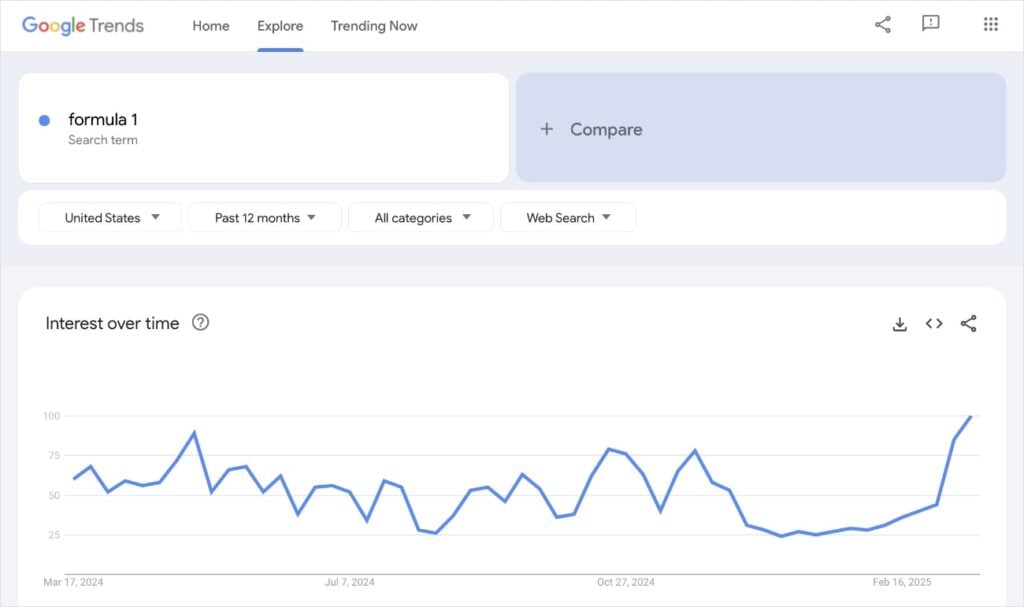
This free SEO tool can help you determine if a specific keyword is trending right now, meaning you should create content on the subject right now.
So, in summary:
Search volume = the number of searches for a specific term or phrase in search engines
2. Keyword Difficulty
Keyword difficulty (KD) is a metric that indicates how challenging it would be to rank for a particular keyword in organic search results. This metric is typically expressed as a percentage or on a scale of 0-100, where higher numbers indicate greater difficulty.
In LowFruits, keyword difficulty ranges from 1-3, with 1 being the easiest. You’ll see this metric as the SERP Difficulty Score (SD) in any LowFruits keyword report.
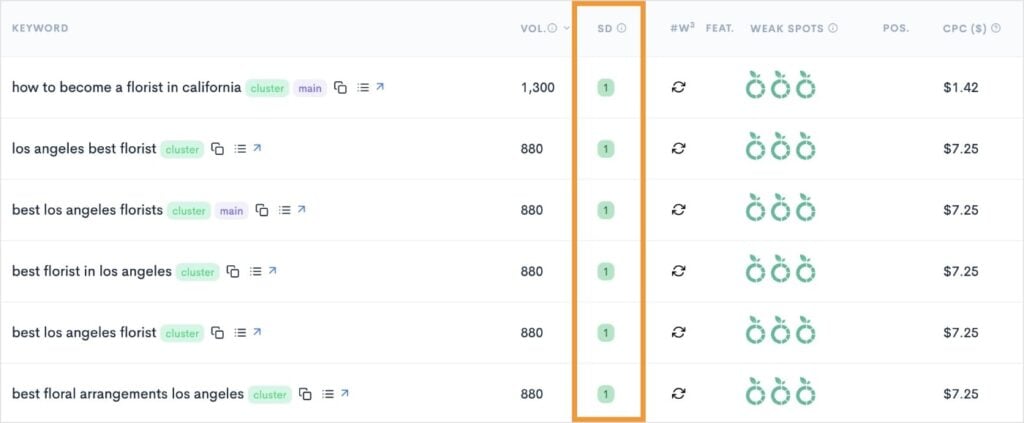
Understanding keyword difficulty is crucial because it helps you:
- Set realistic expectations for ranking potential
- Allocate resources effectively
- Identify low-hanging fruit opportunities
- Balance effort against potential returns
Now, here’s where things get really interesting:
If you want a winning keyword strategy, you should aim for keywords with high search volumes and low difficulty. These are quick SEO wins for small business owners and new websites.
They don’t require a high domain authority (DA), nor do you need a lot of backlinks to rank for them.
They’re easy keywords, ripe for the taking!
In LowFruits, we take this idea of finding low-competition keywords one step further.
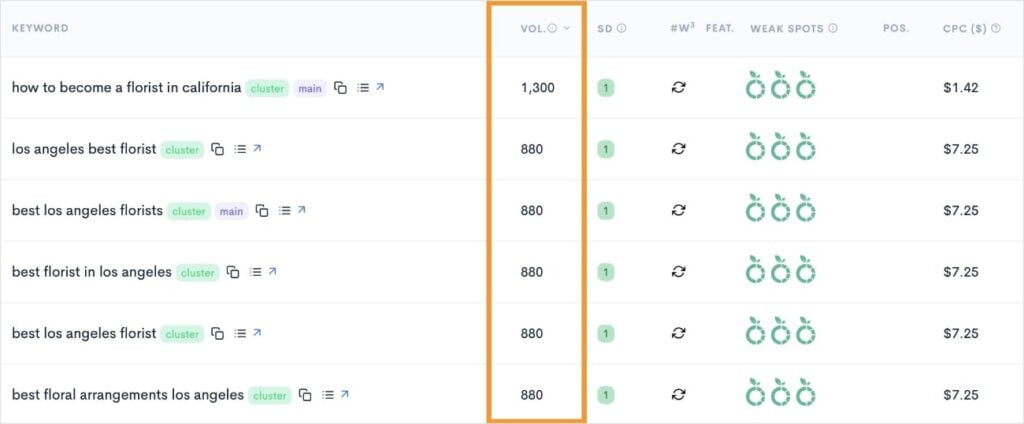
Take a look at the highlighted column below:
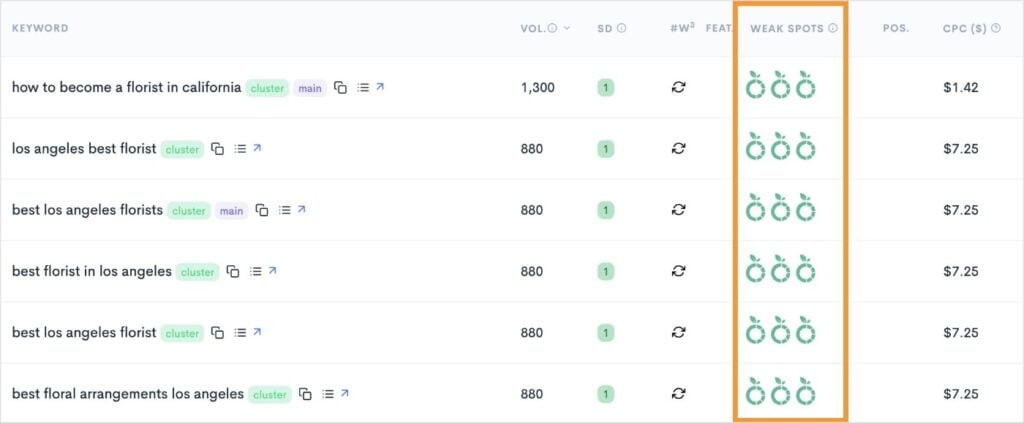
Weak Spots are low-authority domains ranking in the top 10 search results. Every icon represents one of these competitors.
So, the more Weak Spots there are, the easier it is for you to outrank the competition and grab one of the top positions.
This is where the rankings (and money) are. Seriously. If you’ve been sleeping on low-competition keywords, you need to change that ASAP.
They’re an SEO pro’s dream for new and small websites. Go after them!
Did you know? According to SEO statistics, the top 3 organic results in Google get 68.7% of all clicks. All the more reason to target the right keywords in your content.
3. Cost Per Click
Now, let’s talk about money — kind of. Cost per click (CPC) is a metric from the world of paid advertising, but it’s surprisingly useful for SEO too.
CPC is the average price advertisers pay each time someone clicks on their ad when they bid on a specific keyword in Google Ads.
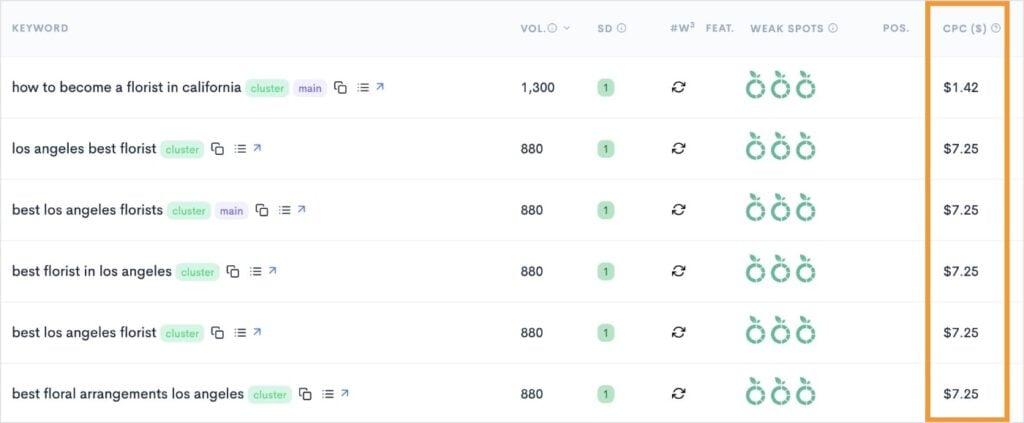
Why it matters (for SEO): CPC is a fantastic indicator of commercial value and buyer intent.
Think about it: if companies are willing to pay real money for clicks on a keyword, it means those keywords are likely to drive sales or leads. Even if you’re focused on organic SEO (free traffic!), high CPC keywords can signal keywords where people are ready to buy.
This translates to more conversions for your business. Score!
Learn how to find buyer-intent keywords to grow your revenue and organic traffic.
P.S. Finding buyer-intent keywords in LowFruits is super easy. When you’re in a keyword report, just click the pre-analysis filter.
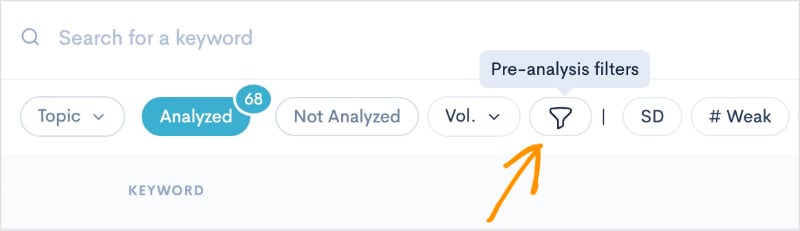
Then, toggle the high-intent filter on. (These keywords have commercial and transactional intent, making them ideal for driving targeted traffic to your site.)
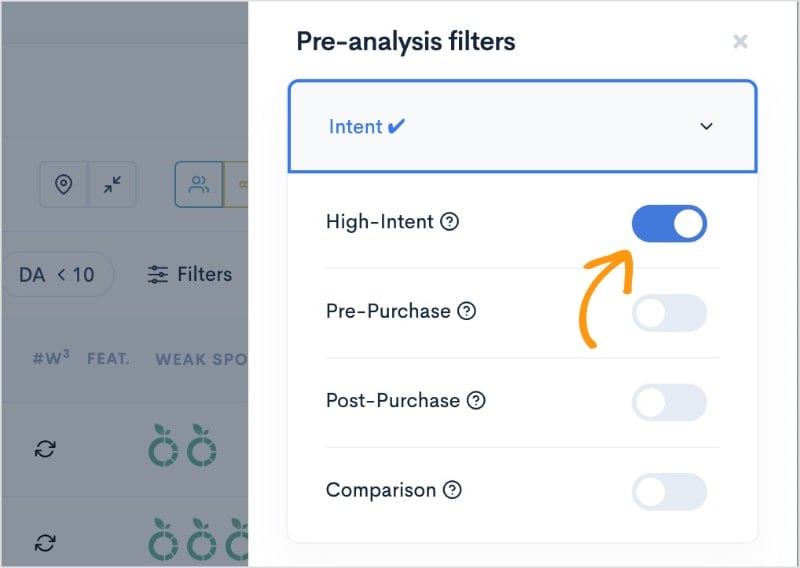
And that’s it!
Your report will now show buyer-intent keywords that reflect users prime to convert.
4. Search Intent
This is where we get a little more… psychological.
Search intent is all about understanding why someone is searching for a keyword. What are they really trying to find?
Search intent is the underlying goal or purpose behind a user’s search query. It explains what they are trying to achieve when searching in Google.
There are 4 main types of search intent:
- Informational: “What are keyword metrics?” – They want to learn something.
- Navigational: “Facebook login” – They want to go to a specific website.
- Transactional: “Buy running shoes online” – They want to make a purchase.
- Commercial Investigation: “Best running shoes 2025” – They’re researching before buying.
Why it matters: Google is really good at understanding search intent. If your content doesn’t match the intent behind a keyword, you’re going to have a tough time ranking, no matter how well you optimize everything else. Matching content to search intent is crucial for both ranking and keeping visitors happy.
So, how do you find out the intent behind a keyword?
The answers are on the SERPs. Check out the top-ranking results for your desired keyword. What are they doing? And what kind of content are they? Blog posts? Product pages? Videos? That’s a big clue to the dominant search intent.
Example: Someone searching ‘what are keyword metrics’ isn’t looking for a product page selling keyword research tools. They need a blog post or guide explaining what keyword metrics are. Informational intent!
(We hope we’re doing a good job of this so far. 😅)
What’s cool about LowFruits is that you can do a SERP analysis directly in the platform. Just click View the SERP next to any keyword.
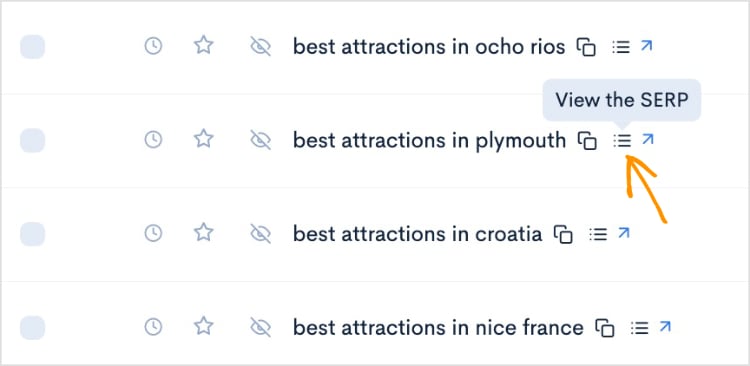
This will open a pop-out window with the top search results for that query.
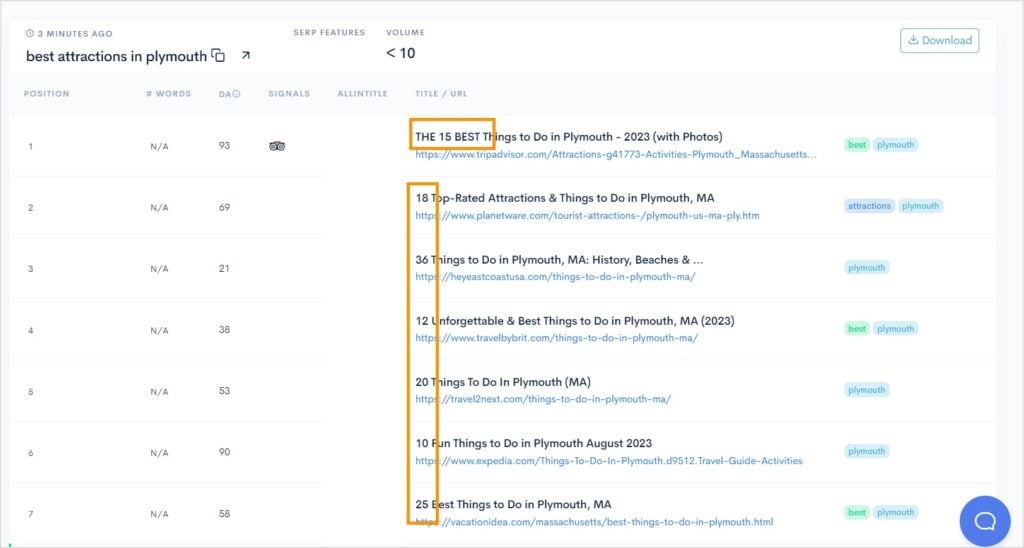
In the example above, all the results are listicles. Within the context of tourism (attractions in Plymouth), this signals informational intent.
And there you have it!
Now you know how to find the search intent of any keyword.
5. Keyword Density
Okay, let’s talk about a metric that’s a bit old school, but still worth knowing about: keyword density.
Keyword density is the percentage of times your target keyword appears in your content compared to the total number of words on the page.
Some tools will ding you if your percentage is too low, like the All in One SEO WordPress plugin.
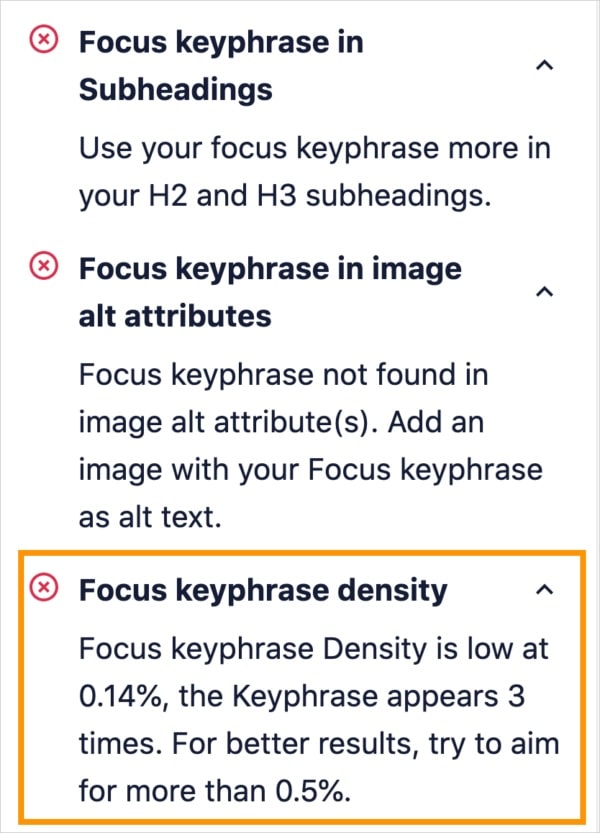
Why it matters (less so now): Back in the day, website owners used to stuff keywords into their content because it helped them rank higher. However, this black hat SEO tactic doesn’t work anymore. Search engines are much smarter now, and over-optimizing keywords can actually hurt you (keyword stuffing = penalty!).
Today, there’s no need to obsess over a specific percentage for keyword density. Instead, just think of it as a reminder to incorporate your focus keyword naturally into your content.
This will produce a better reading experience for users while still being search-friendly for Google.
6. Ranking Position
This one’s pretty straightforward. Ranking position is simply where your webpage shows up in the search results for a given keyword.
It’s important because the higher you rank = the more eyes on your content = more clicks = more traffic.
Obvious, right?
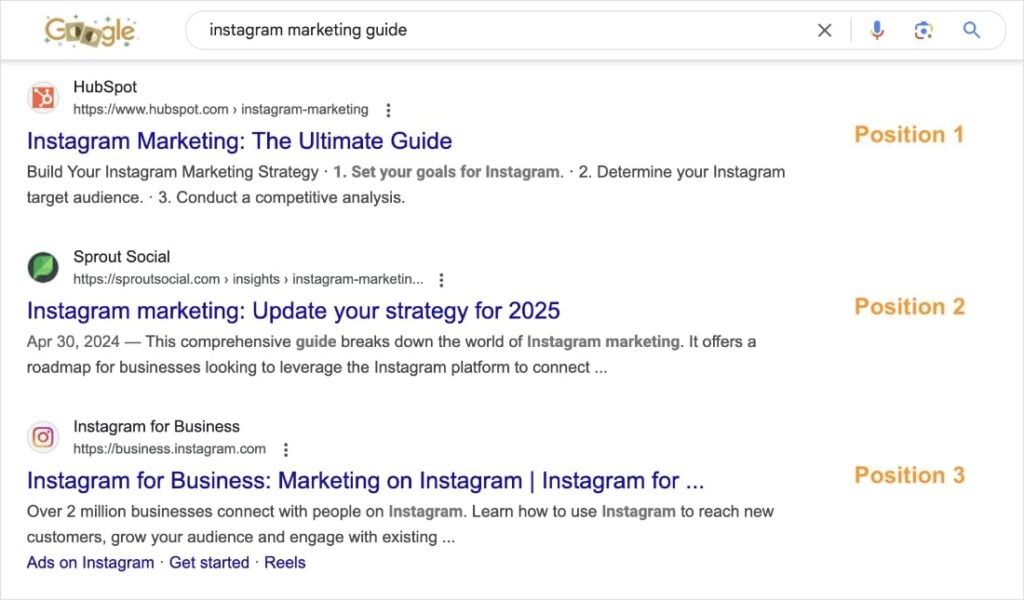
Well, it can be trickier to track than you might think. (Manual searches in Google, anyone?)
This tutorial shows you how to check Google rankings, but I want to point out one method real quick.
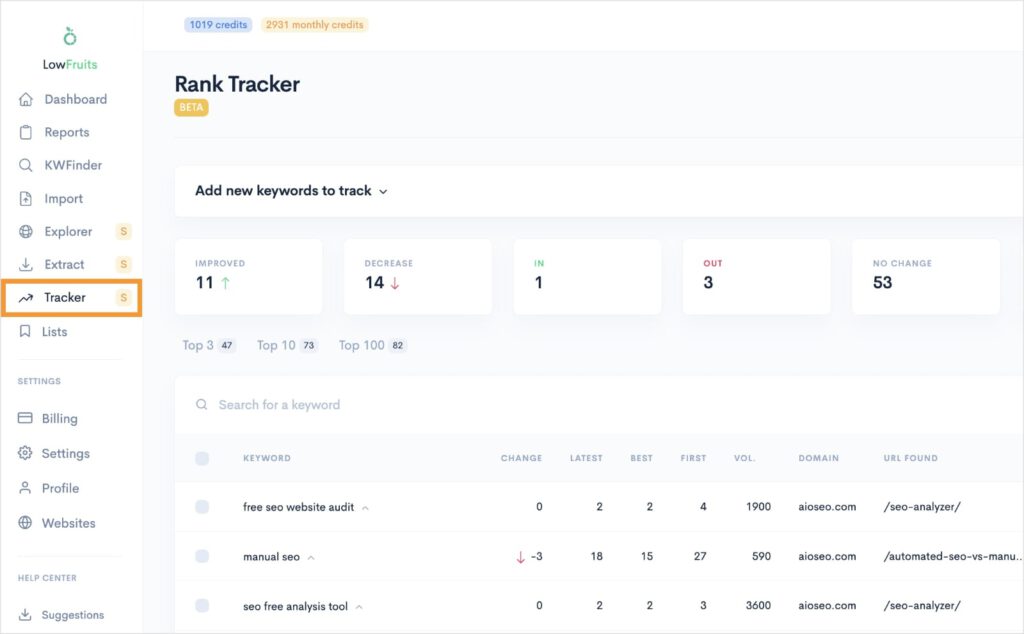
Rank tracker tools are great for keeping an eye on your most important keywords and their positions.
LowFruits has a beginner-friendly Rank Tracker that makes this process fast and easy. You’ll get a dashboard that shows you exactly how your keyword positions have changed since the last fetch from Google.
You can also expand any of your ranking keywords to visualize how their positions have changed over time.
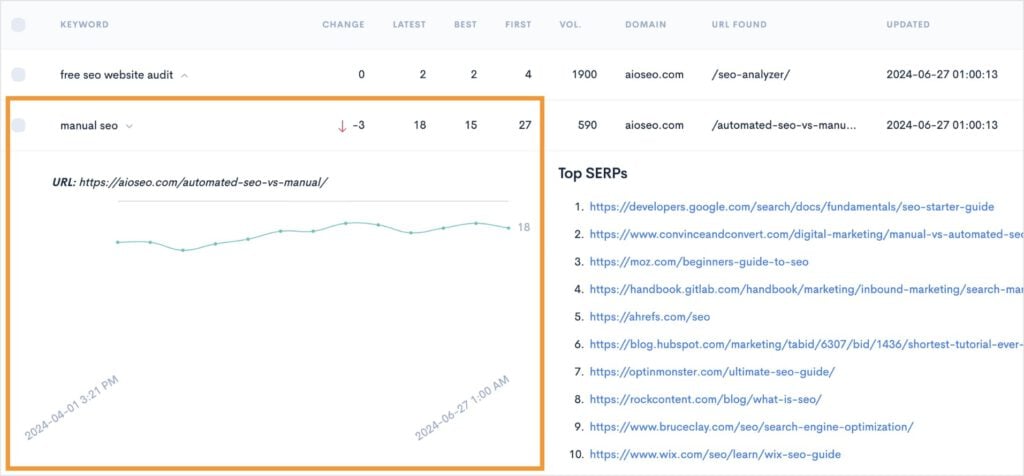
See one of your best keywords take a sudden fall? Time to investigate! Rank tracking is critical for spotting issues (and opportunities) for your target keywords.
Rank Tracker requires a LowFruits subscription.
7. Clickthrough Rate
Clickthrough rate (CTR) measures the percentage of users who click on your website after seeing it in search results. This metric helps you understand how well your page attracts clicks relative to its visibility.
Here’s the official formula: CTR=Impressions ÷ Clicks × 100%
And some factors that influence it include:
- SEO titles
- Meta descriptions
- Ranking position
Why it matters: CTR is a measure of how compelling your search snippet is. Even if you rank well, a low CTR means people aren’t convinced to click on your result. (That’s a problem!)
Conversely, boosting your organic CTR is like making your website look extra inviting.
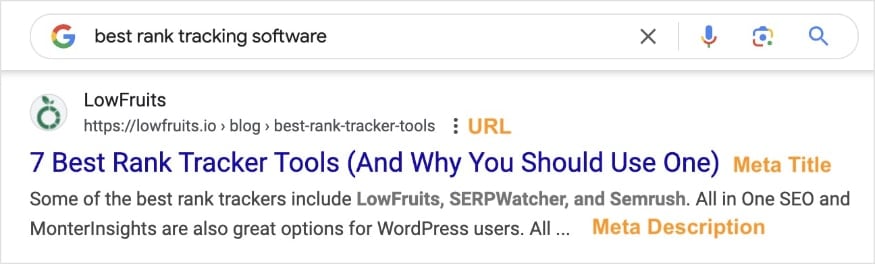
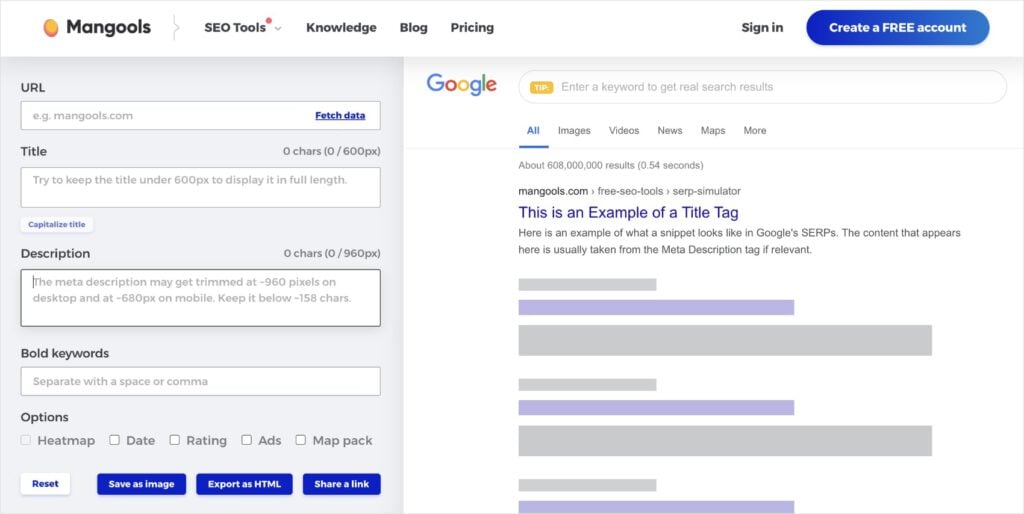
That’s why it’s important to optimize your search listing for clicks. You can use SERP preview tools to see what your listing looks like before going live.
I like the Mangools SERP Simulator because it’s a no-fuss, free tool. The interface is clean, and it does exactly what you need it do — preview your metadata in SERPs.
How to Use Keyword Metrics to Improve Your SEO
Knowing the metrics is powerful, but putting them to work is where you’ll see real SEO gains. Let’s break down how you can use these keyword metrics to create a stronger SEO strategy and get better results — all on your own.
Keyword Research – Find Your Best Ranking Opportunities
- Identify your niche. Start by clearly defining what your website is about and who your target audience is. This will guide your keyword research.
- Brainstorm seed keywords. Think about the core topics and terms related to your niche. What would someone type into Google to find what you offer?
- Use keyword metrics to find easy ranking opportunities. Focus on keywords that have decent search volume, realistic keyword difficulty, and high relevance.
Content Creation – Create Content That Ranks and Engages
- Align content with search intent. For each keyword, think about what users are trying to achieve. Do they want to learn, buy, or something else? Choose keywords that align with your business goals. (Example: If you want to increase sales, focus on commercial and transactional keywords.)
- Naturally Incorporate Keywords: Use your target keywords in your content, but don’t go overboard. Focus on writing clear, helpful, and engaging content for your audience first. Keywords should enhance, not detract from, readability. You can check your keyword density to find a good balance of search- and user-friendliness.
- Optimize your search snippets for more clicks. Write compelling SEO titles and meta descriptions that pique users’ curiosity. This strategy can help you improve clickthrough rates from organic search.
Want help optimizing your content?
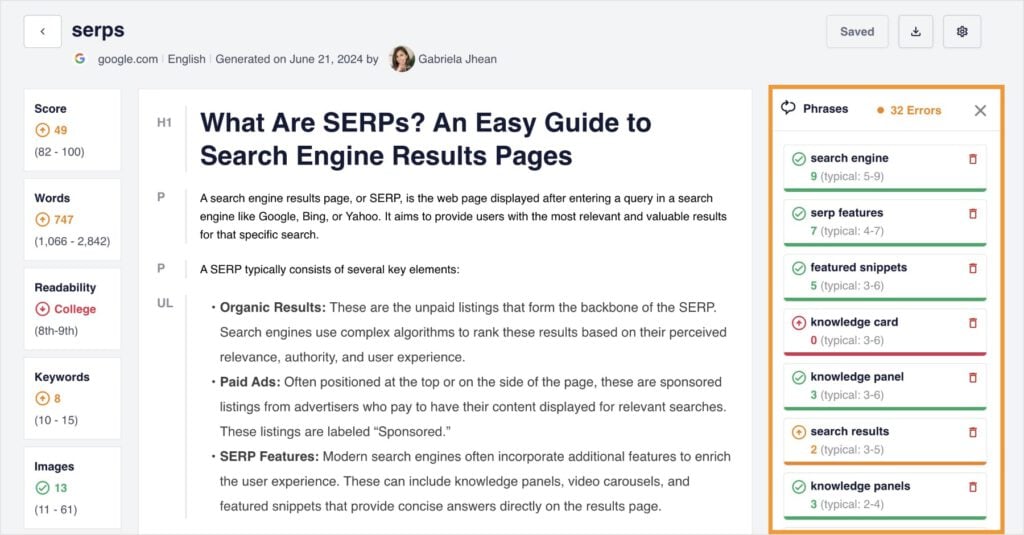
Personally, I like to use SEOBoost for on-page SEO. You can type directly in the platform or paste from your favorite word processor. SEOBoost gives you related keyword ideas and monitors their density for you.
It’s a good way to check your keyword optimizations and maximize your content’s reach.
Performance Tracking – Monitor and Refine Your Strategy
- Set up performance tracking. Use tools like Google Search Console and Google Analytics (both free) to track your organic performance.
- Monitor your ranking positions. Track how your pages are ranking for your target keywords over time. Are your rankings improving? The LowFruits Rank Tracker can fetch your positions automatically from Google so you don’t have to check them manually.
- Analyze organic traffic. See which keywords are driving organic traffic to your website. Identify your top-performing keywords. If you see them start to slip, it’s time to investigate! You may need to refresh your content to give it a boost in rankings.
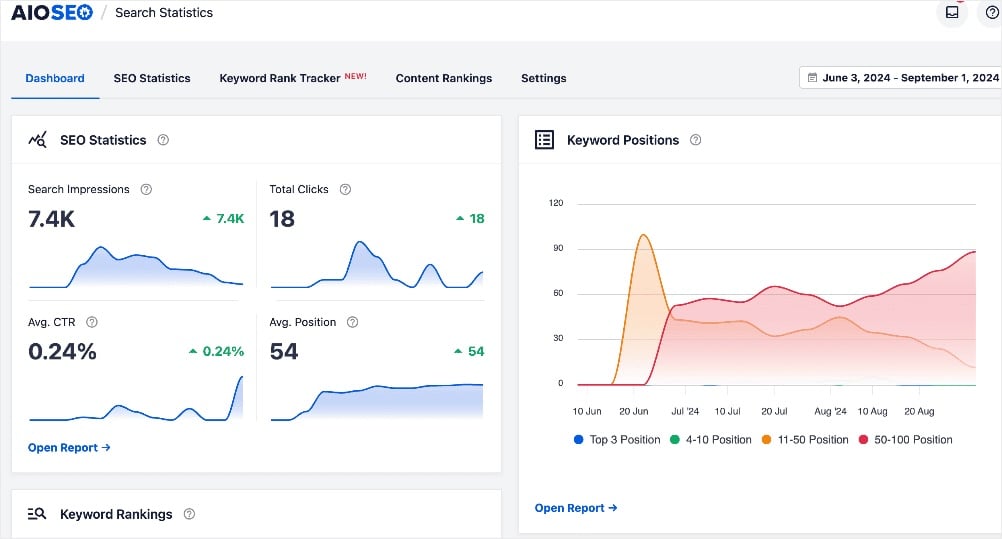
Are you a WordPress user? All in One SEO has a Search Statistics module that presents your most important GA4 analytics directly in WordPress. You’ll get a user-friendly dashboard that presents a high-level view of your organic performance, and you can explore reports in greater detail as needed.
Keyword Metrics FAQs
Which keyword metric is the most important?
There’s no single “most important” metric. The combination of search volume, difficulty, and intent typically provides the most valuable insights. It’s also important to consider the keyword’s relevance to your business and your SEO goals.
How do I track keyword metrics?
There are several tools you can use to track keyword performance. Some popular free choices include Google Search Console and Google Analytics. For paid options, LowFruits is a budget-friendly choice with a powerful Rank Tracker. You can also use SEO platforms like Semrush and Ahrefs.
Should I only target high-volume keywords?
Not necessarily. High search volume = high competition = hard to rank. And while it’s natural to include some of these keywords in your content, it’s not always the best approach to target them specifically. Instead, focus on lower-volume keywords that have clearer search and lower difficulty. These keywords are very valuable for small businesses because they drive targeted traffic and often have higher conversion rates.
How often should I check my keyword metrics?
Monthly is a good starting point for most DIY website owners and small businesses. This frequency allows you to get a good idea of how your keywords are performing without the distraction of daily fluctuations. If you notice that you want to keep a closer eye, you can always bump it up to a bi-weekly analysis.
Final Thoughts
Keyword metrics aren’t some secret code only “experts” can decipher. They’re data points that you can collect and leverage to your business’s benefit.
Remember these key takeaways from today’s post:
- No single metric tells the complete story – always look at the bigger picture
- Balance quantitative data with qualitative understanding of your audience
- Tools are helpful, but understanding how to interpret data is where you can really excel
- Regular monitoring and adjustments are crucial for success
As you apply these metrics to your SEO strategy, keep in mind that success often comes from finding the right balance. Don’t get too caught up in pursuing perfect numbers — focus on creating value for your audience while using metrics as guides rather than absolute rules.
Your SEO and organic traffic will thank you.