Is your content lost in a sea of search results?
Sometimes even the best content can leave creators and business owners scratching their heads on why it won’t rank.
The key to breaking through this barrier lies in creating SEO-optimized content, aka web pages Google wants to serve in search results.
It’s not magic or complex, just a strategic approach for getting your web pages crawled and indexed by search engines.
In this guide, I’ll clarify what SEO-optimized content is, explain its importance, and how to write it. You’ll also get 7 tips that I’ve never shared anywhere else.
Let’s go.
In This Article
- What Is SEO-Optimized Content?
- Why Writing SEO-Optimized Content Matters
- How to Write SEO-Optimized Content
- 1. Start With Smart Keyword Research
- 2. Understand & Match Search Intent
- 3. Craft Compelling Headlines & Meta Descriptions
- 4. Structure Your Content for Readability & Scannability
- 5. Write High-Quality, Comprehensive Content
- 6. Include Your Keywords (Naturally!)
- 7. Optimize Your Images for SEO
- 8. Add Strategic Internal Links
- 7 Quick Tips for Writing SEO-Optimized Content
- Common Mistakes to Avoid When Writing
- Master SEO Content, Master Your Rankings
- FAQs: Your Questions Answered
What Is SEO-Optimized Content?
SEO-optimized content is material created with a dual purpose:
- To rank high in search engine results pages (SERPs)
- To provide genuine value to users.
It serves both search engine algorithms, ensuring crawlability and relevance, and human readers, delivering readability and usefulness.
The goal is to help search engines easily understand what your content is about. This way, they can present it to users searching for relevant information.
Why Writing SEO-Optimized Content Matters
Creating SEO-friendly content is fundamental to your online success. It directly impacts your ability to connect with your audience and achieve your business goals.
Some of the most compelling reasons for writing SEO-optimized content include:
- Increased Organic Traffic: Optimizing your content helps you attract free, qualified visitors to your site. This traffic is highly valuable because users are actively searching for what you offer.
- Higher Rankings: Well-optimized content is more likely to appear on Google’s first page, where the majority of clicks happen. This significantly boosts your visibility.
- Improved User Experience: SEO best practices, like clear structure and readability, make your content more enjoyable for visitors. This keeps them engaged and on your site longer.
- Enhanced Authority & Credibility: Consistently producing high-quality, SEO-friendly content establishes your brand as a knowledgeable and trustworthy resource in your industry.
- Better Conversions: Content that ranks well and provides value guides users towards desired actions. This can include driving more leads, sales, or other key conversions for your business.
Did you know? According to SEO statistics, “75% of users never go past the first page of search results.” That’s why it’s paramount for your content to rank in the top positions.
How to Write SEO-Optimized Content
Now, let’s get into what you came here for: the steps for writing SEO-optimized content.
I follow this exact process when writing my own content and those of clients. It’s a fail-proof way to give your content the best shot at ranking.
1. Start With Smart Keyword Research
The first step is to understand what your audience is actually searching for. This is where keyword research comes in. You need to find the specific words and phrases that indicate a need your content can fulfill.
Focus on search intent, which is the underlying goal behind a user’s search query. Is their intent:
- Informational (to learn)?
- Navigational (to find a site)?
- Transactional (to buy)?
- Or commercial (to research before buying)?
Aligning your content with the correct intent is crucial. The good news is LowFruits can help with this process.
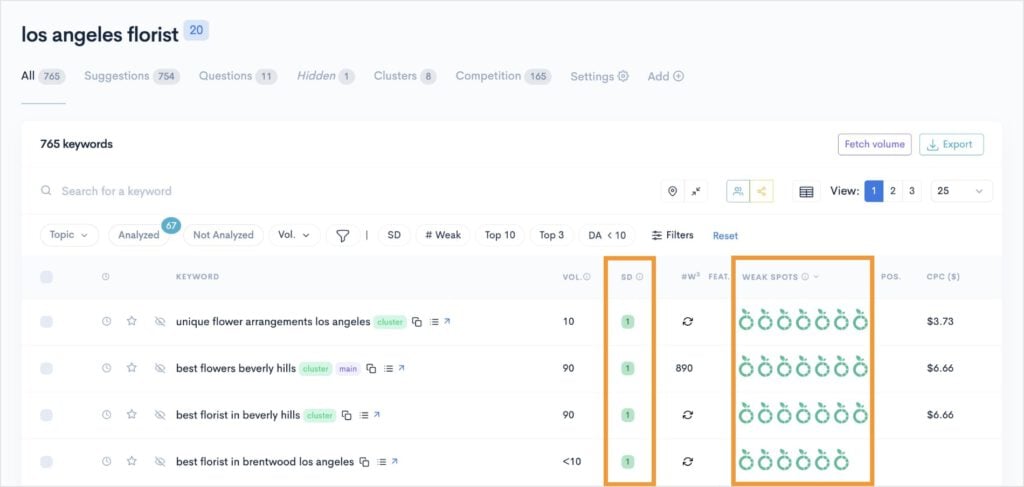
LowFruits is ideal for finding high-value, low-competition keywords. It helps uncover Weak Spots in SERPs, which are low-authority websites ranking in the top 10 search results (aka competitors that are easy to beat).
Combine this data with a low SERP Difficulty Score (SD, represents keyword difficulty), and you’ll have a list of easy keywords to target.
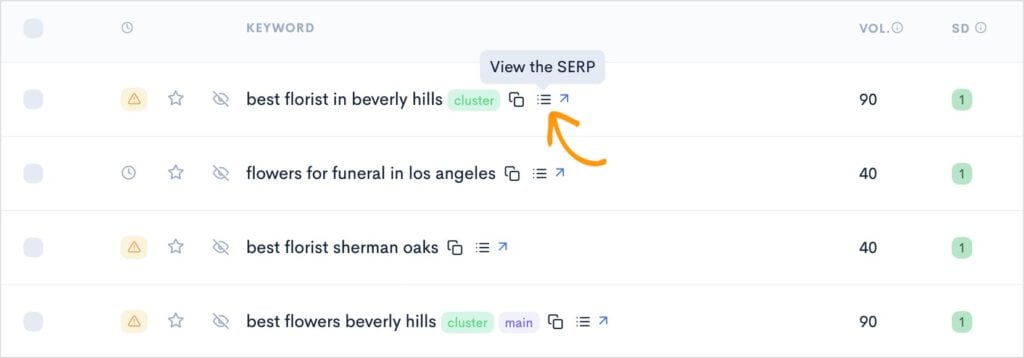
You can also click on the View the SERP button next to any keyword to learn its search intent.
LowFruits will show you the top-ranking domains, and you can explore the content to determine what users (and search engines) are looking for.
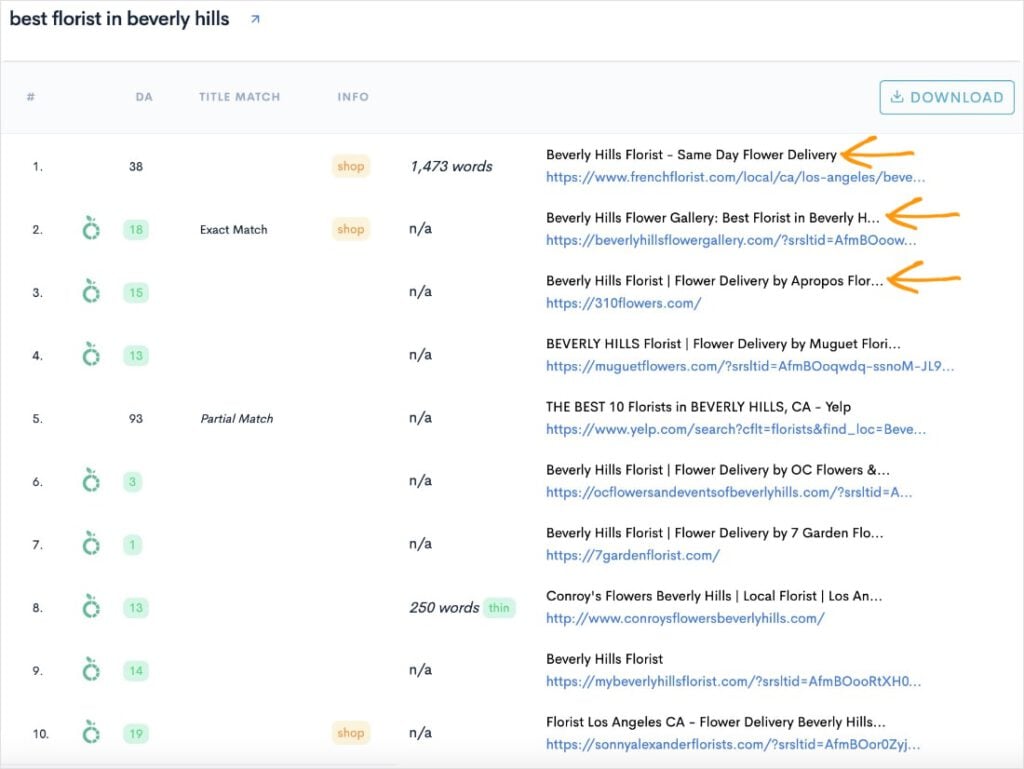
These insights will inform your own SEO strategy and content creation efforts.
2. Understand & Match Search Intent
I already explored search intent in the last step, but I really want to stress its importance.
That’s why you’re going to hear about it again. 🙂
Understanding search intent is crucial for ranking. Google prioritizes content that answers the user’s true need. If your content doesn’t match the intent behind a keyword, it will struggle to rank, regardless of other optimizations.
To check intent, you’ll want to do a SERP analysis for your target keyword. This process involves looking at the top search results and asking yourself the following questions:
- What kind of content currently ranks?
- Are they blog posts, product pages, videos, or listicles?
- Are there content types you haven’t explored yet, like videos?
The dominant content type provides a big clue to Google’s preferred intent. For example, if “best coffee makers” shows shopping carousels and product reviews, a thin affiliate blog post will struggle to appear in the top 10.
Let’s look at another example from LowFruits.
After clicking “View the SERP” next to the keyword “best attractions in plymouth,” I got the following results:
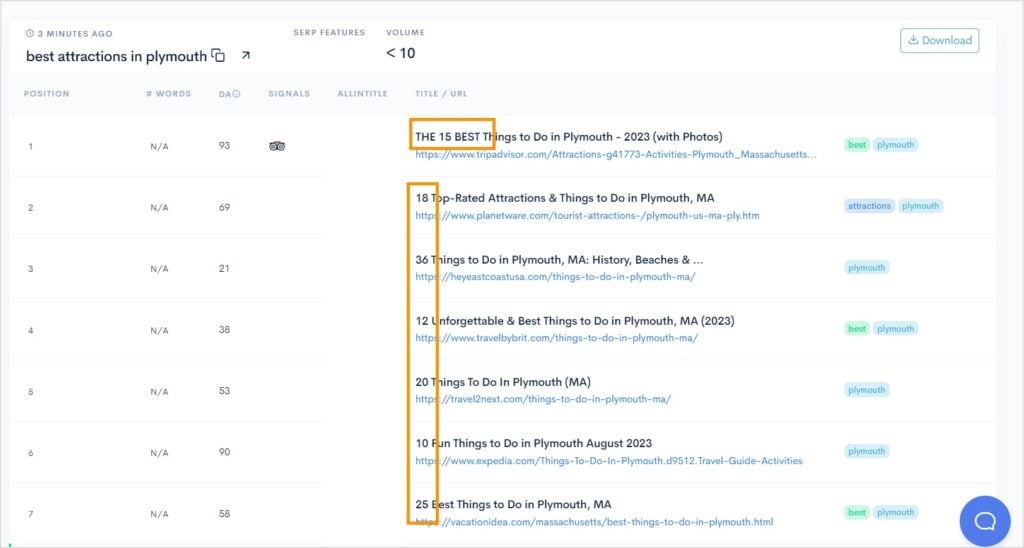
Just by looking at these SEO titles, I can tell that the best piece of content for this keyword is a listicle.
Ultimately, a SERP analysis allows you to align your content type to what’s already out there — and then, make it better.
3. Craft Compelling Headlines & Meta Descriptions
Your SEO title and meta description are your content’s first impression on Google. They directly influence whether users click on your result, impacting your organic clickthrough rate (CTR).
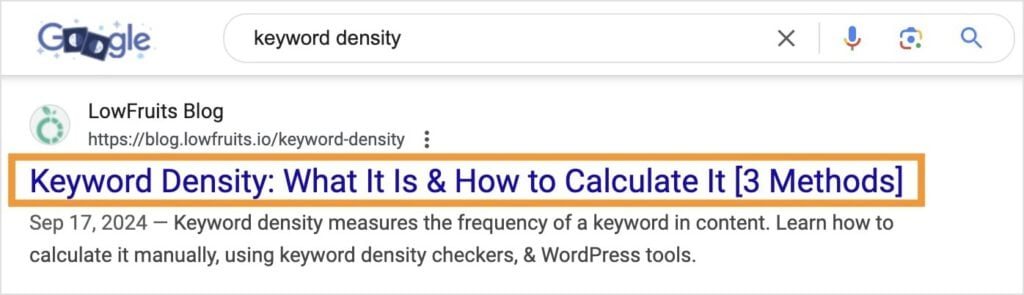
SEO Title: This is the blue clickable link in search results. It should include your primary keyword, be compelling, and be under 60 characters to avoid truncation.
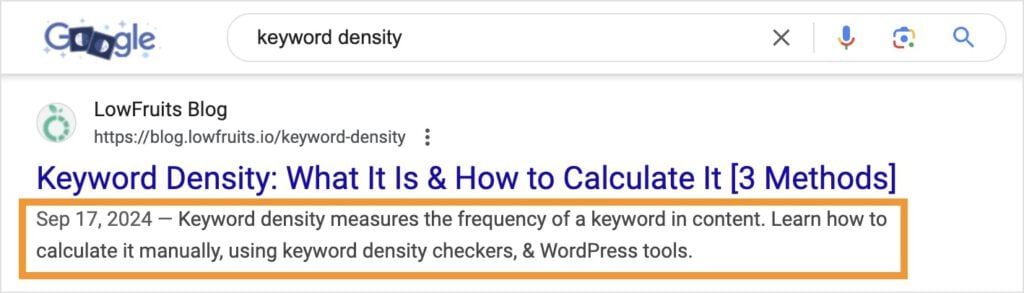
Meta Description: This is the text summary below your clickable title. Aim to keep it under 160 characters. It should accurately summarize your content and entice clicks.
URL Structure: Keep your URL concise, clear, and keyword-rich.
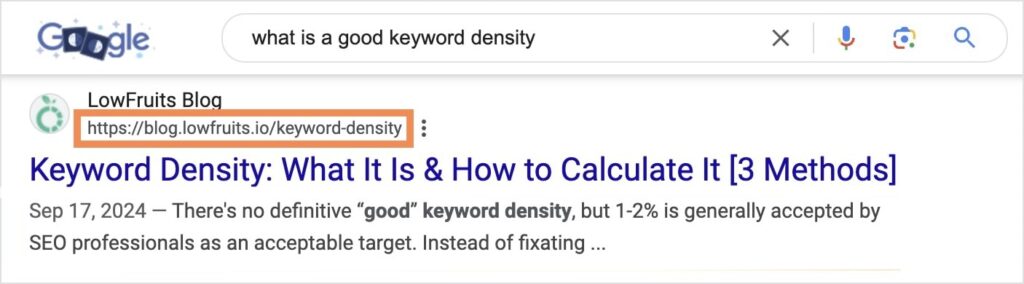
I recommend using a SERP preview tool to see how your metadata will look in search results before publishing. After 6+ years in SEO, I still do this for every post or page I publish.
4. Structure Your Content for Readability & Scannability
Well-structured content benefits both user experience and search engine understanding.
- Use an H1 for your main title, and only have 1 per page.
- Break up content with subheadings (H3, H4). These organize information logically and help users and search engines grasp the overall content. Include keywords naturally here.
- Improve scannability by using short paragraphs, bullet points, and numbered lists.
- Use ample white space to prevent text from appearing daunting.
These techniques will help you improve your readability score and engage your audience more effectively.
5. Write High-Quality, Comprehensive Content
“Content is king” remains true. And frankly, I think that will always be the case.
Your content must provide real value and thoroughly answer user questions. Aim for comprehensiveness over arbitrary word counts, and be thorough when covering a topic.
It’s also important to establish expertise, experience, authority, and trustworthiness (E-E-A-T). This framework is used by Google Search Quality Raters to assess the content quality of a web page.
Furthermore, keep an eye on your bounce rates. This metric represents how many users came to your website, didn’t visit any other pages, and left.
If Google sees high bounce rates, it signals dissatisfaction, which can indirectly harm rankings.
Use SEO tools like Google Analytics to monitor bounce rates and other important organic performance metrics.
6. Include Your Keywords (Naturally!)
Integrating keywords into your content helps search engines understand what your page is about. It also reaffirms readers that they’re in the right place (related to the query they performed in Google).
Here are some tips for writing SEO-optimized content that’s keyword-rich:
- Use your focus keyword in the H1, introduction, body copy, and conclusion.
- Sprinkle your focus keyword and related keywords in subheadings.
- Avoid keyword stuffing! This is an outdated black hat SEO that can get you penalized.
- While some tools measure keyword density, focus on natural incorporation for a better user experience.
Content optimization tools can help you with this process. One of my personal favorites is SEOBoost. I’ve been using it for over a year and have really enjoyed how easy it is to make smart keyword optimizations.
You can type directly into the platform or paste from another word processing tool. You get real-time feedback on your optimizations and recommendations for related terms.
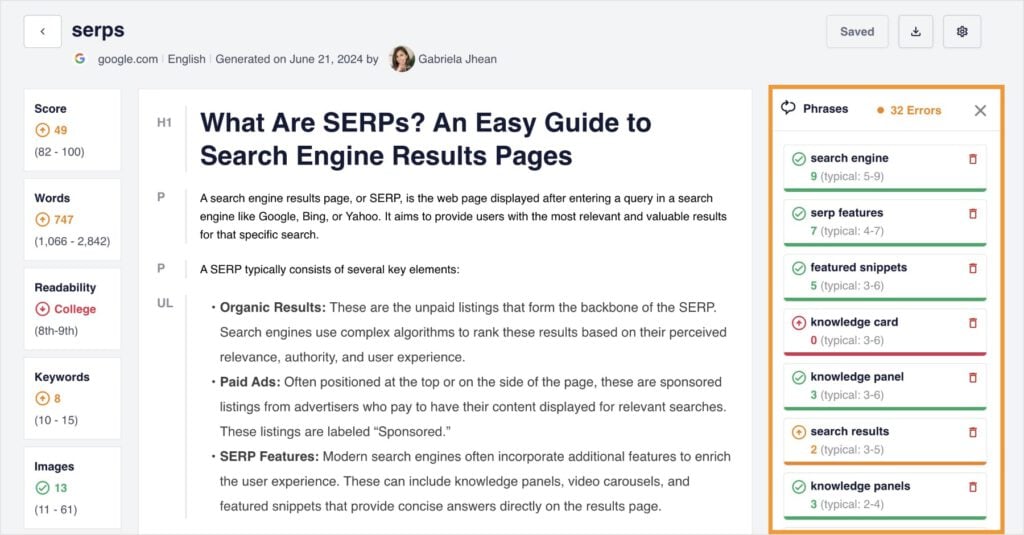
It’s intuitive and visually appealing with its color-coded system.
Pro Tip: If you have a WordPress website, the All in One SEO (AIOSEO) plugin integrates with SEOBoost. This means you can get the same feedback directly within the WordPress editor. AIOSEO also has a TruSEO Analysis, which does additional content checks, like the Focus Keyphrase Checklist shown below.
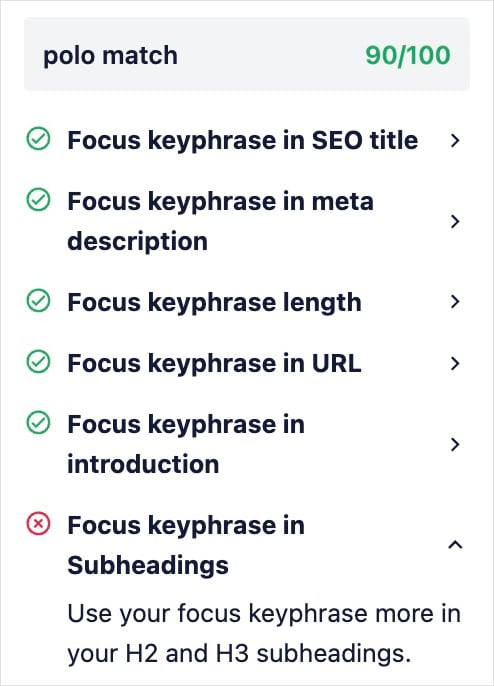
Whichever tool you use, they’re designed to make on-page SEO easier and more beginner-friendly.
7. Optimize Your Images for SEO
Search engines can’t “see” images like humans can. They rely on text elements to understand visual content. That’s why it’s important to provide them with enough information.
Here are a few ways of doing that:
- Use keywords when naming images for SEO. Make filenames descriptive but short.
- Write unique alt text. Alt text is important for accessibility and SEO. Describe the image accurately and include your keywords when appropriate.
- Consider using captions. Captions appear underneath your image and can be helpful for adding more context. Not every image needs them, but they’re great for graphs, tables, reports, etc.
- Compress images. Reduce file size to improve site loading speed, which is a technical SEO factor.
Let’s look at an example. We’ll imagine I have a food blog and want to optimize my most recent recipe for a mixed berry pie.

- Image filename: mixed-berry-pie.jpg
- Alt text: A mixed berry pie with powdered sugar on a plate.
- Caption (Optional): The finished mixed berry pie!
Pretty easy, right? Unfortunately, many business owners skip image SEO. Don’t be one of them!
8. Add Strategic Internal Links
Internal linking is the practice of connecting relevant pages within your own website. It helps users navigate and passes “link juice” (authority) to important pages.
It always surprises me how often business owners overlook internal linking. And to an extent, I get it. It’s another step and requires a bit of strategy to pick the right ones.
With that said, internal linking is an easy and effective way to improve your website’s SEO.
And once you get into the habit of it, you’ll find that it’s very fast.
Just locate a piece of related content, write descriptive anchor text (the clickable text of your hyperlink), and add your link. That’s it!
Pro Tip: If you have a smaller website, keep a spreadsheet of your web pages and their focus keywords. This can serve as a quick reference sheet when looking for relevant content for an article.
7 Quick Tips for Writing SEO-Optimized Content
Want even more ideas for writing search-engine-friendly content? Here are 7 actionable tips you can implement immediately to improve your content’s SEO:
- Answer PAA questions. Directly address common “People Also Ask” questions from the SERPs within your content. This can help you capture rich snippets.
- Focus on long-tail keywords. Prioritize optimizing for longer, more specific keyword phrases. They often indicate higher user intent and face less competition.
- Engage readers early. Capture readers’ attention in your first paragraph. This helps reduce bounce rates and signals content quality to search engines.
- Incorporate related terms and phrases. Include a variety of related keywords throughout your content. This helps Google fully understand your topic and rank your content for a wider range of searches.
- Use concise language. Write clear, direct sentences. Avoid unnecessary jargon or overly complex phrasing to significantly improve readability.
- Implement a strong CTA. Guide users to their next step with a compelling call-to-action. Ensure it aligns perfectly with their search intent.
- Regularly audit and update content. Regularly revisit and refresh your older content. This keeps it relevant and performing well in search results.
Common Mistakes to Avoid When Writing
Even with the best intentions, it’s easy to fall into traps. Avoid these common SEO mistakes for the best results:
- Keyword Stuffing: Overloading your content with keywords makes it unnatural and can result in penalties from search engines.
Ignoring Search Intent: Creating content that doesn’t align with what users truly want to find will prevent it from ranking effectively. - Thin or Low-Quality Content: Google prioritizes valuable, comprehensive content. Short, superficial articles rarely perform well.
Forgetting Mobile Optimization: If your site isn’t mobile-friendly, you’re alienating over 60% of potential traffic and risking lower rankings. - Neglecting Internal Linking: Failing to connect relevant pages on your site can hinder user navigation and prevent “link juice” from flowing, impacting page authority.
- Not Updating Old Content: SEO is ongoing. Old content can lose relevance and rankings. Regularly refresh and update your existing articles for continued performance.
Master SEO Content, Master Your Rankings
Writing SEO-optimized content is a learnable skill. It’s crucial for achieving online visibility and connecting with your target audience. By focusing on smart keyword research, understanding user intent, and crafting high-quality, well-structured content, you empower your website to stand out.
You now have the tips and tools to start creating content that genuinely ranks. Don’t wait. Start applying these strategies today and watch your content climb the SERPs, attracting the traffic and conversions your business deserves!
Related reading:
FAQs: Your Questions Answered
SEO-optimized content is designed to rank high in search engines and to provide value to users. It serves both search engine algorithms (for crawlability and relevance) and human readers (for readability and usefulness). The goal is to gain greater visibility in SERPs and attract targeted traffic to your website.
To write SEO-optimized content with ChatGPT, start with initial tasks like brainstorming content ideas, generating outliens, or drafting sections of articles. Remember that human touch is essential and the output will require fact-checking and edits. And while you can provide ChatGPT with your target keywords, it’s always a good idea to fine tune the optimizations yourself.
You can determine if your content is optimized for SEO by tracking its performance using specific tools. Use Google Search Console (GSC) to monitor impressions, clicks, average position, and the search queries driving traffic. Google Analytics 4 (GA4) helps monitor organic traffic volume, user behavior, and conversions. Additionally, LowFruits Rank Tracker can easily monitor keyword rankings over time.