As a blogger, you craft words that inspire, inform, or entertain. But in today’s crowded digital landscape, even the most brilliant content can feel like a whisper in a hurricane. How do you ensure your unique voice reaches the audience it deserves?
The answer lies in leveraging the right blog SEO tools. These tools transform your creative copy into real traffic and reach your target audience.
In this guide, I’ll share the best SEO tools for bloggers that I’ve discovered over my 6+ years of blogging.
I’ve found that having the right toolkit is the single biggest differentiator for consistent growth, and I’m excited to show you how these tools can amplify your message and boost your readership.
In This Article
- Why Bloggers Need SEO Tools
- My Essential Checklist: What Makes a Blog SEO Tool Great?
- The Criteria I Used When Creating This Lineup
- 10 Best SEO Tools for Bloggers to Boost Traffic & Rankings
- 1. LowFruits [Keyword Research]
- 2. SEOBoost [Content Creation Suite]
- 3. Writesonic [AI Writing Assistant]
- 4. Jasper [AI Writing Assistant]
- 5. NEURONwriter [AI Content Optimization]
- 6. Surfer [SEO Content Optimization]
- 7. Google Gemini [AI Chat Bot]
- 8. Google Search Console [Organic Performance]
- 9. Google Analytics [Website Analytics]
- 10. All In One SEO [WordPress SEO Content]
- 1. LowFruits [Keyword Research]
- Choosing the Right SEO Tools for Your Blog
- Final Thoughts
Why Bloggers Need SEO Tools
For me, blogging is a labor of love. I pour my energy into creating unique content, whether it’s for my own personal projects or those of clients.
Over the years, I’ve learned that if any blog is going to grow, connect with a wider audience, and potentially generate income, I need to think beyond the writing itself.
Here’s why I’ve found blog SEO tools to be absolutely essential for my own digital journey:
- Beyond the Passion: While a unique voice and compelling stories are vital, you quickly learn that SEO is what ensures your content is seen. Without proper optimization, even the most brilliant blog post can remain undiscovered.
- Competitive Landscape: The internet is a crowded space, with over 7.5 million blogs post published daily. I’ve personally felt the pressure to stand out. Blog SEO tools help you analyze your niche, understand the competition, and find opportunities to outrank them.
- Time Efficiency: As a blogger, time is precious. We can’t spend hours manually digging through data. These tools automate tedious tasks like keyword research and SERP analysis. This frees me up to focus more on what I love most: creating amazing content.
- Demystifying SEO: For beginners, SEO can seem complex. But I’ve found that the best SEO tools for bloggers help you overcome any initial challenges. They make SEO accessible, providing actionable insights that are easy to implement.
- Data-Driven Growth: Relying on guesswork about what your audience wants is a recipe for failure. SEO tools provide you with concrete data. This helps you make informed decisions about new topics, how to structure your content, and the best ways to promote it.
My Essential Checklist: What Makes a Blog SEO Tool Great?
Over my years of blogging, I’ve developed a clear understanding of what makes an SEO tool valuable for content creators. When I evaluate any new tool for my own blog, I run it through this checklist. These capabilities are non-negotiable for adding a new tool to my writing arsenal:
Keyword Research: My #1 Priority
This is where every successful blog post begins. Bloggers need tools that help us find what our readers are actually searching for.
I specifically look for features that identify long-tail keywords because these are often more attainable for blogs. These keywords have less competition and high intent. This means you can rank higher in search engine results pages (SERPs) and drive targeted traffic to your blog.
I also prioritize keyword research tools that help me analyze the competition, so I can pick topics I can realistically rank for.
Content Optimization: Beyond Just Writing
Once I have my chosen keywords, I need to ensure my blog posts are structured and written in a way that search engines can easily understand and rank them. This means I look for tools that offer on-page SEO analysis built into them. I want to know if my content is hitting the right notes for both Google and my readers.
Performance Tracking: Analyzing My Efforts
Monitoring your blog’s success is crucial for seeing if all your hard work is truly paying off.
I rely on tools that track my keyword rankings over time, show me my organic traffic trends, and provide insights into audience behavior. This allows me to quickly see what’s working well and what needs improvement, helping me refine my strategy and justify my time and efforts.
Ease of Use: Time is Gold
As a blogger, your primary focus is on creating content, not becoming an SEO expert (unless that’s your niche!). User-friendly interfaces with intuitive workflows are vital for getting the most out of your SEO blog tools. I only chose tools that simplify complex SEO tasks, allowing me to spend more time writing and less time deciphering complicated dashboards.
Affordability: Respecting My Budget
Every blogger, especially those just starting out, operates within a budget. I always look for options that offer significant value, whether they are powerful free tools or premium platforms. My goal is to find tools that provide a strong return on investment (ROI) without breaking the bank, ensuring my SEO efforts are sustainable.
The Criteria I Used When Creating This Lineup
When I set out to curate the best SEO tools for bloggers, my primary focus was on the real-world needs of content creators. Here’s what I looked at when selecting the tools for this guide:
- Relevance to Blogging Tasks: I asked myself: Does this tool genuinely help with the day-to-day challenges of blogging? Does it assist with finding new content ideas, making writing more efficient, or effectively promoting blog posts? I prioritized tools that directly solve these common pain points.
- User-Friendliness: Since many bloggers aren’t full-time SEOs, an intuitive interface was critical. I looked for tools that simplify complex SEO concepts and provide clear, actionable insights, rather than overwhelming dashboards. My goal was to find tools that empower, not intimidate.
- Effectiveness: It’s not enough for a tool to look good; it has to deliver results. I considered whether each tool provided accurate data and helpful features that contribute to higher rankings. My own experience with these tools heavily influenced this criterion.
- Value for Money: I know budgets are a real concern for bloggers. I sought out options that offer real value, whether they are robust free tools or paid investments. I wanted to ensure there’s a viable option for every stage of a blogger’s journey.
- Impact on Organic Growth: Ultimately, the goal is to attract and retain a larger organic audience. I chose tools that directly contribute to this by helping identify opportunities, optimize content for search engines, and track performance. These are the tools that truly move the needle for a blog’s visibility.
10 Best SEO Tools for Bloggers to Boost Traffic & Rankings
These tools can turn your blog into a traffic-generating machine. Here are my top 10 picks for the best blog SEO tools:
1. LowFruits [Keyword Research]
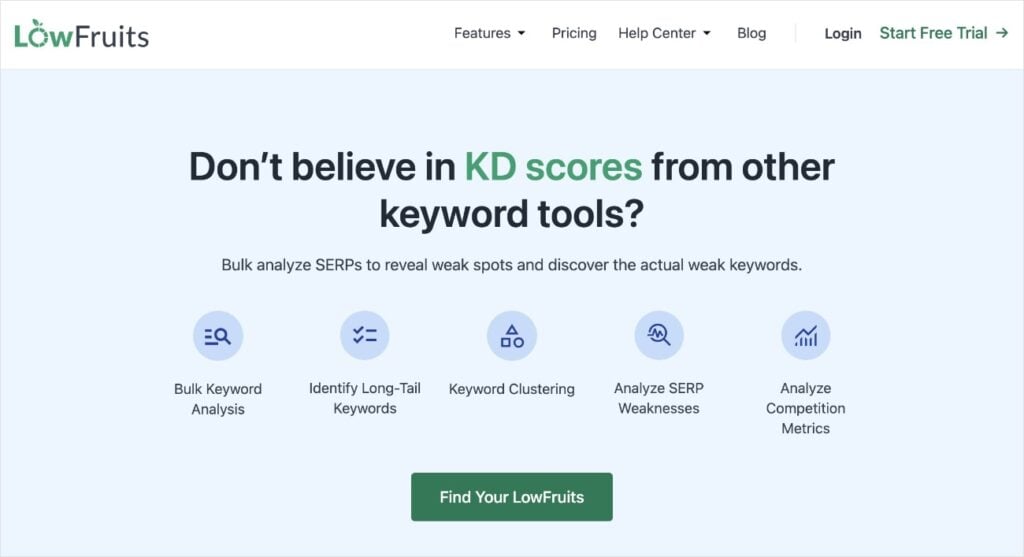
LowFruits is a keyword research and SERP analysis tool, designed to help users uncover easy keyword targets.
Why It’s Great for Bloggers: For bloggers, finding achievable ranking opportunities is crucial. LowFruits “Weak Spots” feature highlights low-authority domains in SERPs, making it simple to spot quick SEO wins. It’s also great for blog topic ideation because it focuses on long-tail keywords with high conversion rates.
Let’s explore some additional LowFruits features that are ideal for bloggers.
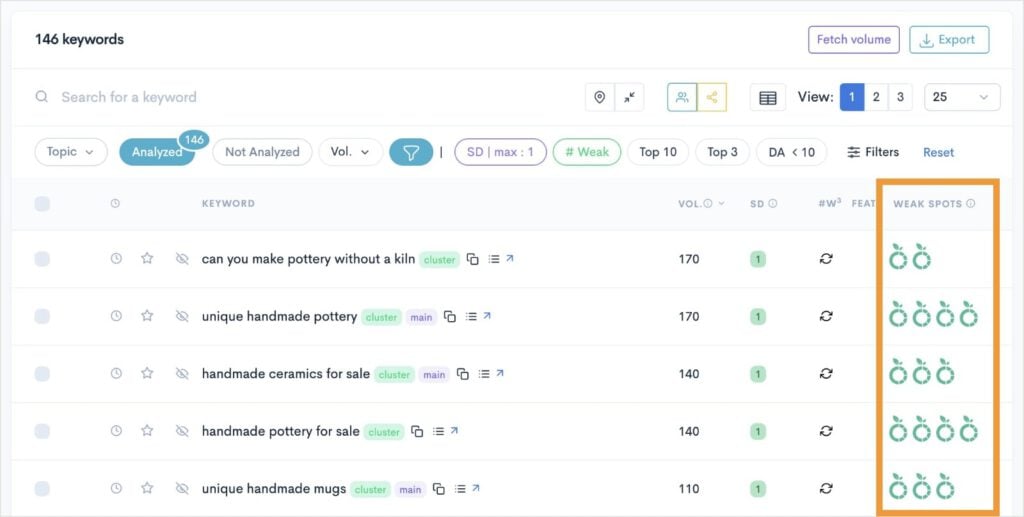
Weak Spots Identification
This feature identifies instances where low-authority websites rank in the top 10 search results. For bloggers and content creators in general, this is huge.
Manually scraping SERPs to find easy “prey” (aka, competitors you can outrank) takes significant time and effort.
LowFruits streamlines the process by identifying these competitors automatically for you. You get keyword reports that show how many Weak Spots there are per keyword. The more there are, the easier it will be for your blog to rank high.
SERP Difficulty Scores
In addition to Weak Spots, LowFruits also provides a SERP Difficulty Score (SD). This metric represents the keyword difficulty.
Unlike other keyword research tools that use a wide range of difficulties, LowFruits simplifies it to a scale of 1 to 3.
- 1: Easy
- 2: Medium
- 3: Hard
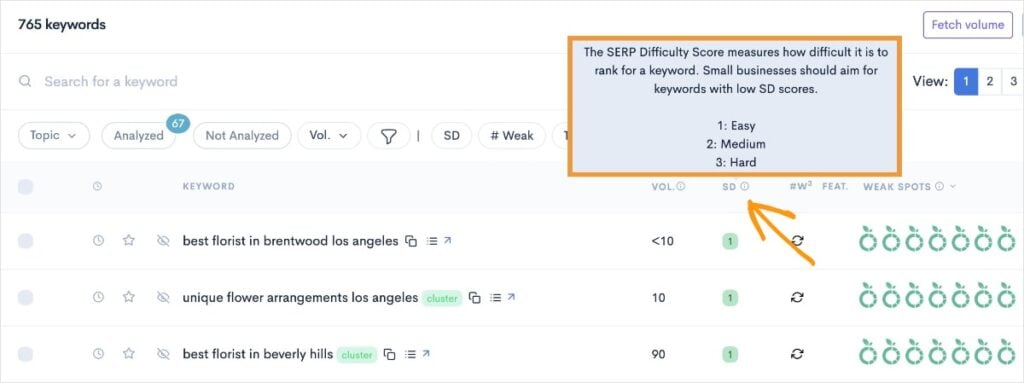
This feature is great for blogging because it allows you to spot low-difficulty keywords at a glance.
Long-Tail Keyword Opportunities
Long-tail keywords are search queries that consist of 3 or more words. These phrases are less competitive and highly effective for attracting niche audiences.
LowFruits’ main function as a keyword research tool is based on the idea of long-tail queries.
In fact, it uses data from Google Autocomplete to generate results. These are the queries that appear when you start typing in Google, and it populates recommended searches.
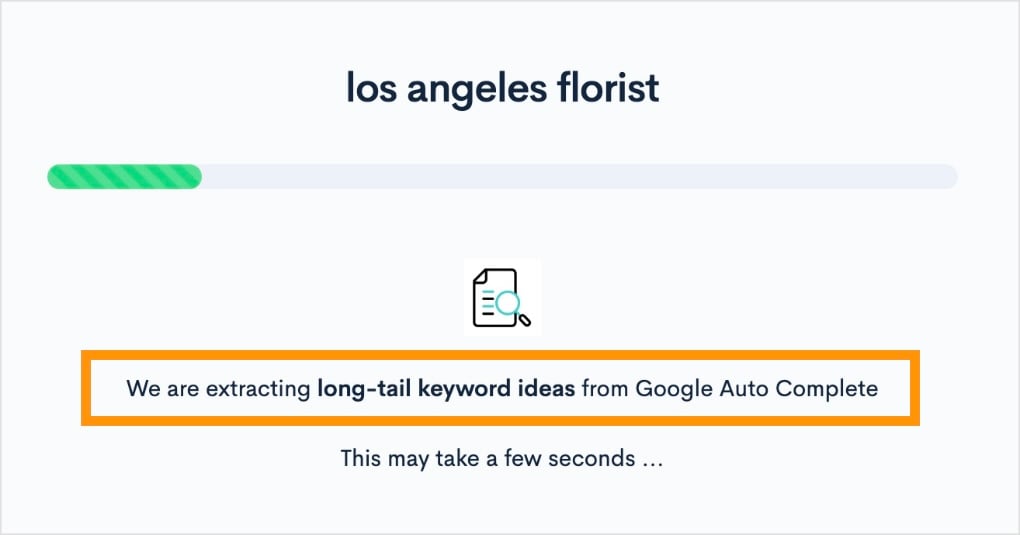
Once you get to your keyword report, you’ll notice that most, if not all, results are long-tail.
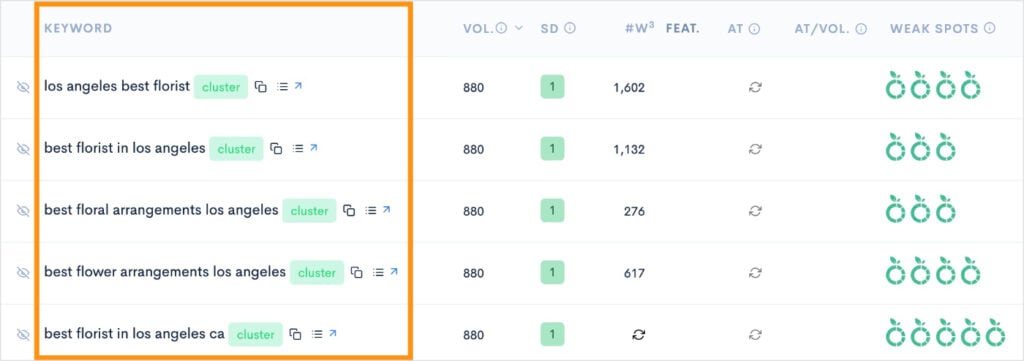
These are prime ranking opportunities that many website owners overlook, making them perfect for bloggers.
Rank Tracker
The last feature I want to point out is the LowFruits Rank Tracker.
If you’re investing in a keyword research tool, please, please make sure it has a rank tracker. This is how you measure your results, after all!
In LowFruits, the setup takes seconds. You can enter keywords manually or paste them from another tool. Then, you tell it how often you want it to fetch rankings from Google.
Here’s what your dashboard looks like once it’s started tracking:
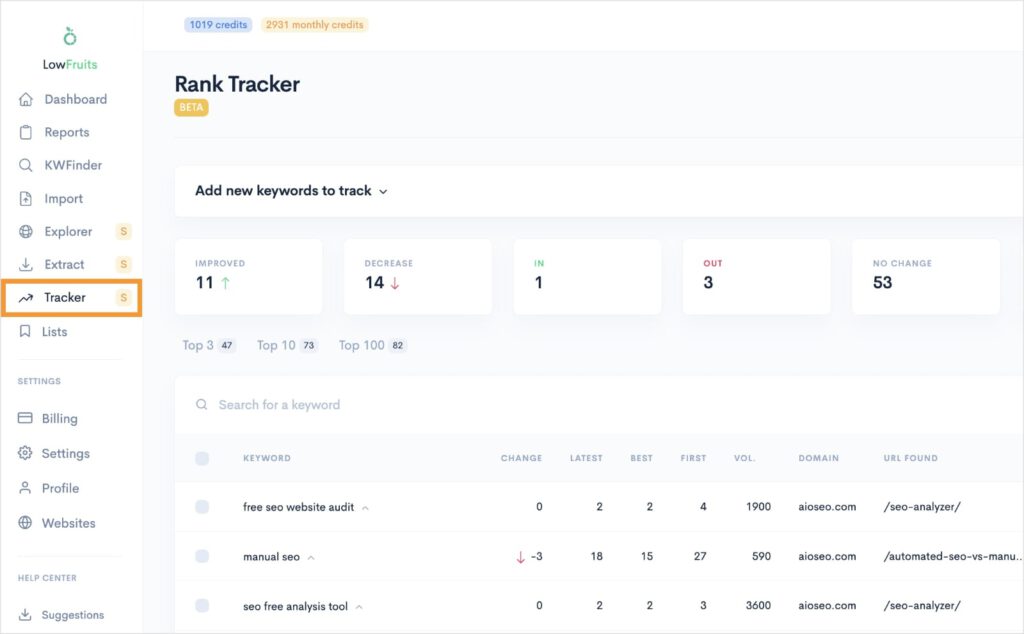
I like how you can get a quick understanding of your rankings just by looking at the dashboard. It’s easy to see what’s changed since the last Google fetch, and how your positions have moved.
This is great for when you’re busy writing blogs and need to keep an eye on keyword metrics without getting lost in complicated platforms or data.
2. SEOBoost [Content Creation Suite]

SEOBoost is a comprehensive content creation platform. It’s designed to streamline the entire process, from initial topic research to final on-page SEO.
Why It’s Great for Bloggers: SEOBoost delivers a clear, actionable roadmap for crafting blog content that competes. Its Topic Reports are detailed yet easy to digest, serving as tailored content briefs. It’s also feature-rich with content optimization tools that suggest related keywords, show competitor usage, and compare to your own copy.
Key Blogging Features:
- Competitor Strategy Deep Dives: Performs deep dives into top-ranking content, uncovering competitor strategies for blog posts. This helps you understands what’s working for others.
- Topic Reports: Provides breakdowns of average word count, readability, and keyword frequency of top-ranking pages.
- On-Page SEO Checks: Compares your keyword optimizations to competitors, helping you identify opportunities to maximize your visibility in SERPs.
- WordPress Integration: Integrates with All in One SEO for WordPress users, offering an AI Writing Assistant that provides keyword ideas and recommendations directly in the editor.
3. Writesonic [AI Writing Assistant]

Writesonic is a leading AI writing assistant that excels at generating several content formats. You can create blog posts, marketing copy, creative pieces, and more — all while leveraging AI.
Why It’s Great for Bloggers: Writesonic can significantly accelerate your content creation. It can help you overcome writer’s block and speed up the blog writing process. It can repurpose your content for different formats, making it a huge time-saver for wider marketing efforts.
Key Blogging Features:
- Quick Content Creation: Since it uses AI, you can quickly produce high-quality text for various blog content needs. This includes outlines, intros, and full sections.
- Overcoming Writer’s Block: I find it incredibly useful for generating ideas and initial drafts. This helps me get past writer’s block and accelerate my output.
- Promotional Copy: It can quickly generate variations of copy for blog promotion, such as social media captions, ad copy, and email snippets.
- Blog-Specific Templates: It offers templates designed for blogging, guiding your writing process.
4. Jasper [AI Writing Assistant]
Jasper is another popular AI writing assistant. Like Writesonic, it can generate several content types, including blog posts.
Why It’s Great for Bloggers: Jasper is great for when you’re on a time crunch. I’ve found it particularly useful for repurposing content into different creative angles. I’ve also turned to it when I need to quickly draft sections and meet a publishing deadline. Ultimately, it’s a reliable solution for maintaining a steady stream of content and getting endless, new ideas for blog posts.
Key Blogging Features:
- Scalable Content Creation: It can produce high-quality for various content needs, helping you scale your content efforts.
- Creative Inspiration: I use it to brainstorm a wide range of blog post ideas, especially when I’m facing writer’s block.
- Content Rewriting & Expansion: It can help rewrite or expand existing content, improving readability or adding more depth to blog posts.
- Marketing Copy Generation: It excels at generating promotional copy, such as social media updates, ad headlines, and email subject lines.
5. NEURONwriter [AI Content Optimization]

NEURONwriter is an AI-powered content optimization tool that helps you:
- Analyze competitors.
- Uncover opportunities.
- Optimize your content.
This is one of the newer tools that I’ve been using, and I’ve been liking it so far. It’s intuitive, uses a color-coded system to assess your content, and gives you real-time feedback on optimizations.
Why It’s Great for Bloggers: NEURONwriter’s strength lies in its semantic analysis capabilities. I’ve found it incredibly valuable for ensuring my blog posts extend beyond keywords to provide full thematic coverage of a topic. It guides on incorporating relevant terms Google expects, helping you implement holistic on-page SEO.
Key Blogging Features:
- Semantic Analysis: It analyzes top-ranking content for keywords and broader semantic terms relevant to a topic. This helps you cover a topic comprehensively.
- AI-Powered Suggestions: It provides suggestions to create more thorough and semantically rich blog content, ensuring all relevant aspects are covered.
- Featured Snippet Optimization: By helping blog posts fulfill search intent more completely, it increases the likelihood of appearing in click-worthy featured snippets.
- Content Score & Competitor Overview: Provides a content score and a clear overview of competitor strategies, guiding optimization efforts.
6. Surfer [SEO Content Optimization]

Surfer is known for its data-driven approach to content optimization. It uses a SERP Analyzer tool to scan top-ranking content and understand what makes it perform well.
Why It’s Great for Bloggers: Surfer helps me eliminate guesswork when optimizing blogs. Its content editor and scoring system provide clear benchmarks for word count and relevant terms. This ensures my blog posts answer specific, nuanced questions readers have, making it a powerful tool for establishing thought leadership and capturing high-intent blog traffic.
Key Blogging Features:
- Content Editor with Content Score: This feature analyzes content length, keyword density, and heading structures from top-ranking domains. It provides actionable recommendations and a “Content Score” to guide blog post writing.
- SERP Analyzer: Helps quickly see what kind of content (e.g., listicles, how-to guides, product reviews) is ranking for target keywords. This helps you match search intent to a new blog post.
- Competitor Benchmarking: Its comparison tool allows your to benchmark content against competitors. This helps you identify keyword gaps and areas for improvement directly within the editor.
7. Google Gemini [AI Chat Bot]
Our next 3 tools come straight from where the magic happens — Google.

Gemini is Google’s advanced large language model (LLM), designed to assist with various AI-powered tasks. It’s one of the most popular AI SEO tools available, particularly for content creation.
Why It’s Great for Bloggers: Gemini offers a powerful way to kickstart content creation. It can help you create blog outlines, write specific sections (or even whole posts), and optimize for engagement. It’s a huge time-saver for any step of the writing process, which is why it’s become normal for writers to use it in their workflows.
Key Blogging Features:
- Faster Research: I use Gemini to quickly research complex topics for my blog posts, asking it to summarize key points or explain concepts in simpler terms. This saves me significant research time.
- Creative Brainstorming: It’s excellent for generating outlines, drafts, headlines, and even story ideas for blogging.
- Content Structuring: You can ask Gemini to help you structure your blog posts, suggesting logical flows or breaking down longer articles into digestible sections.
- Drafting & Rephrasing: While I always refine the output, Gemini can assist in drafting initial paragraphs or rephrasing sentences to improve clarity.
8. Google Search Console [Organic Performance]
Google Search Console (GSC) is a free tool that helps you monitor your website’s performance in Google Search. It’s an absolute must for anyone serious about growing their blog and readership.
Why It’s Great for Bloggers: You can think of Search Console as your go-to tool for SEO reporting. It shows you exactly how your blog posts perform in search and which keywords bring in organic traffic. You’ll also get insights into technical issues that could be holdin your blog back
Key Blogging Features:
- Performance Report: This report monitors a blog’s indexing status, impressions (how many times content appeared in search results), clicks, and average position. I use it to see exactly which search queries (keywords) are bringing readers to my blog.
- Indexing & Core Web Vitals: GSC helps identify any technical issues preventing blog posts from being indexed or performing well in terms of page experience (like speed and stability). This is crucial for ensuring my content is even visible to Google.
- Sitemaps: You can submit your blog’s sitemap directly through GSC, ensuring Google crawls all my new and updated content. This helps your content get discovered.
9. Google Analytics [Website Analytics]

Google Analytics (GA4) is another free tool from Google that provides detailed user insights. You can see who visits your website, how they arrive, and what they do once they’re there. It’s another non-negotiable when it comes to building a set of blog SEO tools.
Why It’s Great for Bloggers: GA complements GSC by providing a deeper understanding of your audience’s behavior after they land on your blog. You can see which posts keep readers engaged, which ones lead to conversions, and how different traffic sources perform. This helps you refine your content strategy to keep users reading, interacting, and converting.
Key Blogging Features:
- Organic Traffic Reports: I use these to track the volume of organic traffic my blog receives, allowing me to see if my SEO efforts are paying off.
- User Behavior Metrics: GA provides insights into how readers interact with blog posts, such as time on page, bounce rate, and pages per session. This helps me understand engagement levels for individual posts and overall blog sections.
- Conversion Tracking: You can set up conversions (e.g., newsletter sign-ups, affiliate link clicks, e-book downloads) to see which blog content is driving valuable actions. This helps you understand the ROI of your posts and identify your most effective content.
10. All In One SEO [WordPress SEO Content]
This last recommendation is for WordPress users. After all, according to blogging statistics, over 60 million blogs are hosted on WordPress.
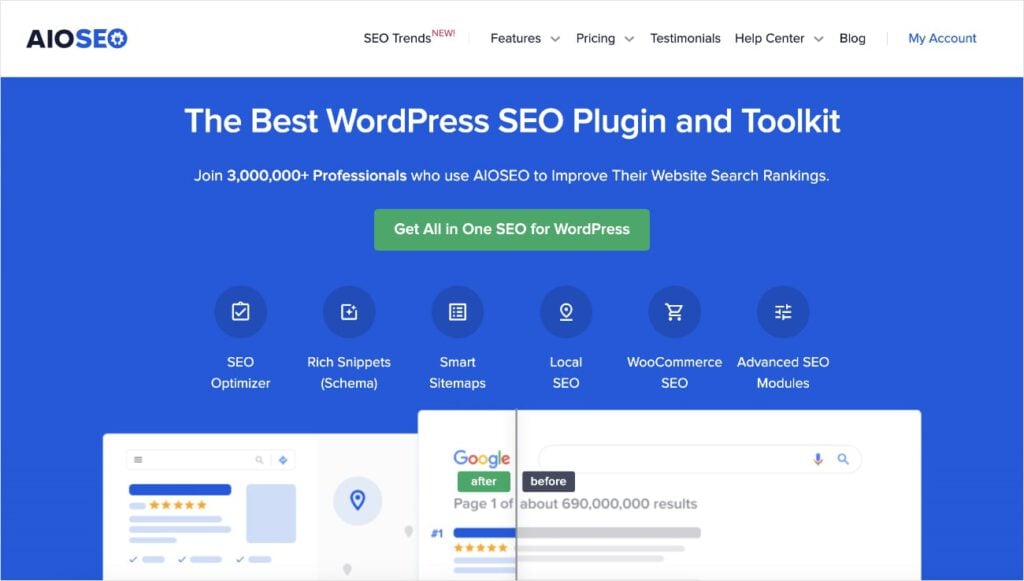
All in One SEO (AIOSEO) is the original WordPress plugin for SEO. Today, it has over 3 million active users.
It has a long list of beginner-friendly SEO features that help you optimize your WordPress site for greater visibility in SERPs. The whole idea is to make SEO accessible to everyone, allowing you to focus on content creation and get the most out of every page.
Why It’s Great for Bloggers: AIOSEO integrates crucial SEO tasks right into your writing workflow. This makes it incredibly easy to optimize each blog post during creation. It also helps you with technical SEO, like creating sitemaps and fixing indexing issues.
Key Blogging Features:
- On-Page SEO: It simplifies optimizing critical on-page elements like page titles, meta descriptions, and URL slugs for each post.
- Readability Analysis: AIOSEO offers real-time feedback to improve your readability score. This helps you write SEO-optimized content that is both user- and search- friendly.
- Technical SEO: It automatically generates and updates XML sitemaps, which helps search engines efficiently crawl and index your blog. It also has a schema generator that allows you to add schema markup without coding.
- AI Writing Assistant: With its integration with SEOBoost, AIOSEO offers an AI Writing Assistant that provides keyword ideas and recommendations directly in the editor.
Choosing the Right SEO Tools for Your Blog
With so many blog SEO tools available, deciding which ones are the best fit for your needs is crucial. Here are the key factors to consider when choosing which ones to bring into your blogging workflow:
- Consider Your Blog’s Current Stage and Size: Are you just starting out and need free basics, or are you an established blogger looking to scale and invest?
- Evaluate Your Specific SEO Challenges: Are you struggling most with finding topics, optimizing your writing, or tracking your performance? Match tools to your primary pain points.
- Match Tools to Your Budget and Technical Comfort Level: There are excellent free options and powerful paid suites. Choose what you can afford and what you’re comfortable learning.
- Start Small, Then Expand Your Toolkit: You don’t need all these tools at once. Pick one or two that address your most pressing needs and master them before adding more.
Final Thoughts
SEO blog writing tools are essential in today’s competitive online landscape. They empower bloggers to move beyond guesswork, improve their writing processes, and gain more visibility in SERPs.
Plus, it’s not about finding the most expensive or feature-rich tool. Instead, it’s about finding the one (or combination) that truly amplifies efforts and helps your blog grow.
I hope this guide equipped you with the knowledge to pick the best SEO tool for you. These 10 options were hand-picked, and they each bring something valuable to blogging.
Start with the one that caught your attention first or address your biggest pain point. You can always add more later!