You’ve worked hard on your website’s content, perfecting your titles, and optimizing your images. That’s fantastic — you’ve nailed your on-page SEO. But what happens outside your website?
That’s where off-page SEO comes in, and it’s absolutely crucial for helping your site rank higher on Google.
If you’re new to this side of SEO, don’t worry. I’ve made this off-page SEO guide beginner-friendly, so you can learn what it is and why it’s so important in plain English.
You’ll also get simple, actionable steps to start building your website’s authority, no experience required!
Let’s dive in.
In This Article
- What Is Off-Page SEO & Why Does It Matter?
- On-Page SEO vs. Off-Page SEO: What's the Difference?
- Backlinks: The Cornerstone of Off-Page SEO
- Key Off-Page SEO Techniques for Beginners
- Things to Avoid: Off-Page SEO Bad Practices
- Measuring Off-Page SEO Success (Basics)
- Off-Page SEO: A Means to Build Long-Term Authority Online
- FAQs About Off-Page SEO
What Is Off-Page SEO & Why Does It Matter?
Off-page SEO refers to all the actions taken outside your website to improve its search engine rankings. While on-page SEO is about what’s on your site, off-page is about how the rest of the internet sees and interacts with your site.
So, why does this matter?
Think of it like a popularity contest, but for websites. When other reputable websites link to, mention, or share your content, Google sees these as “votes of confidence” or endorsements. These signals tell Google that your website is:
- Credible & Trustworthy: If industry experts link to you, you must know your stuff.
- Authoritative: You’re a go-to source for information.
- Relevant: Your content is useful to others.
The stronger these signals, the higher Google is likely to rank your pages in search results. This means more visibility, more traffic, and ultimately, more growth for your business.
On-Page SEO vs. Off-Page SEO: What’s the Difference?
You’ll often hear “on-page” and “off-page” SEO talked about together because they’re two sides of the same coin. Both are vital for ranking, but they cover different areas.
On-Page SEO
On-page SEO is everything you do directly on your website to optimize it. This includes your content, title tags, meta descriptions, image optimization, internal linking, and more.
You have full control over these elements.
If you’re new to SEO, this is typically where you start.
To learn more, check out our Easy On-Page SEO Guide.
Off-Page SEO
Off-page SEO, on the other hand, covers actions taken outside your website that influence its rankings. The most important part of this is building high-quality backlinks (links from other reputable websites pointing to yours).
Off-page SEO also involves things like social media engagement, brand mentions, and online reviews. You have less direct control over these, as they often rely on others choosing to link to or mention you.
The Two Compared
On-page SEO is like making sure your shop is perfectly clean, well-organized, and has great products (what’s inside).
Off-page SEO is like getting fantastic word-of-mouth recommendations, mentions in local papers, and positive reviews from happy customers (what people are saying about your shop).
While they’re different, both are essential for your business’s success!
Backlinks: The Cornerstone of Off-Page SEO
When we talk about off-page SEO, backlinks are usually the first thing that comes to mind, and for good reason. They’re the most powerful signal of authority in Google’s ranking algorithm.
What Is a Backlink?
A backlink is a hyperlink from one website to another. When Website A links to Website B, that’s a backlink for Website B.
Why Are Backlinks So Important?
Google treats backlinks as “votes of confidence” or endorsements.
If many credible, relevant websites are linking to your content, it tells Google that your content is valuable, trustworthy, and authoritative.
The more high-quality votes you have, the more important your site appears. This can lead to higher rankings in search engine results pages (SERPs).
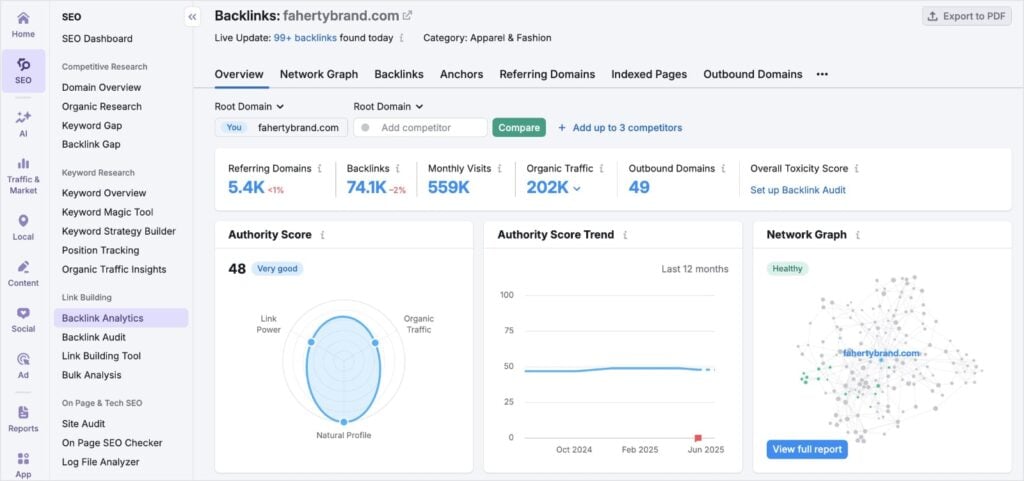
Pro Tip: Tools like Semrush can help you see what backlinks your website (or competitors) are getting. I like using their Backlink Analytics Tool to investigate clients’ websites and inform my backlinking strategy.
Quality Over Quantity
Not all links are equal.
A link from a highly respected industry website (e.g., a major news outlet, a well-known research institution) is far more valuable than a dozen links from low-quality, spammy sites.
Focus on earning links from relevant and authoritative sources.
Dofollow vs. Nofollow
Most valuable backlinks are “dofollow,” meaning they pass “link juice” (SEO value) to your site.
Some links are “nofollow” (e.g., many social media links, forum comments) which tell Google not to pass value.
While nofollow links still offer brand exposure and traffic, dofollow links are what you primarily want for SEO authority.
Key Off-Page SEO Techniques for Beginners
Now, let’s look at actionable ways you can start building your website’s authority with off-page SEO.
Remember, these are about earning credibility, not tricking the system.
1. Content Promotion & Outreach
Even the best content won’t get noticed if nobody knows it exists.
Great content earns links, but it often needs a little push. Think of it as gently letting relevant people know about the awesome resource you’ve created.
Why it works: Promoting your content helps it get seen by the right people — journalists, bloggers, industry experts — who might then naturally link to it or share it. This often leads to “organic links” because they found your content genuinely useful.
My personal experience has shown that even a well-timed tweet or LinkedIn share can lead to a relevant blogger discovering your piece and deciding to reference it in their own article later. It’s about planting seeds!
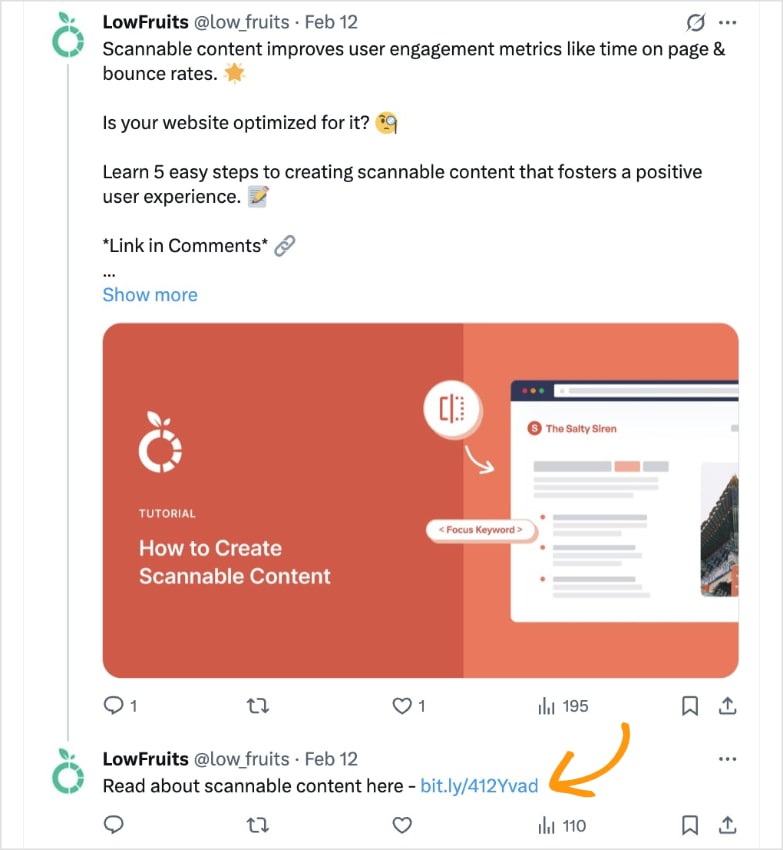
Pro Tip: In addition to getting the word out about your content, you’re creating backlinks for your website when you share your URLs on social media platforms! Check out the screenshot below to see how I add links to our LowFruits Twitter account.
Easy Tips for Promoting Content:
- Share on social media. Post your new content across all your relevant social media channels. Don’t just share once; re-share with different angles or quotes over time.
- Email your network. Let your subscribers, customers, or industry contacts know about your valuable new resource. A simple email saying, “Hey, I just published this guide on [topic] that I thought you might find useful,” can go a long way.
- Outreach to relevant sites. If you’ve created an in-depth guide that genuinely complements or expands on something another blog has written, you could send a polite, personalized email to that blog’s editor. Frame it as: “I saw your article on X, and I’ve just published a comprehensive guide on Y that might be a helpful resource for your readers.” Focus on providing value, not demanding a link. It’s amazing how many genuine connections this can build.
2. Guest Blogging (A Strategic Approach)
Guest blogging involves writing an article for another website in your niche. It’s a classic off-page SEO tactic, but it needs to be done strategically to be effective.
Why it works: Guess blogging allows you to get a valuable backlink (usually within your author bio or within the content itself) and exposes your brand and expertise to a new, relevant audience.
For example, when I first started working on a client’s new blog, I wrote a guest post for a slightly larger site in their industry. That single link not only brought in referral traffic but also significantly boosted the client’s site authority in Google’s eyes, making their own articles rank better.
Tips for Guest Blogging:
- Find relevant sites. Look for blogs or websites in your industry that accept guest posts. Start with sites that have a decent (but not overwhelming) domain authority, as these are often more accessible for beginners.
- Pitch unique, valuable ideas. Don’t just ask to write. Research their content and offer specific, valuable article ideas that would genuinely benefit their audience and haven’t been covered extensively. Show you understand their readership.
- Provide high-quality content. Treat a guest post with the same (or even more!) care you’d give your own content. It must be well-written, informative, original, and provide real value. This reflects well on you and your brand.
3. Broken Link Building (A Helpful Tactic)
This is a clever way to provide value to another website while earning a link for yourself. It’s an often-overlooked advanced keyword research technique that can be simplified for beginners.
Why it works: Google and users hate broken links (links that lead to a “page not found” error). They create a bad user experience and result in dead ends. You can be a solution to this problem and earn a backlink while you’re at it.
Here’s how to do it:
First, find a broken link on a relevant website within your niche. Then, offer your content as a replacement. You’re essentially doing them a favor, making them more likely to link to you.
I’ve found this works best when you already have a highly relevant piece of content that directly replaces the broken one. Don’t just pitch anything.
Broken Link Building Tips:
- Find relevant pages. Identify reputable websites or resource pages in your niche. Think of industry guides, curated lists, or evergreen content that might accumulate broken links over time.
- Use a simple browser extension. Install a free “check my links” or “broken link checker” browser extension.
- Scan for broken links. Visit the chosen pages and run the extension. It will highlight any broken links.
- Offer your content as a solution. If you find a broken link, and you have a relevant, high-quality piece of content that could replace it, email the website owner or editor. Politely inform them of the broken link and suggest your article as a helpful, updated replacement. Frame it as: “I noticed a broken link on your ‘Best X Resources’ page, and I recently published a comprehensive guide on [Your Topic] that might be a good fit.”
Have a WordPress site? I really like the Broken Link Checker by AIOSEO. It scans your website automatically to help you find and fix broken links.
FYI, this tool is for finding broken links on your website, not on others.
4. Directory & Citation Submissions (Foundational for Local SEO)
These are basic but important steps, especially for businesses with a physical location or serving a specific local area.
What they are: Listing your business information (Name, Address, Phone Number: NAP) on online directories (like Yelp, Yellow Pages, industry-specific directories) and business listing sites. These are called “citations” for local SEO.
Why it works: These provide foundational backlinks and consistent brand mentions across the web. For local businesses, they are critical for building trust with Google and ranking in “Local Pack” results (the map results you see when performing local searches).
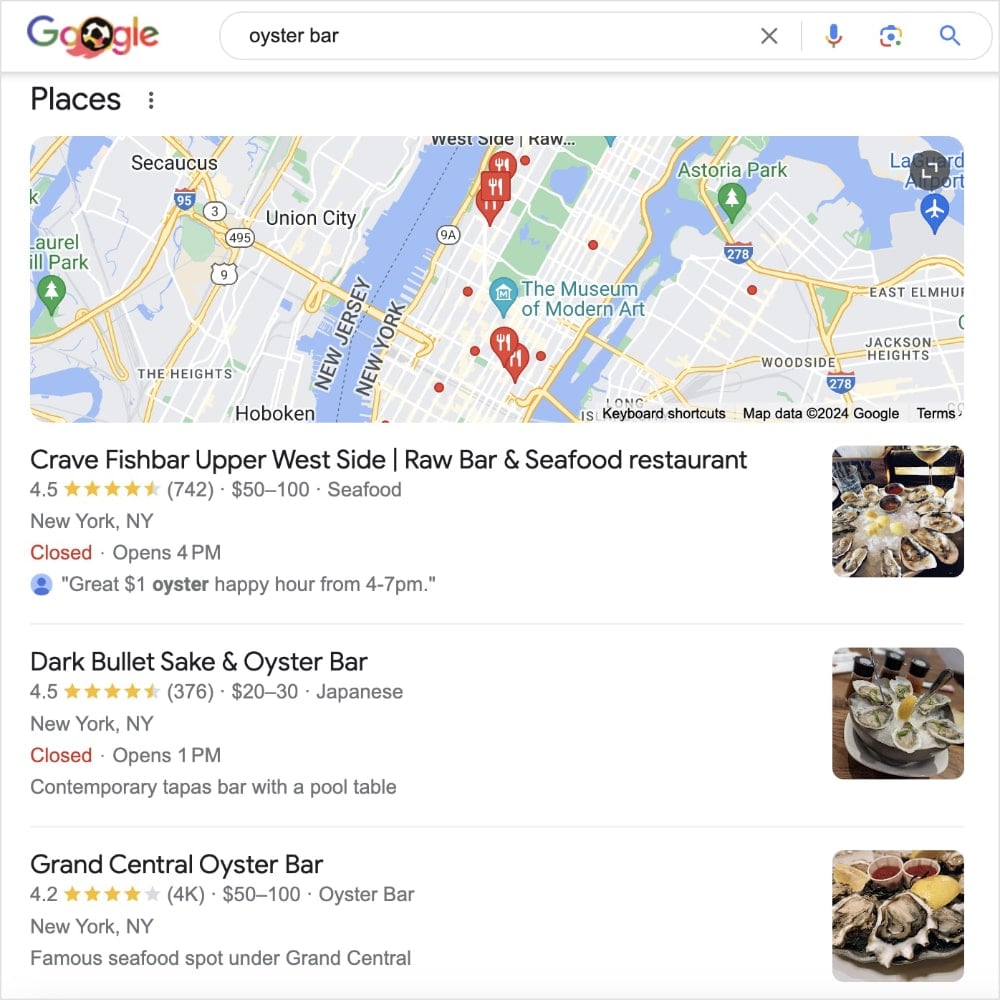
When I was building out local SEO for a client, ensuring their NAP was consistent across 30+ directories made a noticeable difference in their local search visibility. Plus, it’s not hard to do.
Pro Tip: Focus on reputable and highly relevant directories for your industry and location. Ensure your Name, Address, and Phone Number (NAP) information is absolutely identical across all listings — even small variations can confuse search engines.
5. Social Media Presence & Engagement
While most social media links are “nofollow” (meaning they don’t directly pass SEO value like a dofollow backlink), social media is still crucial for off-page SEO.
Why it works: An active social media presence increases brand visibility and drives direct traffic to your website. More visibility means more people seeing your content, which can naturally lead to organic mentions, shares, and traffic for your website.
Easy Social Media Tips for Improved Engagement:
- Be active on specific platforms. Investigate where your target audience spends most of their time. Then, focus your social efforts and engagement there. Share your content, partake in conversations, and build a community around your brand.
- Monitor brand mentions. Use free tools like Google Alerts to track when your brand or website is mentioned online. When you see a mention, you can engage with it, thank the person, and sometimes even turn it into a backlink.
- Engage with industry influencers. Follow and interact with key influencers and thought leaders in your niche. Sharing their content, leaving thoughtful comments, and participating in their discussions can put your brand on their radar, potentially leading to future collaborations or mentions.
6. Online Reviews (Especially for Local Businesses)
Reviews can make or break your business. Good ones build trust, while negative ones can turn potential customers away.
That’s why it’s critical to encourage positive reviews and manage disgruntled customers before they reach their keyboard.
Why it works: Positive reviews on platforms like Google My Business or Yelp can impact local SEO rankings. They signal trust, customer satisfaction, and overall business legitimacy, which are all factors Google considers.
For a local service business, a strong stream of 5-star reviews is like gold.
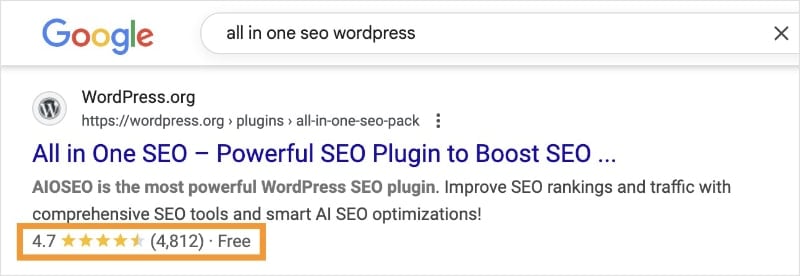
Tips for Managing Online Reviews:
- Encourage happy customers to leave reviews! Make it incredibly easy for them by providing direct links to your review profiles (Google My Business, Yelp, specific industry sites) in your follow-up emails, on your website, or even via QR codes in your physical location.
- Respond to all reviews, good and bad. This shows that you’re engaged with your customers and value their feedback. For positive reviews, a simple “Thank you!” is enough. For negative ones, respond professionally and offer to resolve the issue offline. Google pays attention to businesses that actively manage their reviews.
- Feature positive reviews on your website. Showcase testimonials or star ratings on your homepage or a dedicated reviews page. This builds trust with website visitors and provides fresh content.
Additional local SEO resources:
Things to Avoid: Off-Page SEO Bad Practices
Just as there are good ways to earn links and authority, there are bad ways that can actually hurt your SEO.
Avoid these black hat SEO tactics, as Google can detect them and penalize your site:
- Buying Links: This is a direct violation of Google’s guidelines and can lead to severe penalties. Never pay for links designed solely to pass SEO value.
- Spamming Comments Sections: Leaving irrelevant, keyword-stuffed links in blog comments or forums is considered spam. It offers no value and damages your brand’s reputation.
- Participating in Link Schemes or Link Farms: These are networks of sites created solely to pass links back and forth. Google can easily detect and penalize them, often resulting in manual actions against your site.
- Over-Optimizing Anchor Text: Don’t always use the exact same keyword as your anchor text (the clickable words of a link). Keep it natural and varied, using brand names, URLs, generic phrases, and related keywords.
- Focusing on Quantity Over Quality: A few high-quality, relevant links from authoritative sites are infinitely more valuable than hundreds of low-quality, spammy ones. Always prioritize quality.
Measuring Off-Page SEO Success (Basics)
Off-page SEO isn’t an instant fix. Results take time, but you can track your progress using the following metrics;
- Backlink Profile: Use tools like Google Search Console (it’s free!) or paid SEO tools (like LowFruits’ reporting features, Ahrefs, Semrush) to monitor new links you acquire, the number of unique websites linking to you (referring domains), and the quality of those links. Look for an upward trend in quality domains.
- Organic Traffic: Check your Google Analytics to see if overall traffic coming from search engines is increasing. This is a clear indicator that your SEO efforts are working.
- Domain Authority (DA) / Page Authority (PA): These metrics estimate your website’s overall strength. While not direct Google metrics, they can give you a general indication of your site’s growing authority over time as you build links.
- Keyword Rankings: Keep an eye on your focus keywords. Are they climbing in search results? This is the ultimate goal, and often a direct reflection of improving authority.
Regarding this last point, LowFruits makes it easy to monitor your keyword rankings Google.
LowFruits is the best SEO tool for small businesses. It specializes in keyword research and SERP analysis, helping you uncover low-competition keywords that are easy to rank for.
It does this by revealing “Weak Spots” in SERPs, which are low-authority domains ranking in the top 10 search results. Combined with more traditional keyword metrics, like difficulty, you’ll quickly spot keyword opportunities that are prime for ranking.
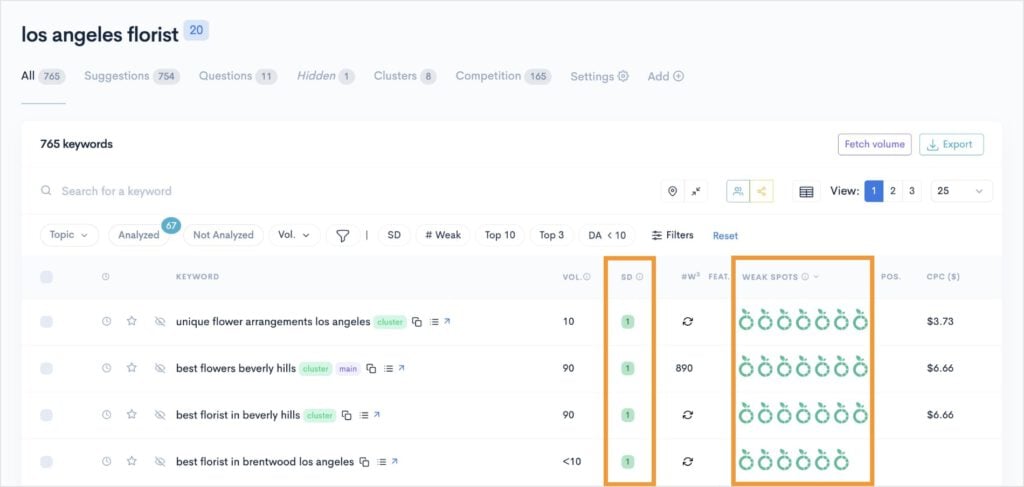
As for measuring the success of your on-page and off-page SEO efforts, you can use the Rank Tracker to see how your keywords perform in Google.
Rank Tracker monitors the position changes of your most important keywords and displays the details in a user-friendly interface.
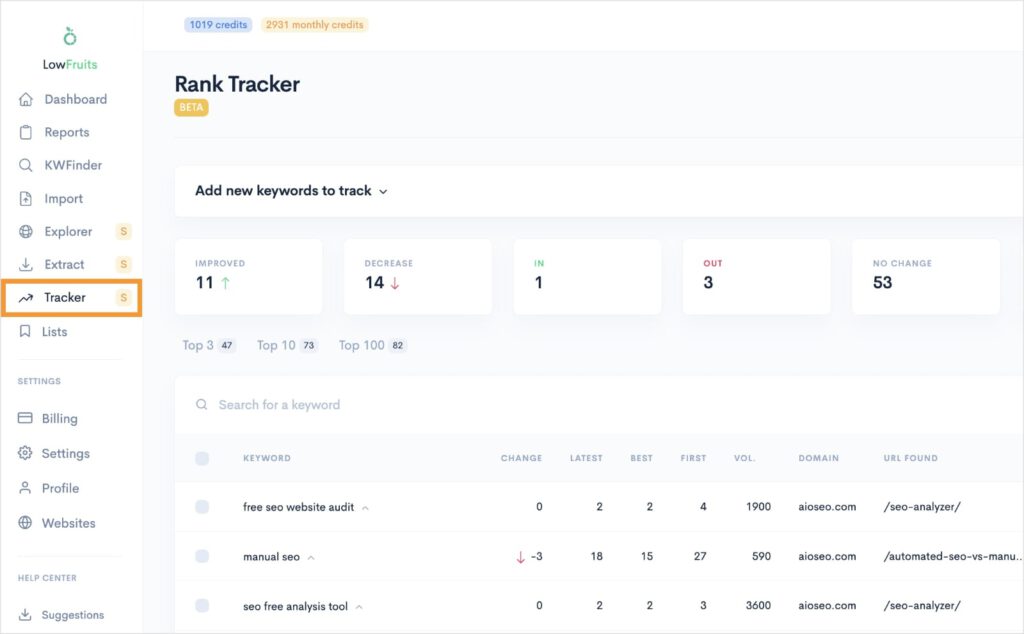
I like how you can get a quick understanding of position changes just by looking at the improved and decreased metrics at the top of the dashboard. This gives me a decent idea of how our rankings have changed since the last SERP fetch.
LowFruits gets its data directly from Google, which is a huge plus. I prefer getting data directly from the source versus third-parties.
If you want to dive deeper into a position change, you can expand the keyword for historical data.
This view gives you a full breakdown of how the keyword’s position changed over time. You can also see the top 10 domains currently ranking in search results.
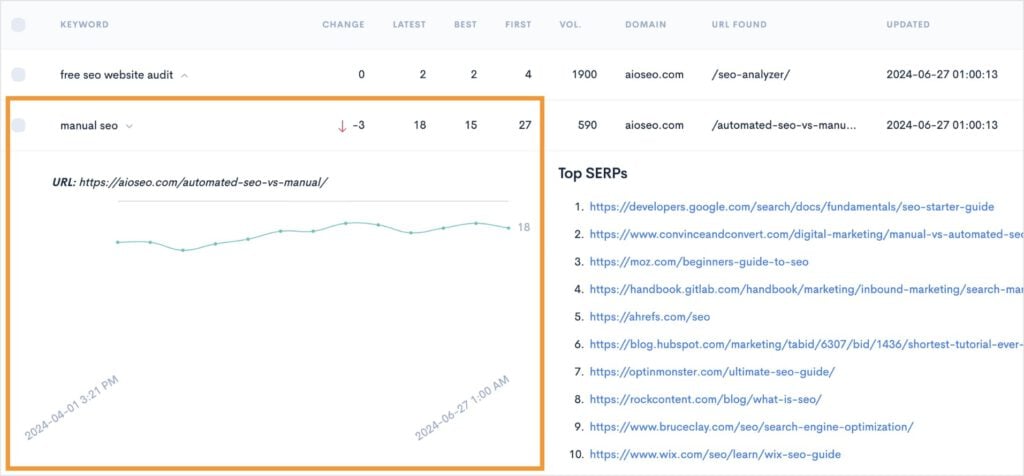
Ultimately, LowFruits built-in Rank Tracker makes monitoring your keyword positions effortless.
This allows you to allow you to see the impact of your efforts in real-time and determine if they’re on track with your SEO goals.
Off-Page SEO: A Means to Build Long-Term Authority Online
Off-page SEO is about building trust and credibility beyond your website’s four walls.
By cultivating a strong presence across the web, you’re signaling to Google that your site is valuable in the digital world.
I hope this off-page SEO beginner’s guide showed you that it’s a marathon, not a sprint. Consistency is key!
When combined with strong on-page SEO, a robust off-page SEO strategy creates a powerful combination for online success, helping you drive more traffic and reach more customers.
For additional beginner SEO guides, check out the following articles:
- Content Optimization in SEO
- How to Optimize Images for SEO
- Best SEO Tools for Beginners
- How to do a SERP Analysis in 5 Easy Steps
FAQs About Off-Page SEO
Off-page SEO refers to all the actions taken outside your website to influence its search engine rankings. It focuses on building your site’s authority, credibility, and trust in the eyes of search engines through external signals.
The most important part of off-page SEO is acquiring high-quality backlinks. These are links from other reputable and relevant websites pointing to your site. Google views these as strong “votes of confidence” in your content’s value and authority.
Backlinks help your website by signaling to search engines that your content is trustworthy and authoritative. When credible external sites link to you, it passes “link juice” or SEO value, which can significantly boost your page’s ranking potential for relevant keywords.
On-page SEO involves optimizing elements on your actual website (like content, titles, images). Off-page SEO involves actions taken outside your website, like earning backlinks, building social media presence, and getting online reviews, to build external authority.