Tired of blending in or getting lost in the crowd of broad, generic keywords?
Niche keywords are your ticket to standing out and attracting highly targeted traffic. By focusing on them, you can outrank your competitors and drive real results.
In this guide, you’ll learn how to do niche keyword research in just 3 easy steps.
We’ll also share resources for leveraging these keywords on your website to engage your audience and boost your visibility.
In This Article
What Are Niche Keywords?
Niche keywords are specific, long-tail keywords that target a particular audience. They are less competitive than broad keywords, making them easier to rank for.
By targeting niche keywords in your content, you can attract more qualified traffic and increase the likelihood of converting website visitors into customers.
Niche keywords have higher conversion rates, making them extremely valuable for business owners looking to grow sales.
How to Find Niche Keywords
Follow these 3 steps to perform niche keyword research:
1. Brainstorm a List of Niche Keywords
The first step is to brainstorm a list of potential niche keywords. Start by thinking about your target audience’s interests and search queries. What kind of questions are they likely to ask? What problems are they trying to solve? Which terms do they use to search for information?
You should also list any keywords related to your product, services, or industry.
Try to think of long-tail keywords, which consist of 3 or more words. These keywords will generate better results when we use a niche keyword research tool in our next step.
Here’s an example of short-tail vs long-tail keywords:
- Short-tail (not great for niche keyword research): “florist” or “bouquet”
- Long-tail (good for finding niche keywords): “los angeles florist” or “orange county wedding bouquets”
2. Use a Keyword Research Tool
Now that you have a list of niche keyword ideas, we’re going to enter each one into a keyword research tool.
LowFruits is the best niche keyword research tool because it was designed to help you find long-tail keywords that are easy to rank for.
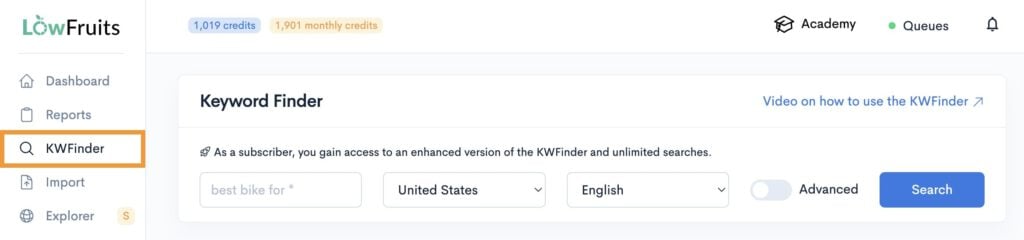
To get started, head over to the KWFinder and enter your niche keyword. You can update the geographic location and language if needed.
Click Search.
For our tutorial, I’ll use our earlier example keyword of “los angeles florist.”
LowFruits will ask you if you want to access all keyword ideas or analyze all high-intent keywords in one go. For niche keyword research, I recommend selecting the latter option.
High-intent keywords, also called buyer-intent keywords, show a clear interest to convert. These queries often contain modifiers like “buy,” “purchase,” or “order.”
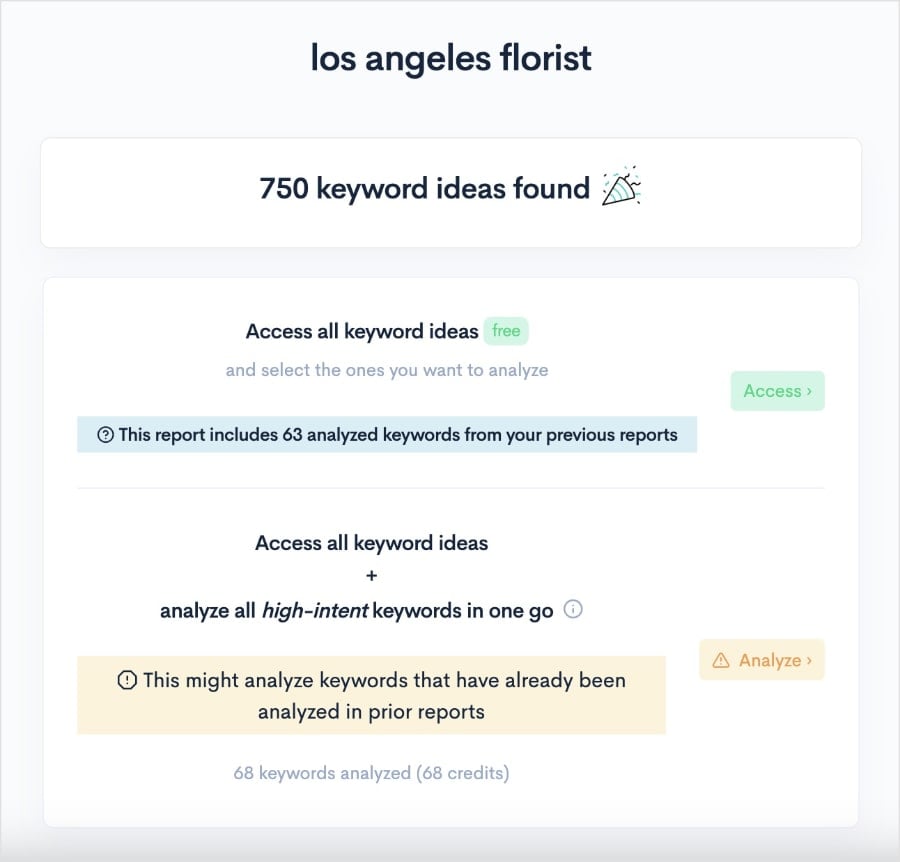
Note: If you don’t have any PAYG credits to analyze all high-intent keywords, you can select the first option then manually select which ones to analyze in your report.
Once you’ve made your selection, LowFruits will generate a keyword report like the one below.
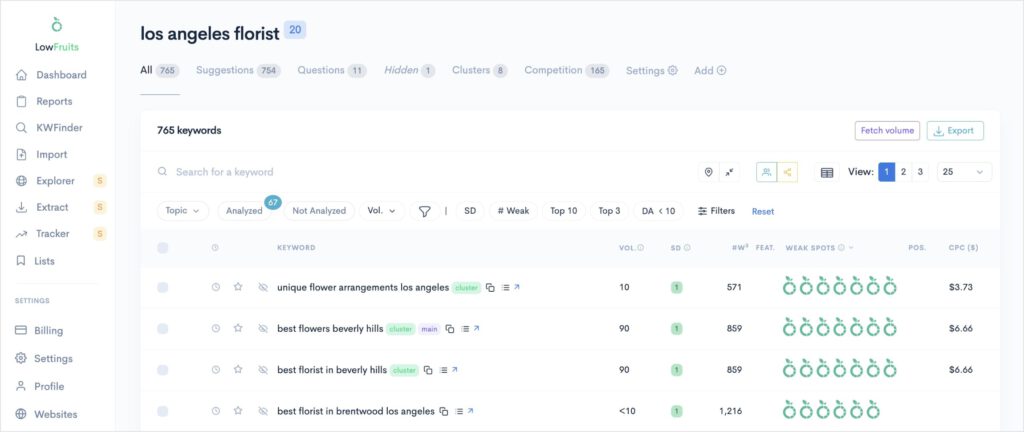
Now, we need to refine this list to identify niche keywords with low competition.
3. Identify Low-Competition Keywords
Finding low-competition keywords is easy in LowFruits.
You just need to know how to use the filters.
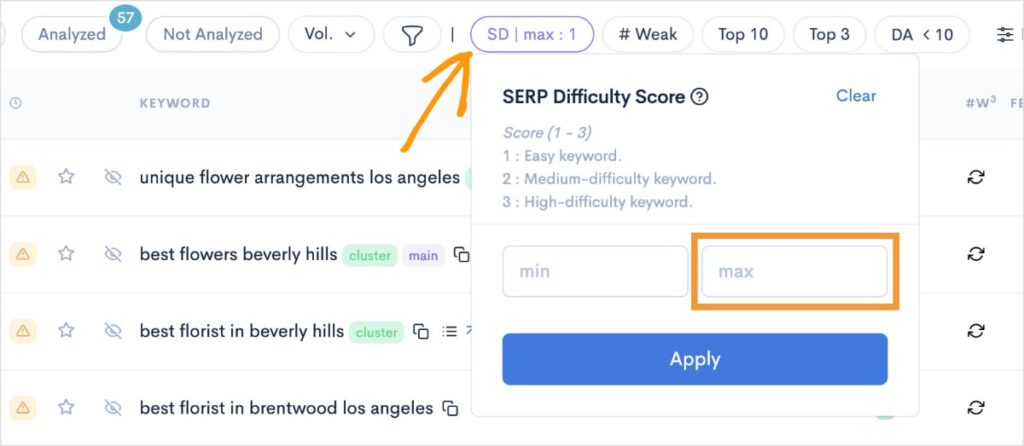
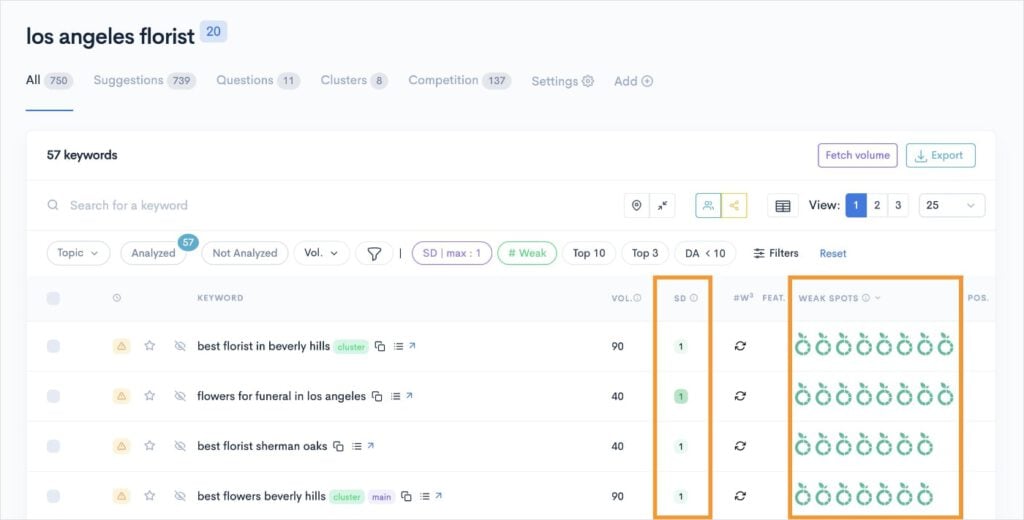
Firstly, you’re going to select the SERP Difficulty Score (SD) filter and set the max to 1.
This LowFruits metric represents keyword difficulty, and 1 is the easiest to rank for. (A score of 3 is the hardest.)
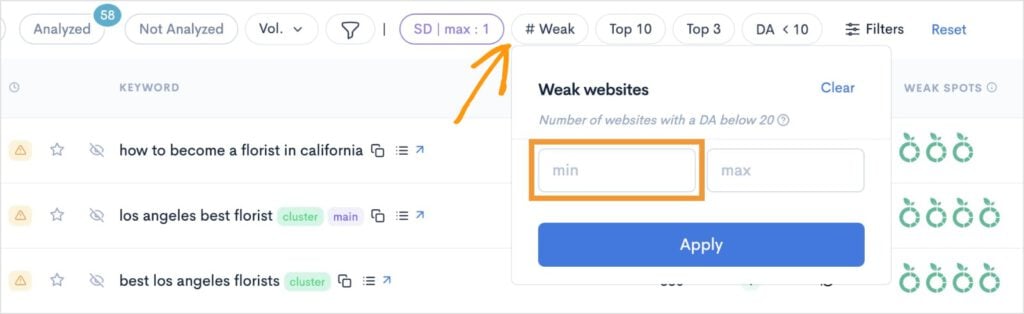
Next, you’re going to set a Weak Spots filter.
Weak Spots represent low-authority domains ranking in the top 10 search results for a keyword.
This LowFruits exclusive metric allows you to assess how easy it will be to rank high for a specific term in search engines. The more Weak Spots there are, the easier it will be to land in one of the top positions.
For our filter, we’re going to click the # Weak filter and set the minimum to 2. (You can adjust this number according to your preferences, but 2 is a good starting point. If you make it too high, you may find that your report doesn’t have many keywords that fit your selection.)
Click Apply.
At this stage, you’ll have a list of niche keywords that have a low keyword difficulty (SD of 1) and multiple Weak Spots (more than 1 low-authority domain).
The final step is to sort your list by search volume.
To do this, click the Vol. column header.
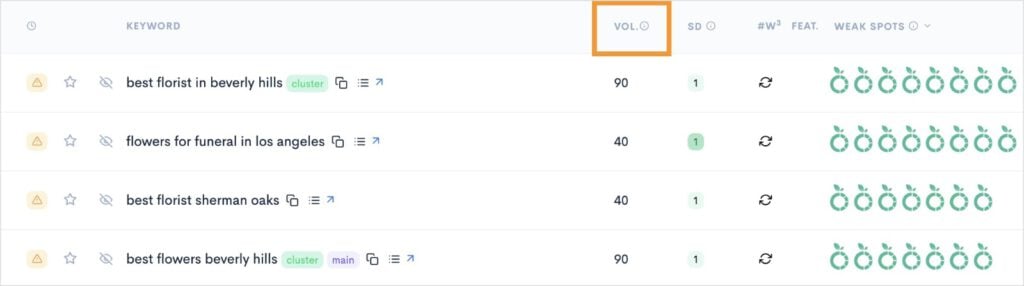
This action will sort your report in descending order by monthly search volume.
You should now have a list of low-competition, niche keywords that are easy to rank for.
You could stop here.
But if you want to spy on the competition, proceed to our next step.
Optional: 4. Extract Competitor Keywords
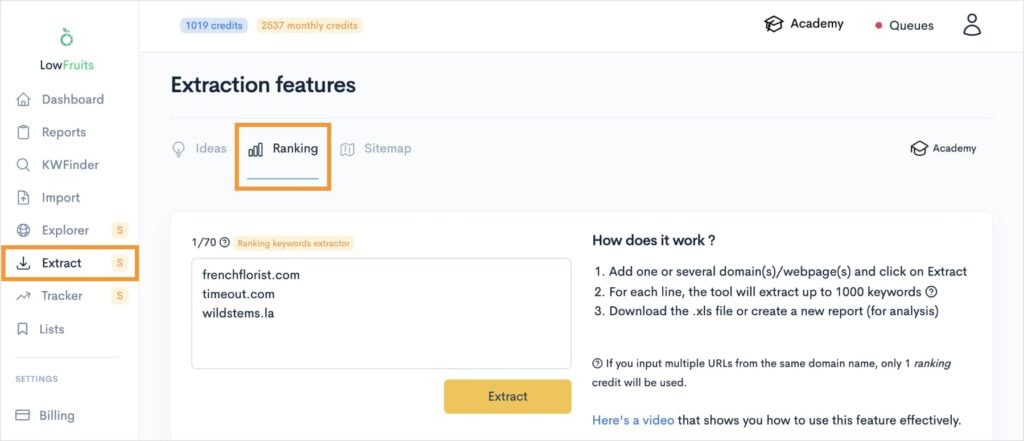
To find competitors’ keywords, navigate to the Extract tool.
Select the Ranking tab and enter the domains of your competitors.
Click Extract.
LowFruits will generate a report of your competitors’ keywords, which you can find by scrolling down the page.
You can download the full report to your computer by clicking the blue download button.
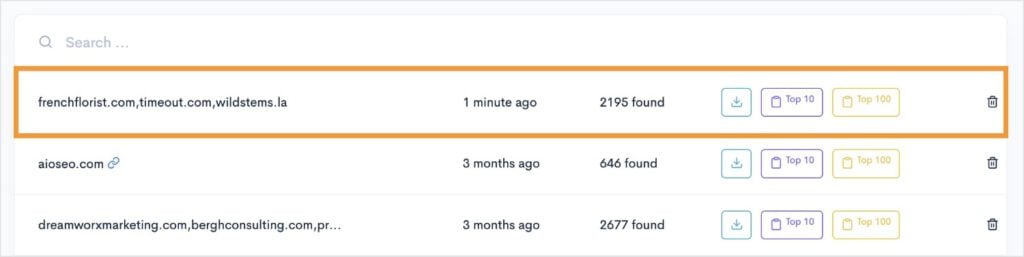
You could also create a new report in the LowFruits KWFinder by selecting the purple (top 10) or yellow (top 100) buttons.
Whichever method you choose, you’ll get a list of the top-ranking keywords for your competing domains. These reports can reveal niche keywords you hadn’t explored yet and inform your content strategy.
Note: The Extract tool requires a LowFruits subscription.
Next Steps: Optimize Your Niche Website
Once you have identified your niche keywords, it’s time to optimize your website for them.
Here’s a beginner-friendly guide to get you started: Content Optimization in SEO.
I’ve also included a few additional resources below to improve your content’s reach:
- How to Write SEO Titles That Rank & Get Clicks
- Best Practices for Writing Meta Descriptions (Plus Examples)
- How to Create Scannable Content in 5 Easy Steps
Final Thoughts
Niche keyword research is a fundamental part of SEO that can drive targeted traffic to your site and enhance your online visibility.
By following these 3 simple steps and optimizing your website for niche keywords, you can increase the chances of engaging your target audience.
This strategy will ensure your content resonates with their interests while positioning your business as a trusted authority in your niche.