You’ve been pouring countless hours into your small business’s SEO efforts. Writing blog posts, optimizing meta descriptions, building backlinks — the works. But when someone asks, “How’s your SEO performing?” you find yourself scratching your head.
Sound familiar? You’re not alone.
Thousands of small business owners navigate SEO without a compass, hoping their efforts will somehow lead to success.
But here’s the unpleasant truth: hope isn’t a strategy.
In today’s hyper-competitive digital landscape, you need something more concrete.
Enter SEO benchmarks — your secret weapon for transforming guesswork into growth. Think of them as your business’s North Star, guiding your SEO efforts with precision and purpose.
In this guide, we’ll share everything you need to know about SEO benchmarking, from the most important ones in 2025 to how to track them and why you should.
Let’s get started.
In This Article
What Are SEO Benchmarks?
Think of SEO benchmarks like training for a marathon (because running a small business sometimes feels like one!). A benchmark in marathon training might be your target pace per mile, or the number of long runs you complete each month. It’s a reference point to gauge your progress.
SEO benchmarks are similar. These reference points help you understand if your digital marketing efforts are making progress. They’re carefully selected metrics that reflect your website’s performance over time.
Put simply, SEO benchmarks give you a clear picture of where you started, where you are now, and where you’re heading. They transform abstract performance goals into measurable progress.
Why Are SEO Benchmarks Important for Small Businesses?
Small businesses face unique challenges in the digital space. Unlike large corporations with massive marketing budgets, you need to make every effort count.
Here’s why benchmarks are particularly vital for small businesses:
- Resource Optimization: Know exactly where to invest your limited time and money
- Competitive Edge: Understand how you stack up against similar-sized businesses
- Growth Tracking: Monitor your progress in a way that makes sense for your scale
- Strategic Planning: Make informed decisions based on data, not hunches
SEO Benchmarks vs. KPIs vs. Metrics: Clearing the Confusion
SEO lingo can be tricky. Benchmarks, KPIs, metrics… aren’t they all the same thing?
Not quite.
Let’s break it down simply.
Metrics
These are the raw data points. Think of them as the basic ingredients. Some examples include:
- Number of monthly website visitors from organic search
- Average time spent on a page
- Bounce rate percentage
SEO metrics are just numbers.
Key Performance Indicators (KPIs)
These are metrics with purpose. They are the metrics you’ve chosen to track because they relate directly to your SEO goals and business objectives.
Here are some examples:
- Increase organic traffic by 20% in the next quarter (organic traffic is the metric, the 20% increase is the KPI)
- Improve keyword ranking for ‘best widgets’ to the top 5 positions (keyword ranking is the metric, top 5 position is the KPI)
- Improve average session duration to 3 minutes
- Reduce bounce rate to below 40%
Ultimately, KPIs are metrics that matter. They have additional context that ties them to your business’s success.
SEO Benchmarks
These are your reference points for your KPIs and metrics. They are the standards you compare your performance against.
They might include:
- Industry average organic traffic growth rates
- Average competitor session duration
- Market standard bounce rates for your niche
Benchmarks provide context outside your website. Are your KPIs good, bad, or just okay? Benchmarks help you understand.
To summarize, here’s a table comparing the differences between metrics, KPIs, and SEO benchmarks:
| Feature | Metrics | Key Performance Indicators (KPIs) | Benchmarks |
| Definition | Raw data points | Metrics tied to specific goals | Reference points for comparison |
| Purpose | Measure basic data | Track progress towards goals | Provide context and evaluate performance against industry standards |
| Example | Total organic traffic (number of visits) | Increase organic traffic by 20% in Q2 | Industry average organic traffic growth: 10% |
Essentially, you track metrics, use them to define KPIs aligned with your goals, and then use benchmarks to see how your KPIs measure up.
6 SEO Benchmarks Every Small Business Should Track
Alright, now let’s get into the SEO benchmarks that matter in 2025. To keep things organized, I’ve grouped them into the following categories:
- Organic Traffic
- Keyword Rankings
- User Experience (UX)
- Technical Performance
- Backlinks
- Conversion Rates
Feel free to read through them all, or jump to the section of greatest interest for your business.
1. Organic Traffic
Organic traffic refers to website visitors who arrive from unpaid listings in search engine results pages (SERPs). This excludes traffic from paid ads.
Why it matters: Organic traffic is a primary indicator of SEO success. It demonstrates your website’s visibility in search results and its ability to attract users actively searching for relevant information, products, or services. Growth in organic traffic often translates to increased brand awareness and potential customers.
Metrics to Track
- Total Organic Traffic: This is the overall number of visits your website receives from organic search within a given period (e.g., monthly).
- Percentage of Total Traffic from Organic Search: This metric indicates how reliant your website is on organic search compared to other traffic sources (social media, direct, referral, etc.). A healthy SEO strategy aims for a significant and growing portion of traffic from organic search.
- Branded vs. Non-Branded Organic Traffic: Segmenting organic traffic into branded (searches including your brand name) and non-branded (generic keyword searches) provides deeper insights. Focus on growing both, but non-branded traffic growth is key for acquiring new customers who aren’t already familiar with your brand.
Benchmark Examples
- Aim for Consistent Month-over-Month Increase: Even small, steady growth in total organic traffic month after month is a positive sign of SEO progress.
- Organic Traffic as Significant Traffic Portion: A good target is often to have organic search contribute a substantial percentage of your overall website traffic, such as 30-50% or higher, depending on your industry.
- Prioritize Non-Branded Traffic Growth: Ideally, your non-branded organic traffic should grow at a faster rate than branded traffic, indicating successful expansion of your reach to new audiences.
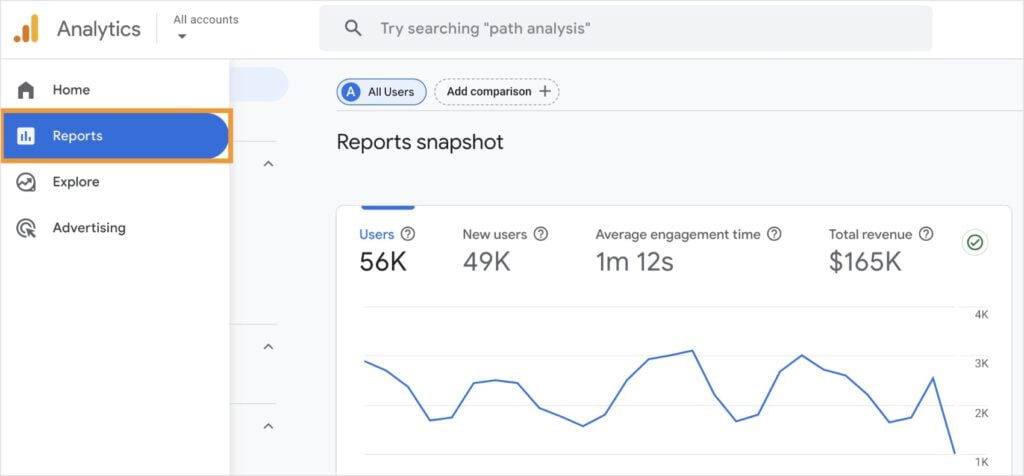
To track organic traffic, you can SEO benchmarking tools like Google Analytics. It provides various reports that can help you determine how and from where you’re getting organic traffic.
2. Keyword Rankings
Keyword rankings refer to the position of your website in search engine results when users search for specific keywords. Higher rankings mean your pages appear closer to the top of search results.
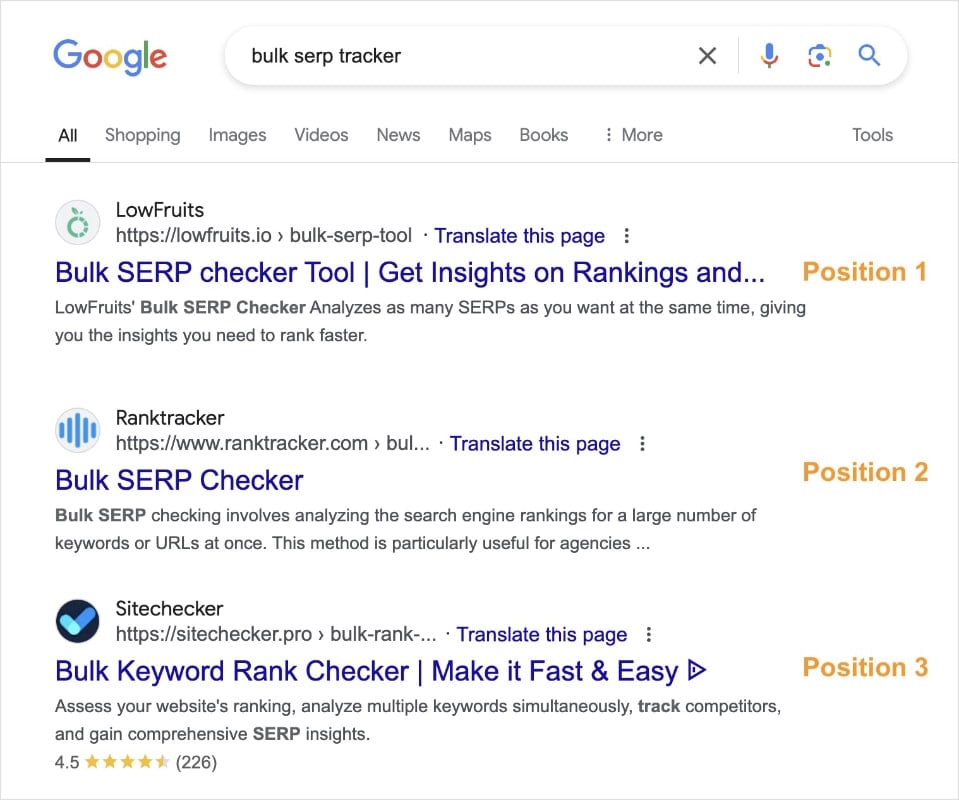
Why it matters: Ranking high for relevant keywords is crucial for visibility. Users are much more likely to click on results at the top of the first page.
Metrics to Track
- Number of Keywords Ranking in Top 3, Top 10, Top 20: This offers a granular view of your rankings. According to SEO statistics, rankings in the top 3 positions receive the highest clickthrough rates (CTRs). Aim to increase the number of keywords ranking within the top 10 (first page) as a primary SEO goal.
- Keyword Ranking Distribution: Analyze the distribution of your keyword rankings. Are you ranking for a broad range of keywords, or is your ranking concentrated in just a few? A diverse keyword portfolio is generally more robust and less vulnerable to algorithm changes.
Keyword Ranking Tools
LowFruits is the best rank tracker tool for organic search.
The LowFruits Rank Tracker monitors Google rankings of your most important keywords. After the initial set up, it will fetch your rankings automatically based on the frequency you selected (daily, weekly, monthly).
In addition to seeing how your rankings have changed since the last fetch, you can also sort your report by top positions to see which keywords are ranking in the top 3, top 10, or top 100.
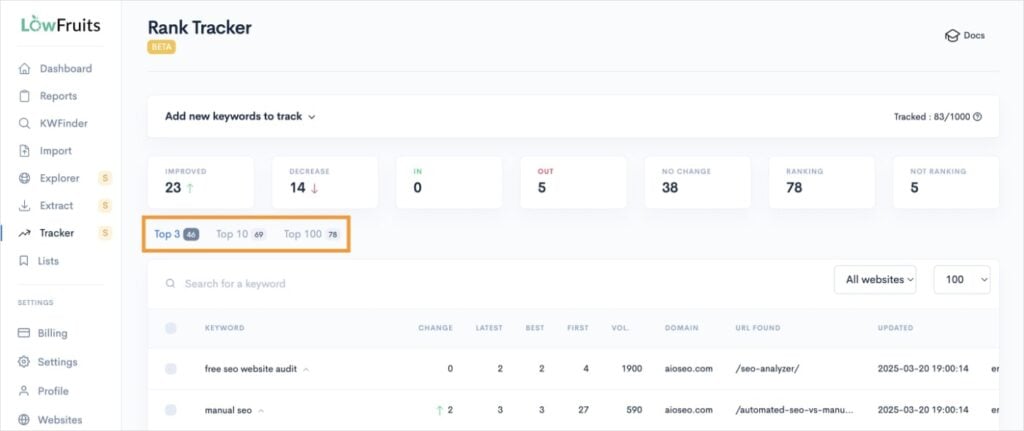
Note: Rank Tracker requires a LowFruits subscription. Standard plans can track up to 100 keywords, while premium users can track up to 500.
Not sure which keywords to track?
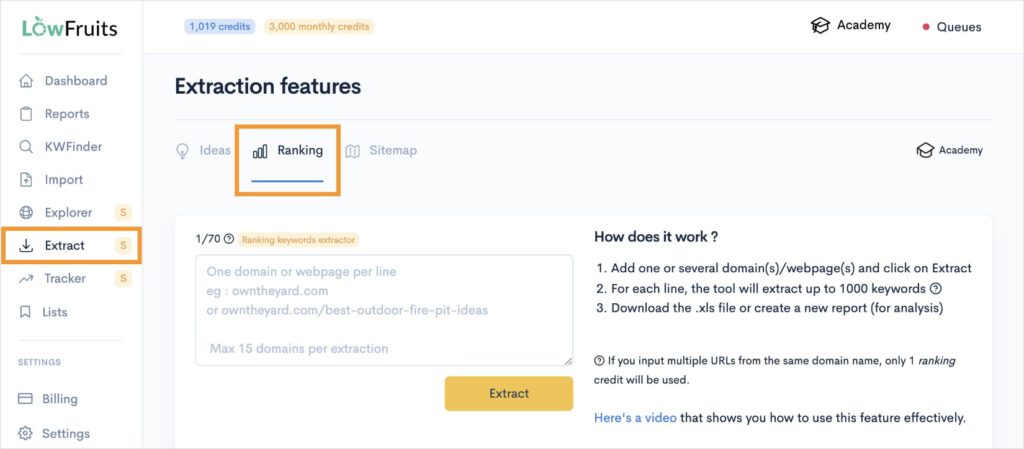
Use the Extract tool to find your website’s ranking keywords. All you have to do is enter your domain under the Ranking tab, and click Extract.
LowFruits will generate a report that you can download to your computer by clicking the blue download button.
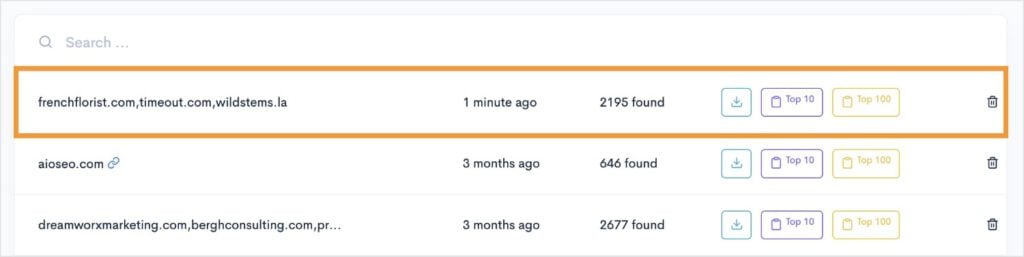
This spreadsheet will show you all the keywords you rank for, which you can then paste or upload into Rank Tracker.
3. User Experience (UX)
User Experience (UX) benchmarks measure how visitors interact with your website. These metrics provide insights into user engagement on your site, which indirectly influences SEO.
Why it matters: Search engines like Google prioritize websites that offer a positive user experience. Good UX signals that your website is valuable and relevant to users. Positive UX metrics can contribute to improved rankings and increased conversions.
Conversely, poor UX can negatively impact rankings and user engagement.
Metrics to Track
- Bounce Rate: The percentage of visitors who leave your website after viewing only a single page. A high bounce rate often suggests issues with page relevance, content quality, page speed, or website design.
- Average Session Duration: This metric measures the average length of time users spend on your website during a session. Longer session durations typically indicate that users are finding your content valuable and engaging.
- Pages per Session: This metric tracks the average number of pages a user views during a single session. A higher number of pages per session suggests users are exploring your website and finding multiple pages of interest.
UX Benchmarking Tools
Google Analytics is a free SEO tool that belongs in every website owner’s arsenal. It helps you track the performance of your website and tap into key engagement metrics.
There are multiple paths to view these metrics in GA4. Here’s one way: Start in Reports > Business Objectives > View User Engagement & Retention > Pages and Screens.
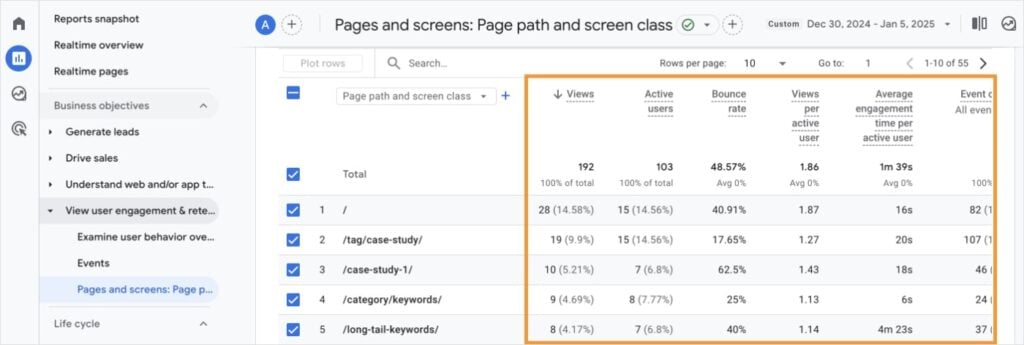
This report will showcase your most important UX metrics, like bounce rate and average session (engagement) time.
4. Technical Performance
Technical SEO focuses on optimizing the technical aspects of your website to help search engines crawl and index your content. It’s about ensuring your website is built and structured in a search engine-friendly way.
Why it matters: Technical SEO provides the foundation for all other SEO efforts. If search engines can’t properly access and understand your site due to technical issues, your rankings will suffer regardless of content quality or backlinks.
Metrics to Track
- Page Loading Speed: Page loading speed is the time it takes for your web pages to fully load. It’s a critical ranking factor, especially for mobile.
- Mobile-Friendliness: Mobile-friendliness refers to how well your website adapts and functions on mobile devices (smartphones and tablets). With mobile-first indexing, Google primarily uses the mobile version of your site for indexing and ranking.
- Website Errors: Google Search Console reports errors that bots encounters when crawling your website. These errors can prevent pages from being indexed and negatively impact your SEO.
Technical Benchmarking Tools
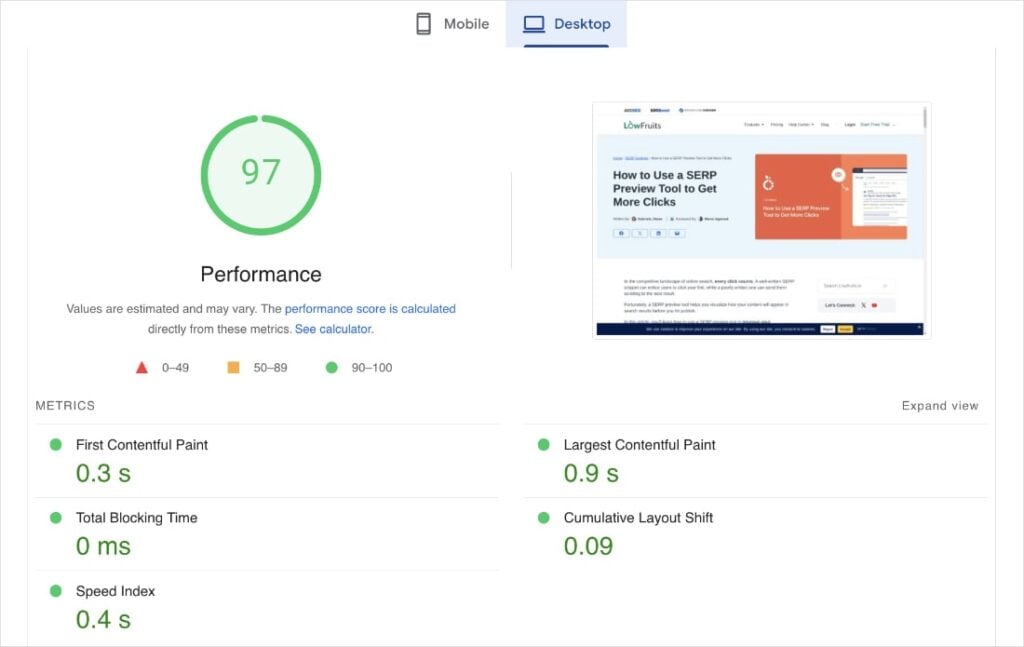
Google PageSpeed Insights is another free tool that can help you catch site speed issues easily. You can check desktop loading times and mobile-friendliness from a user-friendly interface.
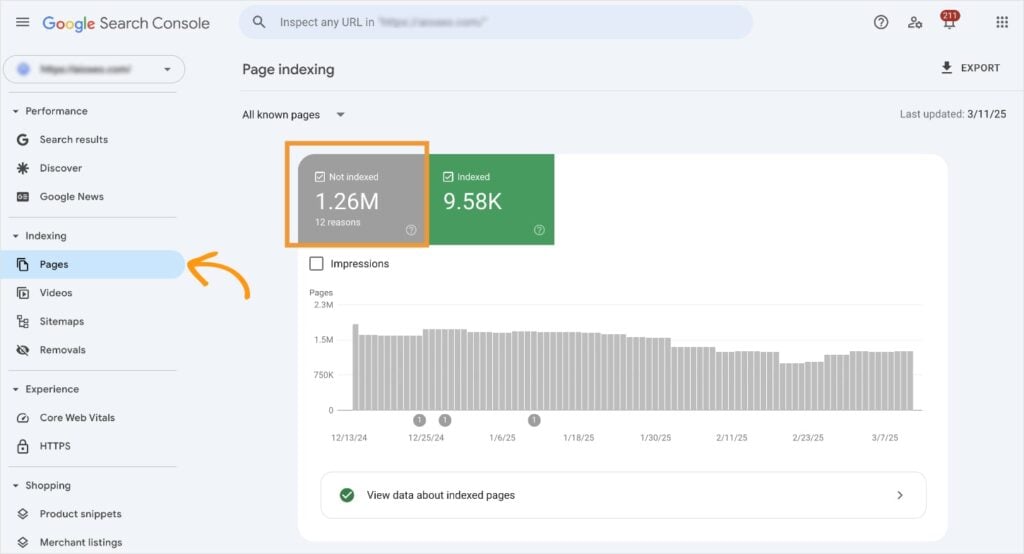
For crawling errors, visit the Page Indexing report in Google Search Console (GSC). This report tells you how many pages are, and aren’t, indexed. (If a page isn’t indexed, it can’t be served in search results.)
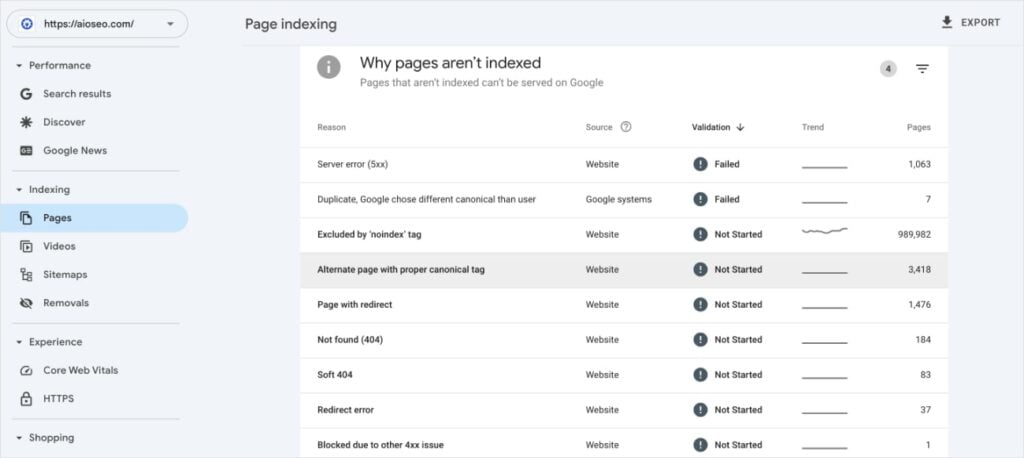
When you’re in this report, you can scroll down to see a list of the non-indexed URLs and the reasons why they’re aren’t indexed.
Ultimately, GSC is a powerful tool for monitoring site performance. And the best part is that it’s free and accurate. After all, you’re getting data straight from Google itself.
5. Backlinks
Backlinks are links from other websites to your website. In SEO, backlinks are considered “votes of confidence” or endorsements from other websites. They indicate authority and trustworthiness.
Why it Matters: Backlinks are one of the most important Google ranking factors. A strong backlink profile signals to search engines that your website is a credible and valuable resource, which can lead to improved rankings.
Metrics to Track
- Total Number of Backlinks: This is the total count of links pointing to your website. While a high number might seem good, focus on quality over quantity.
- Referring Domains: This metric counts the number of unique websites that are linking to you. Links from many different, authoritative websites are generally more valuable than a large number of links from a single domain.
- Domain Authority (DA): These metrics estimate the overall authority and strength of a website. Higher scores generally indicate a more authoritative site. Use these metrics to benchmark against competitors and track your progress in building authority.
When it comes to backlinks, focus on quality over quantity. You should prioritize getting links from relevant, authoritative websites within your industry. These links are more impactful than low-quality or spammy links.
Backlink Checkers
Ahrefs has a free Backlink Checker you can use to see a limited view of a site’s backlink profile. You’ll get the domain rating, total backlinks, and total referring domains. You can also preview some backlinks (about 20 for free users).
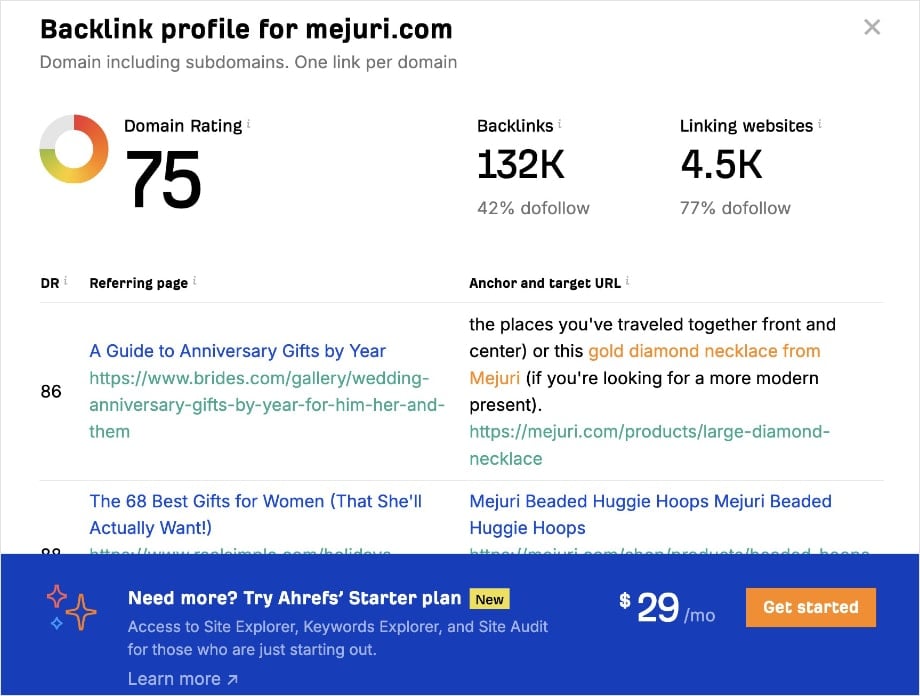
If you’re serious about SEO benchmarking, you’ll likely need to upgrade to an Ahrefs subscription. This will give you full access to backlinking tools in the platform that can help you monitor your backlinking benchmarks over time.
6. Conversion Rates
Conversion rates measure how your organic search traffic translates into desired business outcomes. This may include leads, sales, email sign-ups, or other valuable actions on your website.
Why it matters: Ultimately, SEO should drive tangible business results, not just traffic. High conversion rates from organic traffic indicate that your SEO efforts are attracting the right visitors who are likely to become customers or engage with your business in a meaningful way.
Metrics to Track
- Organic Conversion Rate: This is the percentage of organic website visitors who complete a defined conversion action (e.g., form submission, purchase, registration).
- Conversion Rate per Landing Page: Analyze conversion rates for specific landing pages that are designed to attract organic traffic. This helps identify high-performing landing pages and areas for improvement on underperforming pages.
- Lead Generation Rate from Organic Traffic: If lead generation is a primary business goal, track the percentage of organic visitors who become qualified leads (e.g., submit a lead form, request a quote).
Benchmark Examples
Conversion rates are highly variable and industry-dependent. There’s no universal “good” conversion rate benchmark. Instead, focus on:
- Tracking Your Own Conversion Rate Trends: Monitor your organic conversion rates over time to identify improvements, declines, or areas for optimization.
- Comparing to Industry Averages (If Available): Research industry-specific conversion rate benchmarks for your niche to get a general sense of typical performance ranges.
- Continuous Optimization: Regularly test and optimize your landing pages, calls-to-action, and conversion funnels to improve your organic conversion rates.
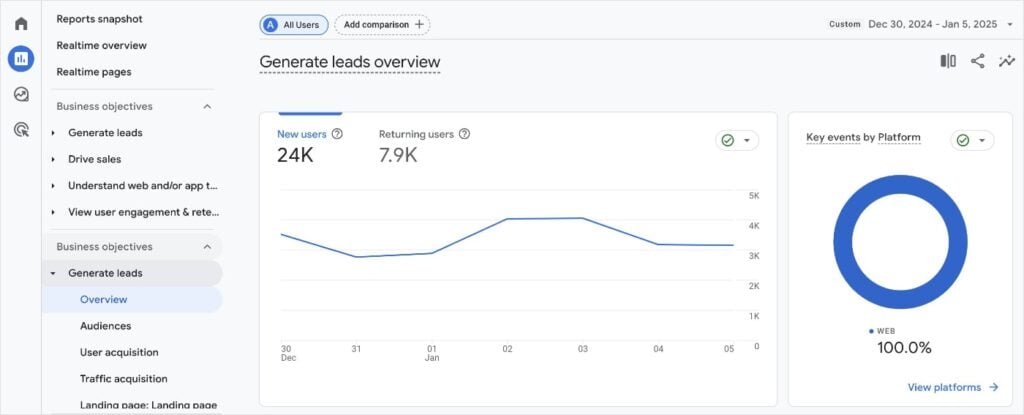
In Google Analytics, you can run various reports to check conversion rates. In the example below, we see the lead generation dashboard, but you can also look into eCommerce purchases and track key events (conversions).
And there you have it! The 6 most important SEO benchmarks for small businesses to track.
Common SEO Benchmarking Mistakes to Avoid
Benchmarking is powerful, but it’s easy to stumble if you’re not careful. Here are some common SEO benchmarking mistakes to avoid:
- Setting Unrealistic Benchmarks: Don’t chase “overnight success” or compare yourself to industry giants with massive marketing budgets. Instead, focus on setting achievable benchmarks that are realistic for your business.
- Focusing on Vanity Metrics: It’s no good to obsess over traffic numbers without considering traffic quality, engagement, or conversions. Focus on metrics that truly impact your goals and their context.
- Ignoring Industry Context: Don’t apply generic benchmarks to niche industries where averages might be vastly different. Consider industry specifics when setting your SEO benchmarks.
- Not Tracking Consistently: Sporadic monitoring is useless. Regular, consistent tracking (at least monthly) is essential to identify trends and make timely adjustments.
- Benchmarking Against Irrelevant Competitors: Avoid comparing yourself to websites that aren’t direct competitors or are in completely different markets. Benchmark against relevant, comparable competitors.
FAQs About Benchmark SEO
How often should I check my SEO benchmarks?
Monthly is a good starting point for most small businesses. This gives you enough data to see trends without being overwhelmed by daily fluctuations. You can adjust to bi-weekly tracking as you become more comfortable and your SEO efforts ramp up.
What are some important SEO benchmarks for small businesses?
The key SEO benchmarks we’ve covered in this article are a great starting point: organic traffic, keyword rankings, and user experience metrics (bounce rate, session duration). You can also monitor your technical SEO, backlinks, and conversion rates. Prioritize the ones that align most closely with your business goals.
Do SEO benchmarks change depending on the industry?
Yes, industry can influence what “good” benchmarks look like. For example, average conversion rates and typical organic traffic percentages can vary across industries. That’s why it’s important to consider industry-specific nuances when setting targets and interpreting data.
Final Thoughts
SEO benchmarks are more than metrics or charts and graphs. They’re your compass to online growth and search engine visibility.
By setting clear, measurable SEO benchmarks, you move from SEO guesswork to data-driven strategy. You gain clarity, track real progress, and make smarter decisions that actually drive results for your small business.
So, take control of your SEO success — and let LowFruits help you along the way. Sign up for LowFruits today to improve your keyword research, rank tracking, and overall SEO!
Additional resources: